

Subscribe
to receive news by email

Poll
Will the Trump Administration Shift U.S. Policy in Favor of Palestine?
- No (87%)
- Yes (13%)
 Loading ...
Copyright © 2026 Arab America
Go topTrump's Gaza Plan: Ceasefire, Not Peace Yet
By: Ghassan Rubeiz / Arab America Contributing Writer
Before celebrating a breakthrough in Gaza, let us recognize what this moment represents: a pause in violence, a response to a scandalous emergency—not more.
The world is breathing a sigh of relief as the guns fall silent in Gaza, Israeli hostages emerge from long captivity in Hamas’s tunnels, and Palestinian prisoners walk free from Israeli jails. Two million starved and traumatized Gazans receive sufficient humanitarian aid.
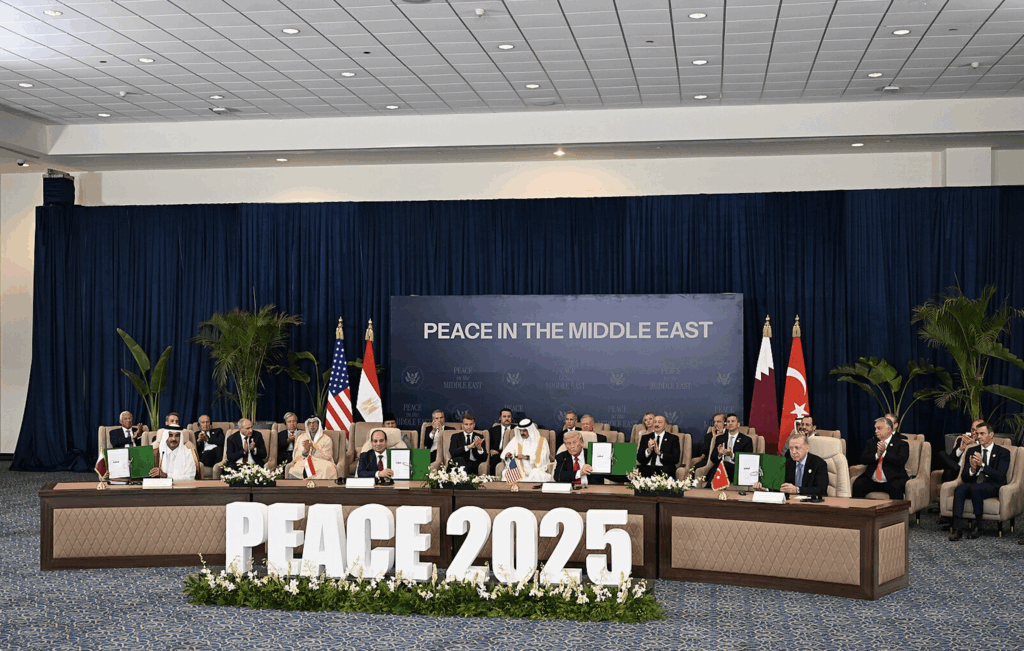
President Trump deserves credit for abandoning his “Arab Riviera” idea and confronting the suffering in Gaza. The media mistakenly portrays Trump’s twenty-point plan as a regional breakthrough. This is a ceasefire, not a Mideast peace treaty. To many, the terms of the ceasefire suggest that the loss of life of tens of thousands of innocent civilians in Gaza was simply an inevitable, unfortunate event, one for which Hamas alone is primarily responsible. The Plan reinforces the view that what happens in Gaza and the West Bank has nothing to do with Israel’s conduct in the Middle East.
Regardless, the hostages are home, and hundreds of Palestinian prisoners walk free. Now for the hard part: how will Gaza function with armed Palestinian resistance and Israeli Defense Forces operating side by side? The Israeli Defense Forces have withdrawn from densely populated areas, but still retain potential control over the entire Strip. Future withdrawals are promised, but not guaranteed. In the best case, Hamas, Islamic Jihad, and the Popular Front for the Liberation of Palestine will voluntarily disarm after Israel commits to a complete Gaza withdrawal with a specific timeline. But in the worst case, Palestinian fighters refuse to surrender, and war resumes. With all the hostages out of Gaza, Israel may abandon concerns about civilian casualties and again begin a scorched-earth campaign.
Five parameters will be relevant to what unfolds:
US Pressure: Trump may possibly continue to press Israel to withdraw completely from Gaza within a short timeframe. He is emotionally invested in scoring a Palestine-Middle East deal. Will he have the political capital to continue investing in Palestine in a few months?
Israeli Cooperation: Israel may or may not withdraw completely from Gaza; it may or may not slow annexing the West Bank. Will there be a new cabinet? Currently Israel seems content with extending Netanyahu’s political mandate rather than seeking new leadership.
Arab Position: Saudi Arabia will probably insist on seeing evidence of progress on Palestinian access to equality and equity before considering joining the Abraham Accords. How will the Arab League respond to Hamas’s likely refusal to disarm unconditionally? Despite the carnage visited on Gaza, Hamas retains some popularity when Israel’s occupation continues to worsen.
Palestinian Governance: Palestinians were largely ignored during the preparations for Trump’s Plan. Tellingly, Israel has refused to release the highly charismatic Marwan Barghouti, whom many see as a Mandela-like personality; the fact that the most popular living Palestinian leader remains in prison arguably reveals Israel’s lack of interest in a genuine partner for dialogue. Will the Plan’s proposed “Gaza International Transitional Authority” actually fulfill its responsibility to govern Gaza?
International Community: How effective and empowering will the Plan’s multinational Board of Stabilization of Gaza be? International solidarity with Palestine, a rising critical factor in their future, could continue to rise as Palestinian resistance stays creative, avoids October 7-like miscalculations, and seeks partnerships of hope and dignity.
To conclude, President Donald Trump enjoys considerable popularity in Israel today, maintains strong relationships with key Arab leaders, and appears willing to invest his precious political capital in the Israel-Palestine conflict. With unusual boldness, he halted the war in Gaza through a combination of threats and incentives, demonstrating that he may have the leverage to advance Arab-Israeli relations further.
However, several factors cast doubt on the durability of this progress. The overwhelming complexity of the Israeli-Palestinian conflict, Trump’s notoriously short attention span, and his administration’s competing domestic priorities threaten to derail momentum. Unfortunately, Israel’s current government shows little awareness of the impact of its occupation—of Palestinian and other Arab land—on the instability of the region. Meanwhile, Arab leaders have historically demonstrated inconsistent commitment to the Palestinian cause.
Trump’s plan represents an important first step in ending immediate suffering, but transforming a ceasefire into lasting peace remains a distant and uncertain prospect.
Ghassan Rubeiz is the former Middle East Secretary of the World Council of Churches. Earlier, he taught psychology and social work in his country of birth, Lebanon, and later in the United States, where he currently lives. He has contributed to political commentary for the past twenty years and delivered occasional public talks on peace, justice, and interfaith subjects. You can reach him at rubeizg@gmail.com
The views and opinions expressed in this article are those of the author and do not necessarily reflect the position of Arab America. The reproduction of this article is permissible with proper credit to Arab America and the author.
Want more articles like this? Sign up for our e-newsletter!
Check our blog here!