

Subscribe
to receive news by email

Poll
Will the Trump Administration Shift U.S. Policy in Favor of Palestine?
- No (86%)
- Yes (14%)
 Loading ...
Copyright © 2026 Arab America
Go topWhen Palestinian Identity Becomes a Brand: A Debate
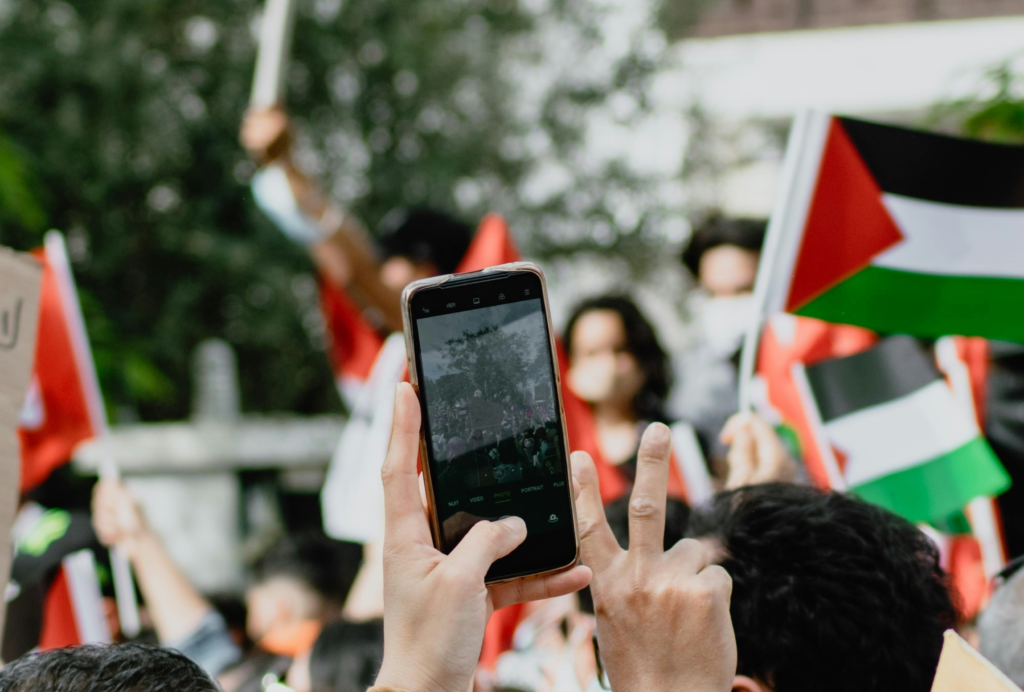
Photo by Mohamed Jamil Latrach on Unsplash
By: Megan Guzman Abbott / Arab America Contributing Writer
The recent feud between Palestinian rappers Shabjedeed and Saint Levant has transcended a typical rap beef and has now evolved into a cultural debate. When does cultural solidarity become a marketable aesthetic? What happens when people’s fight for survival is filtered through pop culture?
These questions exploded across the Arab music scene after the release of SLV, a diss track by West Bank rapper Shabjdeed aimed at diaspora-born pop star Saint Levant. Far from just a petty fight over clout, this clash exposes a critical ideological issue: the difference between local realities of life under occupation and the palatable, Western image of Palestinian identity consumed on the global stage.
The Colonized Bourgeoisie vs. the Lived Reality
In “The Wretched of the Earth”, Frantz Fanon speaks on the psychological and political analysis of the dehumanizing effects of colonization. And through his research, he warns of the “colonized bourgeoisie”: an elite diaspora class shaped by Western institutions that later adapts the values and norms of the colonizer. This same dynamic was seen directly when contrasting the realities of Shaheed and Saint Levant.
Shabjdeed was raised in Kafr ‘Akab, a working-class neighborhood in northern east Jerusalem. In his daily life, he lived with checkpoints, restricted movements, and under military occupation. As Fanon explains, the colonized subject does not claim to represent the truth since he is the truth in his very being. His music is an uncompromised and raw perspective of someone living under occupation.
Marwan Abdelhamid (Saint Levant), however, represents a different origin. Born in Jerusalem, spending his early childhood in Gaza, and then growing up in elite international schools in Jordan, he built his career surrounded by Western ideals. He naturally embodies the privilege of the diaspora due to being surrounded by the upper class and not experiencing the daily struggles of someone living under occupation. The same is seen through his music, where he represents high fashion, multilingual lyrics, and a romanticized lover-boy aesthetic that feeds into Western algorithms and interests.
In Saheed’s diss track, he calls out how modern pop culture portrays the Palestinian struggle as a digestible and trendy aesthetic. He focuses on national trauma and political resistance being watered down to branding, where a simple symbol subsidizes solidarity.
Marketable Aesthetic
This tension goes beyond their artists’ styles, but to a broader system within the global entertainment market.
The market embraces Palestinian representation, but it exhibits a clear preference for what is palatable and white-adjacent. Think about Elyanna and Nemahsis, for instance: artists like Elyanna, who has opened for Coldplay and performed at the latest FIFA World Cup, have gained more traction and marketing in comparison to Muslim hijabi artist Nemahsis, who writes about anti-colonial pop but was later dropped by her record label for speaking out about Gaza.
When an industry selects which voices to amplify that conform to Western ideas, Palestinian identity becomes silenced. Comfort is reinforced, and Palestinian identity is hollowed out. And when the cause becomes a trend, the original demands for systemic justice risk being turned into mere symbols for global audiences to consume without political challenge. This has been seen with people reposting AI flyers saying “Eyes on Rafah;” most repost the “Palestine trend” without taking the time to learn, educate, or participate in protests.
The Wider Reckoning
The Shabjdeed-Saint Levant feud mirrors a larger global dilemma. It forces audiences, creators, and critics to rethink how capital and global entertainment as a whole have gatekept representation, and how it regards voices that are palatable while marginalizing those facing the true hardships. The debate challenges everyone engaging with Palestinian culture to look past the celebrity brand activism and ask whether global visibility is truly serving to bring liberation or just selling an aesthetic.
Beyond artists, when solidarity is mediated through social media feeds, clicking like, sharing a post, or buying trendy merchandise can create an illusion of impact. Yet, these digital ecosystems are embedded in the tech frameworks and algorithms of the West. True solidarity requires looking past digital trends and engaging with the true experiences, people, communities, and stories of those struggling.
Want more articles like this? Sign up for our e-newsletter!
Check out our blog here!