
Subscribe
to receive news by email

Poll
Will the Trump Administration Shift U.S. Policy in Favor of Palestine?
- No (87%)
- Yes (13%)
 Loading ...
Copyright © 2026 Arab America
Go topYoung Arabs Today: Between Frustration, Ambition, and the Search for Opportunity
By Aziz Hellal / Arab America Contributing Writer
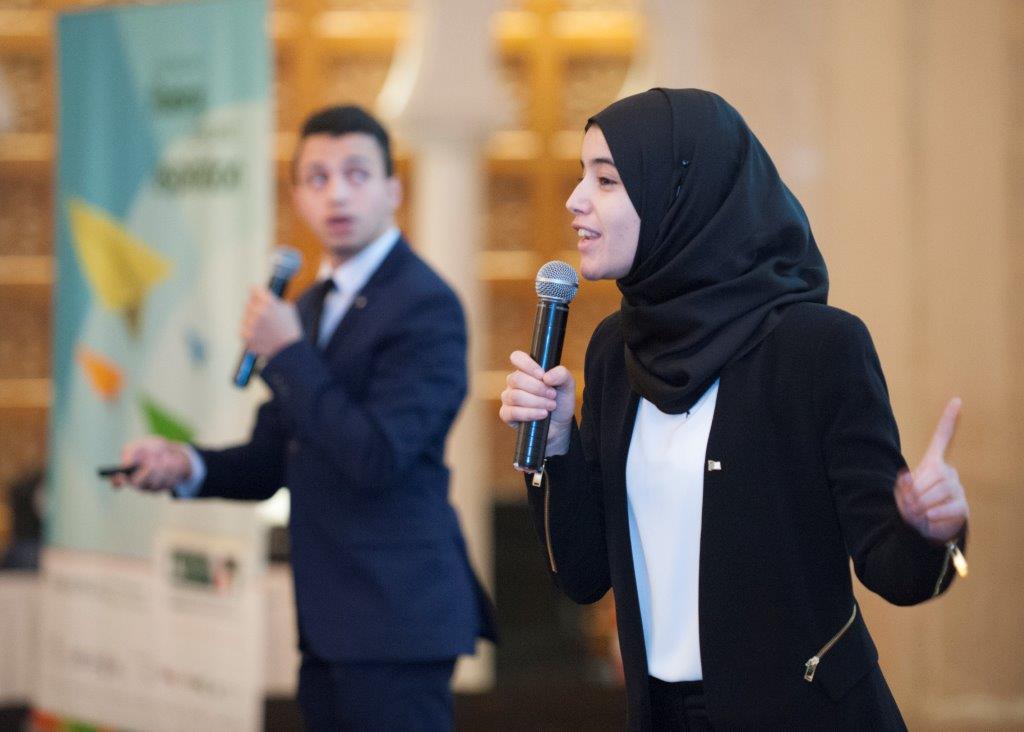
What happens when young people have big dreams but few opportunities? Across the Arab world, millions are living with that reality. Young people aged 15 to 29 make up about 30 percent of the region’s population, while over 60 percent are under the age of 30. This makes their future central to where the region is heading—a ‘demographic gift’ that could easily turn into a ‘demographic time bomb’ if ignored.
Millennials had real hope after the Arab Spring, but much of that hope faded over time. Gen Z is starting out at a more difficult time. After COVID, many young people found themselves facing war, economic pressure, and fewer opportunities.
While many Millennials were left feeling stuck after hopes for change faded, Gen Z is taking a different path. Instead of waiting for broken systems to improve, many are using the internet to create opportunities for themselves—through freelance work and digital platforms.
The Gap Between Ambition and Opportunity
For many young Arabs, the gap between ambition and opportunity isn’t just a theory—it’s their daily reality. Finding a job is not easy, especially for new graduates trying to start their careers. In fact, the Middle East and North Africa (MENA) have the highest youth unemployment rate in the world, exceeding 25% in some countries.
This reality is driven by what can be described as a “triple pressure.” First, there is the unemployment trap, exacerbated by a profound ‘skills gap’; formal education often remains trapped in the past, failing to equip graduates with the high-demand digital skills required by the modern global economy. Second, Second, the number of young people entering the job market is much larger than the number of traditional jobs available.
Finally, the rising cost of living—from housing to education—has made it harder to reach goals that once seemed normal, like marriage or financial independence. Even young people with college degrees often find that the future is unclear and stable employment is hard to secure.
The Impact of Conflict and Instability
In countries like Syria, Yemen, Sudan, Gaza, and Lebanon, war and political collapse have completely changed what it means to grow up. For millions of young people, these conflicts have stolen their homes, their safety, and their chance at a normal life. This instability makes every other problem—like finding a job or getting an education—so much harder to solve. It’s not just about the economy anymore; it’s about trying to survive in a world that is literally falling apart..
Even in neighboring countries not directly at war—such as Egypt and Jordan—the ripple effects are profound, manifesting as immense economic pressure and a deep-seated uncertainty about the future
Together, these challenges have forced a total redefinition of what it means to build a future. Crucially, in these fragile states, a smartphone is no longer a luxury—it is a lifeline. Even amidst displacement or economic isolation, a new generation is leveraging the ‘cloud’ to access education and remote work, turning digital spaces into their only stable territory when the physical ground beneath them remains uncertain.
New Ways to Move Forward
In response to these barriers, the “old script” of waiting for a stable government job or a corporate career is fading. Young people are no longer waiting for systems to fix themselves; they are finding their own, often difficult, ways to move forward.
For some, this means migration—looking toward Europe or the Gulf for better opportunities. For others, the shift is happening online. Freelancing, digital entrepreneurship, and social media commerce have become practical alternatives in a job market that offers limited options. These paths are not easy, but they reflect a generation trying to create opportunities on its own terms.
The Digital Escape Hatch
Despite these challenges, the story doesn’t end with feeling stuck. Across the Arab world, more young people are turning to freelancing, remote work, and small online businesses as new ways to earn a living. This shift is supported by a growing digital economy, which is projected to exceed $100 billion in 2026.
Social media is no longer just for entertainment; it has become a space for income and self-promotion. For many young people, these platforms offer a way to build visibility and independence outside traditional systems.
At the same time, this path comes with real challenges. Many young freelancers still face power cuts, slow internet, limited payment systems, and little legal protection. For many, working online is not a perfect solution, but it remains one of the few available paths forward.
In the end, the gap between ambition and reality remains wide, but it hasn’t stopped this generation from moving forward. The real question is no longer whether the youth are ready for the future—it’s whether the region’s systems can finally keep up with their energy, or if they will continue to fall behind the very people meant to build it.
Will the digital era finally break the cycles of frustration, or will traditional barriers continue to stifle a generation’s potential? One thing is certain: Arab youth aren’t waiting for the answer—they are busy writing it themselves.
Want more articles like this? Sign up for our e-newsletter!
Check our blog here!