Advertisement Close

Arts/Entertainment

Lebanese alt-rock band confronts post-Orlando divisions during U.S. tour

BY YEGANEH TORBATI
REUTERS 

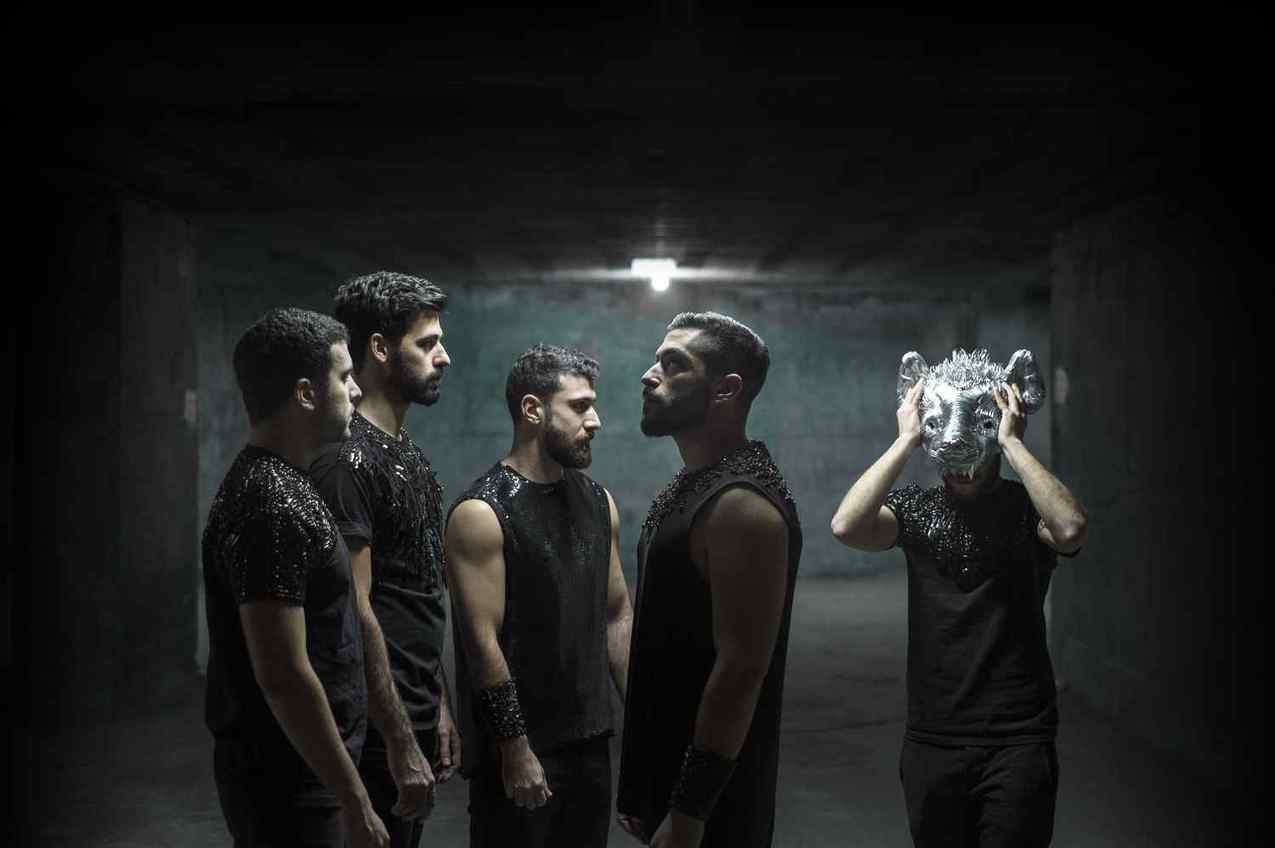
Accustomed to generating controversy in their native Middle East with lyrics tackling love, sex and political apathy, members of Lebanese alt-rock band Mashrou’ Leila thought a summer U.S. tour would bring them a welcome respite.

Instead, as news spread on Sunday that an American man claiming allegiance to Islamic State had killed 49 people in a packed gay nightclub in Florida, the band found itself at the crossroads of tensions between the gay and Muslim communities, spilling out on social media and in online commentary.

Mashrou’ Leila has broken ground in the Arab world with an openly gay lead singer and stances espousing gender equality and sexual freedom. In doing so, the band embodies the two communities most shaken by Sunday’s shooting – lesbian, gay, bisexual and transgender people targeted by the Orlando gunman, and Muslims who feel unfairly blamed for the violence perpetrated in the name of their religion.

“We come from a part of the world where I’ve always felt not accepted because of my sexuality,” Hamed Sinno, Mashrou’ Leila’s lead singer, said in an interview on Monday.

Seeking out information in the hours after the attack, Sinno said he came across comments on social media that he felt sought to pit Muslims and gays against each other.

“By the time they even started getting the names of the victims out, the media had already spun it as this whole LGBT community versus Muslim community” phenomenon, he said. “So many of us are at the intersection of these two communities. Suddenly I felt excluded, I felt I wasn’t allowed to mourn.”

Sinno said the band had already experienced several brushes with anti-Muslim bias in its two weeks in the United States. An airport security guard told them that if Donald Trump won the presidency, “all of this is gonna change,” apparently referring to the Republican presidential candidate’s pledge to ban Muslims from entering the country if he is elected.

The band’s danceable tunes have earned them an avid global following but also condemnations from Arab leaders who say their lyrics go against the region’s traditional values. In April, Jordanian authorities banned the group from the country, band members said, though they later relented after an international outcry.

One song, “Shim el-Yasmine,” describes Sinno’s desire to introduce his male lover to his parents, while “Lil Watan” skewers political apathy in the Middle East.

It is wrong-headed to blame Sunday’s attack on Islam, said Sinno, a U.S. citizen. The FBI said the Orlando gunman, Omar Mateen, called during the massacre to pledge allegiance to Islamic State, the jihadist group that later claimed responsibility for the attack.

But the depth of Mateen’s commitment to Islamic State was unclear. His father said the attack was not motivated by religion and suggested it was rather his son’s anti-gay sentiments.

“The issue is not Islam more than any other religion,” Sinno said. “Most of the attacks that happen against the queer community in the U.S. are not by Muslims, they’re by Christian fanatics.”

In front of a sold-out crowd on Monday night at the Hamilton venue in downtown Washington, D.C., the band briefly addressed the tragedy, the worst mass shooting in modern American history. Staff at the Hamilton said they decided to up security measures following Sunday’s attack, and patrons and their bags were carefully screened before entering the concert.

“There are a bunch of us who are queer, who feel assaulted by that attack who can’t mourn because we’re also from Muslim families, and we exist,” Sinno said to cheers from the crowd, before the band launched into the next song.

Source: www.reuters.com

#RumiWasntWhite – Hollywood Continues to Whitewash Films

BY: Clara Ana Ruplinger/Contributing Writer Recent news sources say that the writer of the box office hit film, The Gladiator, David Franzoni, wants to cast Leonardo DiCaprio as poet Jalaluddin al-Rumi, and Robert Downey Jr. as Shams of Tabriz, Rumi’s mentor. This line up of actors were selected for an upcoming film about the Iranian … Continued

Arab American Contestants in Miss U.S.A. Pageant 2016

BY: Kristina Perry/Contributing Writer A new Miss U.S.A. was crowned Sunday night, and this year’s crown went to Army Reserve officer Deshauna Barber, representing the District of Columbia. She is the first army officer to win the crown, and was a fan favorite from the start of the competition. The winner of Miss U.S.A. goes … Continued

Western designers court Arab clientele with Ramadan collections

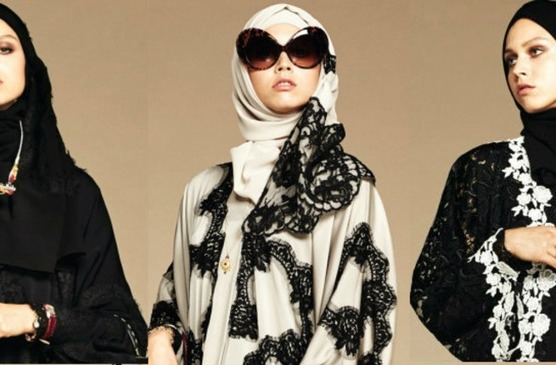
Dolce and Gabbana launched their first abaya collection in January 2016 and have released their second collection for Ramadan. 


By Jamilah Halfishi

Albawaba 

Several Western designer houses are clashing in their trials to attract the Arab client before the start of the Ramadan month, but fail to understand Arab’s shopping needs, and only look at these clients’ capacities to spend large amounts of money on daring accessories and expensive products.

In Great Britain and every year during this period, designers get prepared for Arab clients by offering new products and getting rid of the old, before their arrival in the summer.

There are some designer houses that understand, or at least understand the culture of their Arab client whose need for shopping increases during the month of Ramadan due to women’s need for elegant clothes and accessories 

These houses are now targeting the client in his own ground, by offering a unique collection specially designed for the month of Ramadan. Such attempts witness an acceptable success, because the designs often respect the eastern milieu and the Ramadan spirit, and at the same time, offer women new choices, instead of providing designs that only look at financial profits.

In other terms, many Arab women saw nothing different in the abayas designed by Dolce & Gabbana from the ones already made by Arab designers. The mistake of Dolce & Gabbana was their interest in iconic pieces with deep cultural meanings, that could only be understood by people living in this region or orientalists who had spend years studying Arab culture.

Such mistake drove Burberry fashion house to take a totally different policy by using a more simple language in dealing with the Arab client. The British fashion house decided to celebrate the opening of its immense shop in the U.A.E. last April with its traditional iconic trench-coat, by photographing leading Arab figures, wearing it, each in its own way.

Burberry also offered a unique collection ahead of the month of Ramadan, without referring to the abayas or caftans to reach Arab women’s wardrobe, but, instead, it kept its style as a British designer brand by respecting the Arab environment and the spiritual milieu of Ramadan.

Burberry Creative Director Christopher Bailey suggested a collection of long evening dresses, in addition to silk scarfs, stone embellished sandals, and expensive leather handbags, all designed in London and produced in Italy in small quantities.

In the month of Ramadan, Burberry and other designer houses discovered the increase of selling in the region. Therefore, some of these brands knew how to please their clients by offering modern styles that could be appreciated by Arab women rather than using traditional Arab pieces to reach Arab clients’ pockets.

Source: www.albawaba.com

Art Can Combat Islamophobia

By Anisa Mehdi Islamic Monthly “It’s important for mainstream Americans to hear Muslim voices,” says Omnia Hegazy, a singer-songwriter. Hegazy is not talking about political commentary, debunking Donald Trump or how some Muslims try to explain away the horrors of Daesh; she is talking about artist voices. With her acoustic guitar and bluesy lyrics backed up … Continued

Mashrou’ Leila is re-imagining Arab pop music

Patrick Dunn

Detroit News

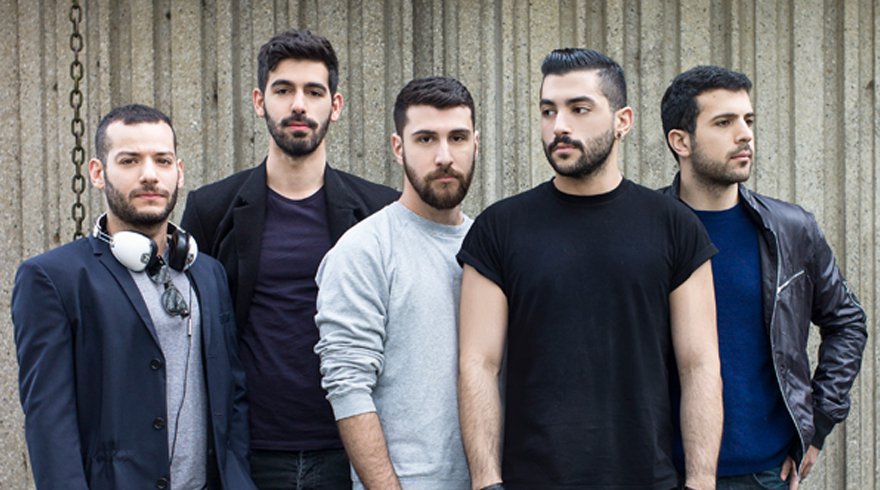
Lebanese indie-rock band Mashrou’ Leila is on a mission to rewrite the rules of Arab pop music, but its members didn’t start with the intention of being a full-fledged band at all.

The quintet got its start in 2008, when its members were all architecture and design students at the American University of Beirut. Guitarist Firas Abou Fakher says he and his bandmates-to-be had all played instruments casually in the past, but had largely set aside musical pursuits in favor of their studies.

Realizing their mutual interest in music, they began meeting informally to jam once a week. They played live for the first time only because one of their professors asked them to play a concert on campus, branching out into a performing career from there.

From the start, the group agreed that they would play only their own original music and not covers — certainly not the Arab pop music they’d all grown up hearing on the radio. Abou Fakher says he and his bandmates were disillusioned with mainstream Arab pop’s homogenized lyrics and sound.

“(Pop stars) change the way they look and the production changes, but at the core they’re still kind of discussing the same topics,” he says. “They’re still addressing the same ideas with very similar intentions, musically and lyrically. We’re just basically bored with it. It doesn’t talk to anybody. It doesn’t try to provoke any thoughts or any discussion about bigger issues or bigger sensitivities.”

Mashrou’ Leila’s lyrics, on the other hand, have been distinctly provocative throughout the band’s career. The song “Min el Taboor” off the group’s self-titled 2009 debut album proclaims, “We’ve been fighting for 50 years / The same war, we can’t forget / The country’s a waiting room / And the queue goes to the airport.” In addition to many other lyrics referring to Middle Eastern political strife, the band has repeatedly addressed homosexual relationships in a positive light (lead singer Hamed Sinno is openly gay).

Those progressive and outspoken stances have won Mashrou’ Leila a robust fan base in the Middle East, and, in recent years, the band has begun touring in Europe and the United States, as well. But the band has also encountered hostility — most recently in Jordan, where government officials canceled an April Mashrou’ Leila show on the grounds that the band’s material contradicted religious values.

“We hold a big amount of pride for the fact that our music has been able to disseminate as widely as it has, especially among Arab youth in sister countries,” Abou Fakher says. “On the other hand, we think it’s ridiculous that it’s still something that is questioned. It’s obvious to us that these things are so boring. They shouldn’t even be controversial.”

Abou Fakher expresses excitement for the band’s upcoming stop at the Grenadier Club — Mashrou’ Leila’s first Detroit show, and part of only their second U.S. tour. Abou Fakher says the band immediately started getting calls from excited fans when it announced the show close to the Arab-American center of Dearborn. But he says the band’s past American shows have attracted a “quite diverse” mix of Arab- and non-Arab-Americans.

Abou Fakher says the band’s mission is to present those audiences with more Arab music that he, his bandmates and other like-minded Arabs can be proud of. He says the Arab music industry is largely limited to performers who are “well-connected,” “very beautiful” and discovered at a very young age.

“We’re hoping to break these misconceptions about music,” Abou Fakher says. “We’re not trying to say it’s easy or everybody’s going to succeed. But once you have enough people trying, that’s when culture starts to be created.”

Mashrou’ Leila

8 p.m. Sat.

Grenadier Club

3101 McDougall, Detroit

Tickets: $45

facebook.com/events/1530088120654546/

Source: www.detroitnews.com

LA Times Review of ‘The Idol’

LA Times By: Sheri Linden There’s an irresistible pull to the story of Mohammed Assaf, the Palestinian wedding singer who made his way from a refugee camp in the Gaza Strip to the TV screens of tens of millions of fans. The same can be said of “The Idol,” an uneven but charmingly earnest fictionalized … Continued

The Idol: Hany Abu-Assad’s Tribute to Mohammed Assaf

PALESTINE SQUARE  By Khelil Bouarrouj The Idol by Hany Abu-Assad, an acclaimed Palestinian director with two Academy Award nominations to his credit, is set for imminent release in US theaters by adopt films. Unlike Paradise Now (2005), which trailed two would-be suicide bombers and Omar (2013), a cat-and-mouse tale about Palestinian collaborators and Israeli intelligence … Continued

AANM’s Arab Film Festival taking place June 3-12

The Lebanese box office sensation What About Tomorrow – consisting of old 8mm footage of performances of legendary singer/writer Ziad Rahbani’s play of the same name  ̶  will make its U.S. premiere during the Arab American National Museum’s 2016 Arab Film Festival, part of the Cinetopia International Film Festival June 3-12, 2016, at venues throughout southeast Michigan. Leyla Bouzid’s … Continued

LISTEN: Morocco is tired of getting the Hollywood treatment

Some of the sweeping scenes of Arabia in the 1962 movie Lawrence of Arabia were actually filmed in Morocco. Credit: Courtesy of Horizon Pictures Jake Warga Public Radio International Morocco is a very large movie set — from sands to cities. It’s served as a stand-in for Arabia in “Lawrence of Arabia,” Abu Dhabi in … Continued

640 Results (Page 25 of 54)