Advertisement Close

Culture

Embracing my mixed ethnicity

Sarah Abdelkahlek

Hatchet University 

As a child, I spent a lot of time in my mother’s hometown about 100 miles outside of Pittsburgh. This small, charming dot on the map has a population that is 97 percent white. Needless to say, I stood out with my tan skin, dark eyes and curls large enough to host all 7,597 people who live there. My unusual features sometimes elicited questioning looks, pointed fingers and snide remarks.

A few weeks after my fifth birthday, my mother and I stood in line at her favorite childhood restaurant. The bell on the entrance door dinged and an older couple entered. They took one look at me and my fair-skinned, hazel-eyed, blonde mother and commended her for adopting me. At the time, I was too young to understand how offensive this comment actually was but old enough to sense that it made my mother uneasy. It was clear that the couple was not ill-intentioned, but it highlighted the ignorance that surrounds my ethnic ambiguity.

Media Credit: Emily Robinson | Design Assistant
If I had a penny for every time someone has asked me “What are you?,” I could likely pay the full tuitions of every student in my class at GW. From strangers on the street to job interviewers to professors, the question does not seem off limits to anyone. I am not personally offended by the question, but it becomes a bit cumbersome to answer over and over again.

My initial response is always the same: “I am human.” Then I usually elaborate on my ethnicity. As easy as answering the question of “what I am” seems, it used to be hard for me. I hopelessly longed to blend in without being singled out. Now, however, I am proud to share that I am Egyptian American. But getting to this point was no easy feat: I had to reconcile the two very different sides of my family.

My parents, a small-town Pennsylvanian and an Egyptian immigrant, met at a restaurant in Pittsburgh in the early 1990’s. My father, eager to contribute to his new country, quickly joined the Marine Corps. My father proposed to my mother before leaving for boot camp, and they soon tied the knot, despite reluctance from both of their families. My mother’s family was surprised, as they thought she would end up with someone from her town, as many people did. They knew very little about my father and his ethnic background but eventually accepted him. My father’s family — almost 6,000 miles away in Egypt — did not get to meet my mother before she shared their last name. With time, they, too, came to love her as one of their own. Two years later, I was born. My parents named me Sarah — a name that has both Western and Arab roots.

My first language is English, but I have picked up some Arabic over the years, thanks to my paternal grandmother’s favorite Arabic-dubbed Turkish soap operas. She taught me the importance of serving guests with the finest tea and biscuits, burning bukhoor to freshen the house and making enough baklava to cover the thousands of miles between here and Egypt. She, along with the rest of my eccentric Egyptian family, urged me to take pride in my heritage. This, however, proved to be a lot easier said than done in a post-9/11 world.

In a time when anyone with dark features and a complicated, Arabic-sounding last name was labeled a “terrorist” or “terrorist sympathizer,” it seemed imperative to distance myself from some parts of my culture. For a long time, I desperately clung to things that made me “white.” I thought that packing a peanut butter and jelly sandwich for lunch instead of leftover koshary would make me more normal. I thought that spending hours straightening my unruly hair would make me more relatable. I thought that associating more with my mother’s white side of the family would make me more “American.” Maintaining this facade was exhausting, and naturally, I began to lose sense of who I truly was.

It was not until my junior year of high school when I realized the error of my ways. I was compiling pictures for a class project and stumbled upon old photos of our family trip to Egypt in 2008. In that moment, I was overcome by nostalgia, unhappiness and regret — mostly regret, though. How could I repress such an important part of my identity? Why would I acknowledge only one culture when I am lucky enough to have two?

Starting college was a pivotal moment in my journey to explore my mixed identity. I was surrounded by a diverse crowd: 3.5 percent of my fellow undergraduate students identify as multiple races. I recently learned that there is even a student organization at GW for those who “fill out more than one box on forms asking for race/ethnicity.” With so much diversity around me, I no longer feel like an outsider.

For instance, I met one of my best friends, who is half-German and half-Lebanese, in a religion course my freshman year. We immediately bonded over the struggle of having language barriers in the house and feeling divided on religious holidays. We also discussed how difficult it can be to form an identity when we feel we don’t fully fit because we’re only “half” or, conversely, too much of one and not the other.

Although staying true to both distinct halves of who I am has not always been effortless, I would not want it any other way. I embrace the fact that I can immerse myself in two cultures. I look forward to one day telling my future curly-haired kids my story, but in the meantime, you can catch me walking around campus shamelessly blasting Amr Diab or Justin Timberlake, with a Tasty Kabob gyro or Chick-fil-A sandwich in hand.

Source: www.gwhatchet.com
Oregon Arabs: think different

By Joseph Gallivan Portland Tribune Arabs and non Arabs turned out under alternating blue skies and drizzle at Oaks Park for the Arab American festival called Mahrajan on Saturday. Ranked in a circle around a music stage and portable dance floor were 10 commercial vendors and tables for six non-profits. The vendors were representing pan … Continued

Israelis, Palestinians ‘battle’ in backgammon game

BY DAPHNE ROUSSEAU

The Times of Israel


The Israelis and Palestinians were facing off in Jerusalem again — but this time they actually seemed to be enjoying each other’s company.

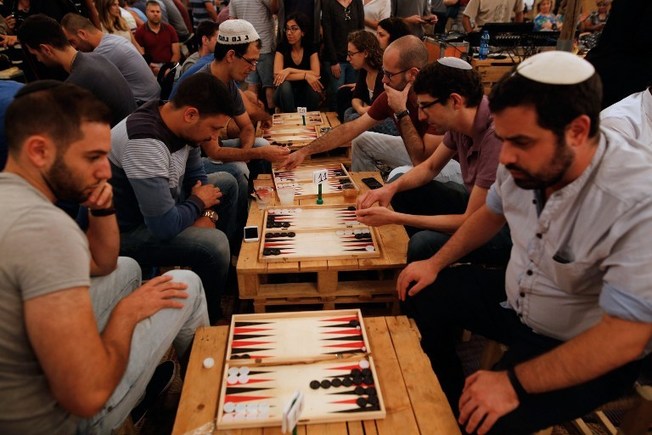
Dozens of Israelis and Palestinians, some with yarmulkes on their head and some with headscarves, gathered at a historic former train station in the divided city on Wednesday night for a backgammon tournament.

They smoked hookah water pipes, munched on ruby-red watermelon slices and listened to a band play Arab music as they matched wits in the board game popular throughout the Middle East.

For a few hours, concerns about violence and territory could be put aside for at least the illusion that the two peoples could live together.

“I remember the time when I spent nights here, in Tel Aviv or in Haifa,” said Abud, a Palestinian Christian in his 50s from Bethlehem who declined to give his last name.

“I had Israeli friends who came to see me in Bethlehem, to eat hummus or falafel.”

In front of him on the other side of the game board, Baruch Mehri, a retired Jewish man in his 70s originally from Iraq, took the opportunity to dust off his Arabic.

He and Abud traded insults while doubling over with laughter.

“As someone from Iraq, this atmosphere, the music, the language, the game, it’s what I dream of for this country,” Mehri said.

Brief co-existence
The tournament was organized over four nights in both the Palestinian and Jewish sections of Jerusalem. They required no special security.

Wednesday’s games were held in an area along the line between mainly Palestinian east and mostly Jewish west Jerusalem, at an Ottoman-era train station now home to bars and restaurants.

While Israelis and Palestinians live side-by-side in Jerusalem, there is very little mixing and constant tension. True coexistence remains a far-off dream.

But events like Wednesday’s backgammon tournament can provide a break from ever-present passions in a city holy to Jews, Christians and Muslims.

It was a group of young Palestinian and Israeli activists that decided to make a play at temporary peace with one of the world’s oldest board games.

They called it “Jerusalem Double” — a reference to when a player ups the ante of points and forces his opponent to match or concede.

Veiled Palestinian women, ultra-orthodox Jews wearing black yarmulkes, families pushing strollers and excited children gathered to watch at the train station.

“You know, for many people, this is the most interaction that they will have with an Arab or a Jew,” said Zaki Jamal, a Jewish man and one of the organizers.

Play fights
Mahmud al-Rifai, a Palestinian organizer, said that 150 people attended on the first night, while even more were at the second.

He said it included those who spoke of what they described as the good old days — perhaps with the help of an overly generous memory — when Jews, Muslims and Christians mingled more easily.

“The situation is not what the politicians try to sell to us,” he said. “Look at how much Jerusalem residents want something like this.”

In Arabic and in Hebrew, the game is called “shesh besh,” mixing Turkish and Persian to say “6” and “5”, as well as “tawle” for the Palestinians.

It’s a popular game among men who gather at cafes from the West Bank city of Ramallah, the Palestinian political capital, to Tel Aviv, Israel’s seaside commercial center.

Tournament organizers realized that the Palestinians played a variation called “mahbussa,” unknown to Jewish players.

The Israelis clear the checkers when they reach the edge of the board, while Palestinians stack them.

The difference — perhaps symbolically — caused endless lighthearted disputes between Abud and Mehri.

One volunteer proposed to mediate, leading the two men to break out in laughter.

For organizer Jamal, “there is something with backgammon that brings different people here — not only the usual peace activists, but also people who have no desire to talk about politics.”

“I think that we have put our finger on something,” he said.

Source: www.timesofisrael.com

Koshary: The Egyptian Dish Where East Meets West

BY: Zane Ziebell/Contributing Writer Imagine a bowl filled with steaming rice, two or three different kinds of pasta, lentils, and warm tomato sauce topped with freshly fried onions. Have you ever thought of such a random combination of ingredients before? When put together, the ingredients make Koshary, a popular dish among Egyptians that has come to … Continued

‘Israeli American’ Restaurants serving up traditional Arab dishes

  BY: Adriana Murray/Contributing writer Cultural appropriation seems to never go out of style, especially when it comes to food.  Los Angeles has become a nesting ground for trendy restaurants that specialize in serving renditions of traditional dishes from various cultures. In recent years, Israeli American restaurants have gained popularity in the city known for being one … Continued

The Rashid Legacy: How Music Preserved Arab Heritage in America

BY: Nisreen Eadeh/Staff Writer Most of Stanley Rashid’s life has been surrounded by vinyl records, audiotapes, and CDs carrying the legendary voices of Farid Al-Atrash, Fairouz, and Wadih Safi. His father, Albert Rashid, founded Rashid Sales Company in 1934 – the first exclusively Arab music company in America. Rashid Sales Company started in Detroit during … Continued

Film on Arab Americans seeks to remove prejudices 

By Maria Saporta

– Saporta Report

During the politically volatile season when some people mistakenly mention Arabs, Muslim, Islam and terrorists as if they were interchangeable, voices of reason and understanding are hoping to be heard.
One of those voices is Abe Kasbo, an Arab American who was born in Aleppo, Syria.

Slide of ALIF Institute before showing move
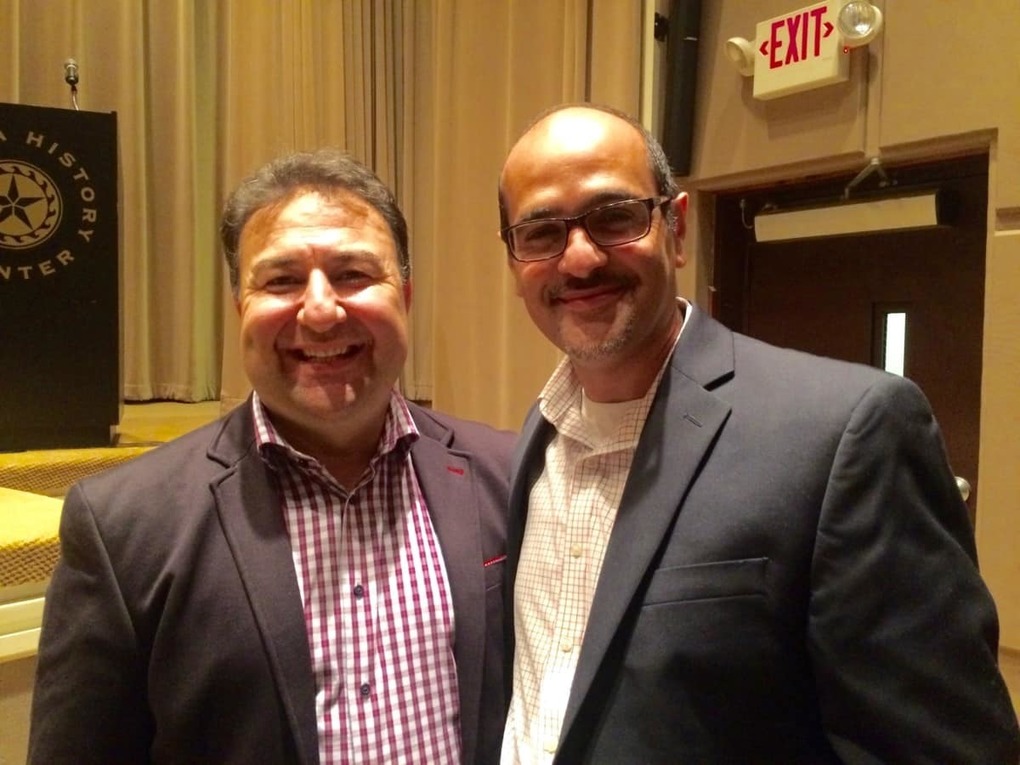
Kasbo has spent nearly 10 years working on a documentary to dispel some of those perceptions. The movie – “A Thousand and One Journeys: the Arab Americans” – had its Southern premier Sunday night at the Atlanta History Center.
The event was presented by ALIF Institute, an Atlanta-based organization that has the motto: “Where Arab Culture Lives.”
“Each one of you is a part of the history of this country,” Angela Khoury, executive director of the ALIF Institute, told the audience in the nearly sold-out auditorium. “Be a vibrant part of the future.”
Kasbo said he started thinking about making the film in 2006, and he remembered talking to Nidal Ibrahim in 2007. At the time, Ibrahim was editor and publisher of the Arab American Business Magazine, and today he is an account executive with the Atlanta Business Chronicle.
“I’m proud to play a small part in getting this film to Atlanta,” Ibrahim said Sunday night. “One of the reasons it was so important to bring it here is because we live in politically turbulent times right now.”
Ibrahim went on to to say: “We have an obligation to fill the vacuum; people who seek to define us will do so if there’s a void. We too often are insular in our communities.”
Looking around the room, Ibrahim said they were pleased to fill the auditorium with a diverse audience.
“We are very proud we were able to fill this place with 40 percent of the folks who are here are of non-Arab descent,” he said. “That was our goal.”
Kasbo, who moved to the United States from Syria when he was 10 years old, said the film cost about $700,000, “We raised $150,000,” Kasbo said. “This is not the definitive film.”
Ideally, the history of Arab Americans would be a six-hour series that could be aired over several nights. Kasbo said he has reached an agreement with PBS to have it distribute the film in 2017 – provided it can raise another $20,000.

Filmmaker Abe Kasbo thanks Nidal Ibrahim for helping organize the Southern premier of his film (Photo by Maria Saporta)
“A Thousand and One Journeys: the Arab Americans” tracks the immigration of Arabs to America from the 1860s to the present – explaining the differences among the various waves. The first wave included primarily Arab Christians, many who were largely uneducated with many settling in Brooklyn to work in the textile industry. And the immigrants weren’t just Arab Christians. Syrian Jews also immigrated in the late 1800s and early 1900s.
By the end of World War I, following the fall of the Ottoman Empire, about 250,000 Arabs called America home. During World War II, 15,000 Arabs served in the Armed Forces, there were Arab communities in Dearborn, Michigan; Boston, Ma.; Utica, New York, East Toledo, Ohio; Oklahoma; and even North Dakota, where the first mosque in the United States was located.
Most of the Syrians immigrants in that day were Christians, but people in America assumed they were Muslim. The second wave of Arab immigration happened after World War II, and many of them were Palestinians, fleeing the conflicts in the Middle East. They mostly practiced Islam, were well educated and assimilated into American society.
But that all changed after the terrorist attacks on Sept. 11, 2001. A Palestinian comedian said in the movie that night he went to bed a white guy and woke up as an Arab. Few people realize that only 10 percent of those who practice Islam are Arab.
“The message has really been owning us,” said Kasbo, adding that Arabs crossed over various religious lines.
One way the film hopes to change people’s perception it is by identifying Arabs who have made a difference in America.
Among the Arab Americans interviewed or portrayed in the movie included Sen. George Mitchell, actor Jamie Farr, consumer advocate Ralph Nader, General John Abizaid, Pulitzer Prize winner Anthony Shadid, former White House correspondent Helen Thomas, Indianapolis 500 legend Bobby Rahal, and actor Danny Thomas, who was the founder of the St. Jude Children’s Research Hospital.
“The Arab-American experience is truly an American story,” Kasbo said in statement before the Atlanta showing. “Just like Polish and Italian Americans, the immigration of Arabic speaking people to the United States and their evolution into integral, productive citizens is a purely American phenomenon. As Americans, we can only complete our story when we recognize everyone else’s story.”

Source: saportareport.com

Eid Al Adha to fall on 9/11? American Muslims fear backlash

If Eid Al Adha falls on 9/11, the Muslim community fears that people will misinterpret the festivities as a celebration of the attacks.

Khaleej Times

While millions of Muslims throughout the world are gearing up to rejoice and reflect Eid Al Adha, many fear a potentially fraught coincidence. 

As reported by New York Times, according to the lunar calendar for Muslims, Eid Al Adha looks likely to fall on September 11 this year — the same day when the World Trade Centre and Pentagon were attacked 15 years ago. The Al Qaeda act in 2001 claimed the lives of nearly 3,000 people. 

Eid Al Adha – also known as “Feast of the Sacrifice”, is very much a community festival when people exchange greetings and visits, and tend to be more tolerant, giving and forgiving. If Eid Al Adha falls on 9/11, the Muslim community in the US fears that people will misinterpret the festivities as a celebration of the attacks.

“Some people might want to make something out of that,” Habeeb Ahmed, who was recently elected president of the Islamic Center of Long Island, told New York Times, adding that he could foresee people saying, “Look at these Muslims, they are celebrating 9/11.””

The fears have reportedly intensified security concerns in New York, even more so, after the killings of an imam and his assistant in Queens this month.

“Our community is like, ‘What are we supposed to do?'” Linda Sarsour, the executive director of the Arab American Association of New York, told New York Times. She said she had sat through extensive meetings with other leaders grappling with the possibility and how best to prepare for it.

“It’s on the minds of every Muslim leader in the country right now,” added Robert McCaw, the director of government affairs at the Council on American-Islamic Relations.

Eid Al Adha date will be announced by the moon-sighting committee based on Zul Hijjah crescent, which is the 12th and last month of the Islamic calendar.

Source: www.khaleejtimes.com

5 Women on What It’s Like to Be Young and Arab in Paris

BY ALICE PFEIFFER ELLE Magazine On August 24, a group of armed police officers forced a woman to remove clothing that resembled a burkini on a beach in Nice, France. The incident not only humiliated an innocent woman, but pointed to a frightening escalation of the continued oppression of Muslim minorities in the country–all under … Continued

Ancient Egyptian works to be published together in English for first time

Dalya Alberge

The Guardian

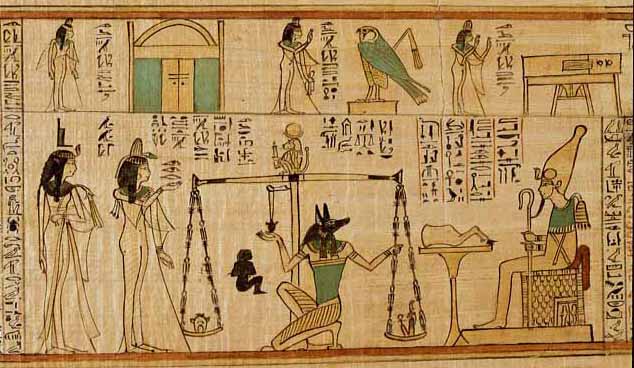
Ancient Egyptian texts written on rock faces and papyri are being brought together for the general reader for the first time after a Cambridge academic translated the hieroglyphic writings into modern English.

Until now few people beyond specialists have been able to read the texts, many of them inaccessible within tombs. While ancient Greek and Roman texts are widely accessible in modern editions, those from ancient Egypt have been largely overlooked, and the civilisation is most famous for its monuments.

The Great Pyramid and sphinx at Giza, the tombs in the Valley of the Kings and the rock-cut temples of Abu Simbel have shaped our image of the monumental pharaonic culture and its mysterious god-kings.

Carved text from pyramid. Photograph: Dalya Alberge
Toby Wilkinson said he had decided to begin work on the anthology because there was a missing dimension in how ancient Egypt was viewed: “The life of the mind, as expressed in the written word.”

The written tradition lasted nearly 3,500 years and writing is found on almost every tomb and temple wall. Yet there had been a temptation to see it as “mere decoration”, he said, with museums often displaying papyri as artefacts rather than texts.

The public were missing out on a rich literary tradition, Wilkinson said. “What will surprise people are the insights behind the well-known facade of ancient Egypt, behind the image that everyone has of the pharaohs, Tutankhamun’s mask and the pyramids.”

Hieroglyphs were pictures but they conveyed concepts in as sophisticated a manner as Greek or Latin script, he said. Filled with metaphor and symbolism, they reveal life through the eyes of the ancient Egyptians. Tales of shipwreck and wonder, first-hand descriptions of battles and natural disasters, songs and satires make up the anthology, titled Writings from Ancient Egypt.

Penguin Classics, which is releasing the book on Wednesday, described it as a groundbreaking publication because “these writings have never before been published together in an accessible collection”.

Wilkinson, a fellow of Clare College and author of other books on ancient Egypt, said some of the texts had not been translated for the best part of 100 years. “The English in which they are rendered – assuming they are in English – is very old-fashioned and impenetrable, and actually makes ancient Egypt seem an even more remote society,” he said.

In translating them, he said, he was struck by human emotions to which people could relate today.

The literary fiction includes The Tale of the Shipwrecked Sailor, a story of triumph over adversity that Wilkinson describes as “a miniature masterpiece”. It is about a magical island ruled by a giant snake – his body “fashioned in gold, his eyebrows in real lapis lazuli” – who shares his own tragedy in encouraging a shipwrecked sailor to face his predicament.

“I was here with my brothers and my children … we totalled 75 snakes … Then a star fell and they were consumed in flames … If you are brave and your heart is strong, you will embrace your children, you will kiss your wife and you will see your house,” it reads.

Letters written by a farmer called Heqanakht date from 1930BC but reflect modern concerns, from land management to grain quality. He writes to his steward: “Be extra dutiful in cultivating. Watch out that my barley-seed is guarded.”

Turning to domestic matters, he sends greetings to his son Sneferu, his “pride and joy, a thousand times, a million times”, and urges the steward to stop the housemaid bullying his wife: “You are the one who lets her do bad things to my wife … Enough of it!”

Other texts include the Tempest Stela. While official inscriptions generally portray an ideal view of society, this records a cataclysmic thunderstorm: “It was dark in the west and the sky was filled with storm clouds without [end and thunder] more than the noise of a crowd … The irrigated land had been deluged, the buildings cast down, the chapels destroyed … total destruction.”

The number of people who can read hieroglyphs is small and the language is particularly rich and subtle, often in ways that cannot be easily expressed in English.

Wilkinson writes: “Take, for example, the words ‘aa’ and ‘wer’, both conventionally translated as ‘great’. The Egyptians seem to have understood a distinction – hence a god is often described as ‘aa’ but seldom as ‘wer’ – but it is beyond our grasp.”

Words of wisdom in a text called The Teaching of Ani remain as true today as in the 16th century BC: “Man perishes; his corpse turns to dust; all his relatives pass away. But writings make him remembered in the mouth of the reader.”

Source: www.theguardian.com

The origins of Arab sweets

AYA ABI HAIDAR StepFeed Arabic sweets originate from many different cultures due to civilizations that occupied the region, such as the Ottomans and Mamluks. These sweets are very unique in their taste and special ingredients are used when they are made. They are especially popular during the month of Ramadan due to their nutritional benefits. Below … Continued

1,695 Results (Page 108 of 142)