
Advertisement Close

Culture

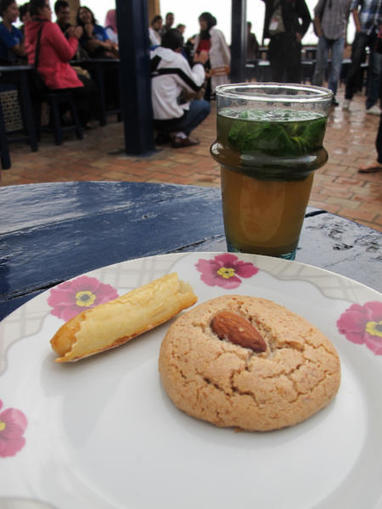
Serving tea, Islam and understanding in Cleveland

How one man and his tea house are trying to foster a sense of understanding and community in the US city of Cleveland. By Angelo Merendino Aljazeera Cleveland, US – Ayman Alkayali is no stranger to feeling like a foreigner. Ayman’s parents were born in Palestine: his mother in Jaffa and his father in Ramla. … Continued

American Delivery Service Supports Local Palestinian Businesses

BY:  Kristina Perry/Contributing Writer Growing from the recent boom in subscription goods services, PalBox is a fair trade and 501(c)(3) organization that sends organic and cultural Palestinian goods in a quarterly box. Half of all proceeds from purchases of PalBox benefit the International Solidarity Movement, a nonviolent means of resisting Israeli occupation and oppression. Inside the … Continued

The Beauty Of An Arab American Ramadan

Nesreen Issa
The Huffington Post

In Arab countries, you count the days in anticipation of Ramadan. In the United States, we also count the days as we wait for Ramadan. We close our eyes and day-dream about its spiritual details, which, in a way, we miss out on. We fantasize about listening to the morning call to prayer that signals the beginning of our fast — we imagine it as if it were coming straight from the mosque’s minaret. Our hearts beat as we imagine the maghreb (sunset) call to prayer.

Ramadan in the United States is not as dreary as some people may think. The Muslim diaspora here is large, and the ties between them grow stronger during Ramadan. Mosques and homes become decorated with religious symbols, such as lanterns and crescents.

If you walk into Arab grocery stores, you would definitely get a taste of Ramadan. You’d run into people asking about the price of dates, or buying Vimto — a Ramadan favorite — or looking for a crescent-shaped ornament to place on their doors. At the end of the day, you’ll have an iftar table, large or small, with a special Ramadan flair.

We eat katayef (a Ramadan pastry) like everyone else does, but the difference is that we bake it at home. We go through the hassle so that we’d be able to hold the piece of katayef in our hands, take in its scent, and say that we are truly observing Ramadan.

In the United States, unlike in Arab countries, Muslims exert extra effort to create a Ramadan atmosphere.

If you’ve lived in the United States your whole life, you wouldn’t find it difficult to enjoy Ramadan. You would be able to get together with your family and relatives, and have an experience similar to that of any other Muslim in the Arab world.

If you were a visitor to the United States, and your trip happened to coincide with Ramadan — don’t worry or despair. If you want to retain that spiritual experience this Ramadan, you should try to go to cities where there is an abundance of Arab restaurants, such as Chicago, and you’ll find Ramadan in one of them. You will see other Muslims waiting for the call to prayer so that they could start eating. Everyone there will be fasting like you, and will say a prayer before they break their fast with a glass of water and dates. You won’t feel like you’re missing out just because you’re in the United States.

You’ll feel as if you’re experiencing all the Ramadans of the world, combined in one Ramadan in America.
The night prayers during the last 10 days of Ramadan are particularly beautiful here. If you go to the mosque at midnight, you would find young and old worshippers, parents and students, united in worship until sunrise. Many Muslims here — those who speak Arabic and those who don’t — make an effort to read the Quran in full throughout the month.

The diaspora here works really hard, and they work even harder during Ramadan. They organize events, group iftars and charity banquets at mosques and schools. They also organize Quran competitions, in which young and old Muslims from Turkey, Ethiopia, and Arab countries participate. We do all this with love, and we try to breathe that love into our children, so that Ramadan may become a shining light, even away from home.

The taraweeh prayers (special night prayers) make up a central part of Ramadan. Are taraweeh prayers different in the United States? I would say yes, but the difference is not necessarily for the worse. I have lived in Arab countries as well as in the United States, and I used to attend taraweeh prayers there — and I miss the company at the mosque and the taraweeh sermon. But taraweeh prayers in the United States will also make you feel like you’re observing Ramadan. You’ll walk into the mosque and you’ll find it beckoning you, as if saying: “I have Ramadan here, come!”

You’ll run into Palestinians, Syrians, and Indians, and you’ll exchange smiles with a Sudanese or an Egyptian Muslim from across the room. You’ll hear “Ramadan Mubarak” from a Pakistani Muslim. At that point, you’ll feel as if you’re experiencing all the Ramadans of the world, combined in one Ramadan in America.

Ramadan is part of our identity, wherever we are. We will keep observing Ramadan to show the whole world that it is is alive in our hearts.

Source: www.huffingtonpost.com

Standup Comedian Mo Amer is a proud Texan and Arab American

By P.F. Wilson 

City Pages


“I was born in Kuwait after the first Gulf War,” says comedian Mo Amer, “or, as I like to call it ‘The Prequel.’” Born to Palestinian parents, Amer lived a comfortable life in Kuwait. “People ask, ‘Why did you leave?’ Very simple. Our house spoke to us.” Houses don’t speak, of course, unless they are in, say, Amityville, New York, but Amer elaborates: “If a bomb lands a 100 feet from your house, it will speak to you. Boom! ‘Get out!’”

Amer’s parents sent him and his brother to the U.S. when he was about nine years old. Fortunately, he was fluent in English, although there was still some culture shock. “I went to a nice, private British school in Kuwait,” he says. “I spoke British English. I wore a bow tie and a vest.”

Until their parents came to America, Mo’s brother was his guardian, and enrolled him in public school in Houston. “My brother neglected to tell them I spoke English, so they put me in an English as a second language class. I was the only guy who spoke English.” His classmates immediately began speaking Spanish to him. “I have no idea what you’re talking about,” he says in an English accent. “I think my parents sent me to the wrong country!”

Sadly, Amer’s father passed away just a few years after he came to Texas. When he wasn’t skipping school, Amer began acting out in class. A teacher intervened, and encouraged him channel that energy into more artistic pursuits. Having seen Bill Cosby at the Astrodome a few years earlier, Amer decided comedy would be his focus. 

Watching Amer perform today, his Arab/British English background isn’t immediately apparent, as he is decidedly a Texan. “Damn right,” he agrees. “I do take pride in being a Texan. All my memories and childhood friends I grew up with are from there, so I absolutely have an affinity and a special place in my heart for Texas.”

He does go into his heritage quite a bit onstage, however, such as when he talks about performing in the South. “I was working in Arkansas, and everything was going great,” he tells an audience. “People are laughing, and then I say I’m an Arab-American. Suddenly the whole room gets quiet. One guy in the back goes, ‘Ah, hell no.’ One black couple got up and left.”

Amer isn’t averse to poking fun at his culture, though, or even his own name. “I didn’t know how popular my name was until I watched the Egyptian soccer team on ESPN Deportes,” he says. “They were showing the play-by-play: ‘Mohammad has the ball and passes to Mohammad to Aqmed to Mohammad to Mohammad, back to Mohammad, Mohammad to Mohammad to Aqmed to Mohammad. Mohammad! Goal!’ Was that just one guy on the team passing the ball to himself?”

That bit always kills with audiences, but as an observer of all things, including culture, Amer is keenly aware of the current U.S. climate — one that in some circles is hostile to his culture. That’s why, he feels, it’s even more important that he be a successful comic.

“People will look at it and go, ‘Wow, this guy did it in this time,’” he says, “because when I first started, 20 years ago, there was only like two or three of us that were doing standup from my background.” Amer feels he has an obligation to future generations. “I want to introduce people, through this art form, that we’re something other than terrorists or the evil Muslims that are often portrayed in the media.”

“It’s surprising America hasn’t learned from its previous mistakes and continues to experience the same crap it did with Japanese Americans in World War II or black people in the Civil Rights movement, and way before that,” he says. “I think it’s really important to be able to introduce our community to people so they can see who we really are, and I think standup is great for that purpose. I love being a standup for that reason. I get to talk about things from my perspective and my own experiences and people can walk away with a new perspective. But it’s not a specific agenda. My goal is to be hilarious.”

Source: www.citypages.com

Dip into Lebanese cooking

Rita Heikenfeld

Cincinnati.com

I’m more than opinionated when it comes to ethnic foods. The recipes found in a book can’t compare to what you learn hands on from someone who has cooked the dishes for years.

I can attest to that since the Lebanese dishes I learned from my mom, sisters, aunts and friends like Joe and Marylou Zarick are authentic ones, lovingly taught and handed down for generations. Most of the ingredients aren’t measured.

“Hands are my measurements,” my mom used to say.

My family loves the Lebanese food I cook now, but I have to say that mom’s still was better.

One dish we make is our yogurt dip, with Laban/homemade yogurt, cucumber, mint and garlic. Making this dip with homemade yogurt results in a pretty loose mixture, even when I strain the yogurt overnight. So the recipe I’m sharing today uses strained Greek yogurt, which results in a thick, creamy dip.

I’m also sharing my family’s recipe for hummus which I’ll be making live on June 9 with my Fox 19 friends at 9:45 a.m. We’ll be chatting about the annual Lebanese festival, Mahrajan, at St. Anthony of Padua Church on June 12 and I’ll be making my hummus on the show.

Yogurt cucumber dip

You can buy Greek yogurt already strained. I have to thank Kay Hitzler, a West Side reader and dear friend, for allowing me to adapt her original recipe.

This is always included on our mezze/appetizer plate when I fix a Lebanese dinner. We use Lebanese flat bread to scoop it up. Ditto with the hummus recipe I’m sharing.

1 English or regular large cucumber, peeled if desired, seeded, shredded

Salt

1-1/2 cups plain Greek yogurt, strained

1 teaspoon garlic, minced or more to taste

2 tablespoons extra virgin olive oil

1 tablespoon lemon juice or more to taste

Palmful of fresh chopped mint (I use peppermint; most people use spearmint)

Salt to taste

Place shredded cucumber in strainer over a bowl and sprinkle with a little salt and let stand for 15 minutes. Meanwhile, place yogurt in a strainer (unless you bought already strained yogurt) and let drain for 15 minutes, then discard liquid. Squeeze the cucumber in a towel to remove as much liquid as possible. Mix everything together.

Tip from Rita’s kitchen

Remove seeds from regular cucumber

Cut in half longways and take a small spoon and run it down the center, scooping up seeds. No need to do this with English cukes, as their seeds are tiny.

Why this recipe is good for you:

• Garlic and olive oil are good for your heart

• Vitamin C in lemon helps your immune system and helps detoxify your liver

• Mint is high in fiber and good for digestion.

• Greek yogurt has more protein than regular.

Rita’s easy hummus

Hummus is a popular and expensive deli item. Making your own will give you a greater yield, taste so good, and is economical. If too thick, add a little water.

1 can, 15 ounces, chick peas, drained

1 teaspoon minced garlic

Lemon juice, olive oil and Tahini (ground sesame seed “paste”) to taste – start with 3 tablespoons each

Salt to taste

Cumin to taste – start with a teaspoon

Whole milk Greek yogurt to taste – start with 1/4 cup

Mash chickpeas by hand or in food processor until of desired smoothness. Add everything else and mix until well blended, either in food processor or by hand.

Why this recipe is good for you:

• Chickpeas contain protein and calcium.

• Tahini is sesame seed paste and high in protein.

• Cumin is a good source of iron.

Lebanese festival details

St. Anthony of Padua Maronite Catholic Church Lebanese Festival Mahrajan

When: Noon to 8 p.m. Sunday, June 12

Where: 2530 Victory Parkway, Cincinnati

Info: 961-0120.

Events: Middle Eastern dancing, shopping, raffle, kids games and prizes.

Food: Homemade Lebanese cuisine: kibee, grape leaves, tabouleh, falafel, vegetarian, pastries, and much more.

Source: www.cincinnati.com

Q&A: What Is Ramadan and Why Do Muslims Fast All Day?

Associated Press


Millions of Muslims around the world on Monday marked the start of Ramadan, a month of intense prayer, dawn-to-dusk fasting and nightly feasts. Others will begin fasting a day later, Tuesday, due to a moon-sighting methodology that can lead to different countries declaring the start of Ramadan a day or two apart.

Here are some questions and answers about Islam’s holiest month:

___

WHY DO MUSLIMS FAST?

The fast is intended to bring the faithful closer to God and to remind them of the suffering of those less fortunate. Ramadan is a time to detach from worldly pleasures and focus on one’s inner self.

It’s seen as a way to physically and spiritually purify, refraining from habits such as smoking and caffeine. Muslims often donate to charities during the month and feed the hungry. Many spend more time at mosques during Ramadan and use their downtime to recite the Quran.

London’s new Muslim mayor, Sadiq Khan, wrote in the Guardian that he plans to use Ramadan to “build bridges” and break bread with Muslims and non-Muslims around the city at synagogues, churches and mosques, though he acknowledged that 19-hour-long fasts during the longer summer days in Europe and forgoing coffee will be challenging.

Fasting during Ramadan is one of the five pillars of Islam, along with the Muslim declaration of faith, daily prayer, charity, and performing the hajj pilgrimage in Mecca.

___

HOW DO MUSLIMS FAST?

Observant Muslims abstain from eating and drinking from dawn to dusk for the entire month of Ramadan. A single sip of water or a puff of a cigarette is enough to invalidate the fast.

However, Muslim scholars say it’s not enough to just avoid food and drinks during the day. Ramadan is also an exercise in self-restraint. Muslims are encouraged to avoid gossip and arguments. Sexual intercourse between spouses is also forbidden during the daytime fast.

Just before the fast, Muslims have a pre-dawn meal of power foods to get them through the day, the “suhoor.” Egyptians eat mashed fava beans called “ful,” spiced with cumin and olive oil, while in Lebanon and Syria, popular suhoor food is flatbread with thyme, cheese or yogurt. In Afghanistan, people eat dates and dumplings stuffed with potato and leeks, first steamed, then fried.

___

HOW DO MUSLIMS BREAK THEIR FAST?

Muslims traditionally break their fast like the Prophet Muhammad did some 1,400 years ago, with a sip of water and some dates at sunset. That first sip of water is the most anticipated moment of the day.

After sunset prayers, a large feast known as “iftar” is shared with family and friends. Iftar is a social event as much as it is a gastronomical adventure. Across the Arab world, apricot juices are an iftar staple. In South Asia and Turkey, yogurt-based drinks are popular.

Every night of Ramadan, mosques and aid organizations set up tents and tables for the public to have free iftar meals.

But large crowds at mosques can also be targets for extremists. As the war with the Taliban intensifies, Afghan and U.S. military officials have said they expect attacks to increase during Ramadan. Nigerian intelligence officials also say the extremist Boko Haram group plans to attack Muslims during morning and evening prayers.

___

CAN MUSLIMS BE EXEMPTED FROM FASTING?

Yes. There are exceptions for children, the elderly, those who are ill, women who are pregnant, nursing or menstruating, and people traveling, which can include athletes during tournaments.

Many Muslims, particularly those living in the United States and Europe, are accepting and welcoming of others around them who aren’t observing Ramadan.

However, non-Muslims or adult Muslims who eat in public during the day can be fined or even jailed in some Mideast countries, such as Saudi Arabia and the United Arab Emirates, which is home to large Western expat populations in Dubai and Abu Dhabi. In many predominantly Muslim countries like Indonesia, karaoke bars and nightclubs are closed across much of the country for the month. Restaurants there use curtains to conceal customers who eat during the day.

And in Egypt, the Dar al-Ifta, which is the main authority in charge of issuing religious edits, on Monday warned against eating in public, saying this is not an act of “personal freedom, but chaos — an assault on Islam.”

In China, minority Uighur Muslims complain of heavy restrictions by the Communist Party, such as bans on fasting by party members, civil servants, teachers and students during Ramadan, as well as generally enforced bans on children attending mosques, women wearing veils and young men growing beards.

___

WHAT ARE SOME RAMADAN TRADITIONS?

Typically, the start of the month is welcomed with the greeting of “Ramadan kareem!” Another hallmark of Ramadan is nightly prayer at the mosque among Sunni Muslims called “taraweeh.”

Egyptians have the tradition of Ramadan lanterns called the “fanoos,” often the centerpiece at an iftar table or seen hanging in window shops and from balconies. In the Arabian Gulf countries, wealthy families hold “majlises” where they open their doors for people to pass by all hours of the night for food, tea, coffee and conversation.

Increasingly common are Ramadan tents in five-star hotels that offer lavish and pricey meals from sunset to sunrise. While Ramadan is a boon for retailers in the Middle East and South Asia, critics say the holy month is increasingly becoming commercialized.

Scholars have also been disturbed by the proliferation of evening television shows during Ramadan. In Pakistan, live game shows give away gifts promoting their sponsors. In the Arab world, month-long soap operas starring Egypt’s top actors, rake in millions of dollars in advertising.

___

HOW DO MUSLIMS MARK THE END OF RAMADAN?

The end of Ramadan is marked by intense worship as Muslims seek to have their prayers answered during “Laylat al-Qadr” or “the Night of Destiny.” It is on this night, which falls during the last 10 nights of Ramadan, that Muslims believe that God sent the Angel Gabriel to the Prophet Muhammad and revealed the first versus of the Quran.

The end of Ramadan is celebrated by a three-day holiday called Eid al-Fitr. Children often receive new clothes, gifts and cash.

Muslims attend early morning Eid prayers the day after Ramadan. Families usually spend the day at parks and eating — now during the day.

Source: www.nytimes.com

20 Arabic Proverbs We Love

By: Yusra Al Shawwa/Contributing Writer Proverbs have played a meaningful role in Arabic literature, poetry, and everyday conversation. Here are some of the most timeless proverbs translated from Arabic to English.          

Iraq native offers Arab culture classes 

By KEITH COUSINS

CDPRESS.COM


One of Michael Paul’s fondest memories of the beginning of his American journey took place after he drove his Jeep through a car wash in Post Falls.

When the wash was complete Paul, a native of Iraq, got out to dry the Jeep off and inadvertently locked his keys, wallet and phone inside. Unsure of what to do, Paul told The Press that he walked into a nearby laundromat, where the employee suggested he use their phone to call 911.

An officer Paul described as an amazing guy with a big smile arrived shortly after and quickly assisted him with getting into his car. The small act of kindness, Paul said, changed his life.
“Where I come from, the cop is against me because we do not have freedom,” he said. “The concept of a cop helping me open my car was something so different.”
Paul, who worked with the Navy as a cultural adviser and interpreter during Operation Iraqi Freedom, said there are countless examples of people in North Idaho helping him bridge the gap between the culture of his homeland and his new home in America. Now, he wants to return the favor.
On June 16, Paul will lead the first of a three-week seminar entitled “Language and Culture Series: Arabic” at The Salvation Army Ray and Joan Kroc Center, located at 1765 W. Golf Course Road, in Coeur d’Alene. The seminar, which lasts two hours each Thursday and begins at 6 p.m., will focus on the language, culture, art, music, and architecture of the Middle East.
“We’ll end it with a session on food and the nutrition we put on our tables,” Paul said. “I will make a demonstration for them, I cook very well.”
Paul said he recognizes that he is a minority in North Idaho, and quickly realized there is a natural cultural barrier. The idea for the seminar, which he plans to eventually bring to other parts of the country, is to share the beauty of his culture with the community he has grown to love, he added.
“The majority of people in our community doesn’t realize how much we have in common,” Paul said. “I love the Northwest because there is a lot of similar things here. For example, people here are very generous of their time and effort — they want to invite you to their house and share their food with you.”
The beauty Paul hopes to share, he added, is lost when individuals adopt a “They vs. I” attitude about others. Paul said he believes no human being wants to offend another person, but sometimes perception and the outside world paint others in a way that separates.
“There is bias everywhere in the world. But, I’ve always believed that explanation and understanding can fix any problem,” Paul said. “I want to be a bridge that connects the two and fills those gaps.”
For more information, or to register for the seminar, contact the Kroc Center at (208) 667-1865.

Source: cdapress.com

Arabic Weather Term ‘Haboob’ Offends Texans #HummusHaters

With all the anti-Arab bashing we see in the news every week, Arab America is determined to expose those who discriminate against our community. We will recognize those who vilify the positive influence and contributions Arabs have made to the fabric of American society. And we will use hummus as our weapon. By naming those … Continued

‘I am Palestinian and I am human’ — and Leanne Mohamad, 15, is disqualified from UK speaking competition

By Jonathan Ofit Mondoweiss Last week, a video of a 15-year-old student at Wanstead high-school in London named Leanne Mohamad went viral. Leanne, a Palestinian, was taking part in the Jack Petchey Speak Out Challenge, where she won a regional final with her speech “Birds not Bombs”. The Jack Petchey-sponsored competition is an English competition … Continued

1,673 Results (Page 113 of 140)