Advertisement Close

Religion

Michigan’s Chaldean Community Discusses Freedom of Religion in the Middle East

BY: Weam Namou/Ambassador Blogger Tina Ramirez is the president and founder of Hardwired, an organization that provides legal guidance for victims of religious oppression. Ramirez visited Michigan’s Chaldean Community Foundation on Thursday to discuss with leaders her upcoming trip to Iraq in mid-October. Among other things, she is trying to help pass a resolution that … Continued

A Muslim woman in Playboy. What could go wrong?

BY HANNAH ALLAM McClatchy DC It doesn’t matter that she’s fully covered, wearing a shiny headscarf and leather jacket. It doesn’t matter that she speaks passionately about media distortions of minority communities. And it doesn’t matter that she’s collaborated on a fashion line whose proceeds help to fight human trafficking. Noor Tagouri is a Muslim … Continued

American Muslim Leaders meet with President Rouhani of Iran in New York

MPAC On Tuesday afternoon in New York, a group of more than 30 American Muslim leaders met with Dr. Hassan Rouhani, the newly elected President of the Islamic Republic of Iran. Among the leaders present were Salam Al-Marayati, president of the Muslim Public Affairs Council, and Imam Mohamed Magid, president of the Islamic Society of North America. The … Continued

Islamaphobia in America: 15 years after 9/11

In the lead-up to the 15th anniversary of the September 11 attacks, Muslim-Americans say they are once again under intense scrutiny. The U.S. presidential campaign has further stoked Islamophobia, and an important Muslim holiday Eid Al-Adha falls too close to the anniversary for comfort. CCTV America’s Liling Tan reported on how New York’s American-Muslim community … Continued

Eid Al Adha to fall on 9/11? American Muslims fear backlash

If Eid Al Adha falls on 9/11, the Muslim community fears that people will misinterpret the festivities as a celebration of the attacks.

Khaleej Times

While millions of Muslims throughout the world are gearing up to rejoice and reflect Eid Al Adha, many fear a potentially fraught coincidence. 

As reported by New York Times, according to the lunar calendar for Muslims, Eid Al Adha looks likely to fall on September 11 this year — the same day when the World Trade Centre and Pentagon were attacked 15 years ago. The Al Qaeda act in 2001 claimed the lives of nearly 3,000 people. 

Eid Al Adha – also known as “Feast of the Sacrifice”, is very much a community festival when people exchange greetings and visits, and tend to be more tolerant, giving and forgiving. If Eid Al Adha falls on 9/11, the Muslim community in the US fears that people will misinterpret the festivities as a celebration of the attacks.

“Some people might want to make something out of that,” Habeeb Ahmed, who was recently elected president of the Islamic Center of Long Island, told New York Times, adding that he could foresee people saying, “Look at these Muslims, they are celebrating 9/11.””

The fears have reportedly intensified security concerns in New York, even more so, after the killings of an imam and his assistant in Queens this month.

“Our community is like, ‘What are we supposed to do?'” Linda Sarsour, the executive director of the Arab American Association of New York, told New York Times. She said she had sat through extensive meetings with other leaders grappling with the possibility and how best to prepare for it.

“It’s on the minds of every Muslim leader in the country right now,” added Robert McCaw, the director of government affairs at the Council on American-Islamic Relations.

Eid Al Adha date will be announced by the moon-sighting committee based on Zul Hijjah crescent, which is the 12th and last month of the Islamic calendar.

Source: www.khaleejtimes.com

In massive shift, Lutherans vote to halt US aid to Israel

Ryan Rodrick Beiler 

The Electronic Intifada

Lutheran church wants US to halt aid to Israel until settlement construction and human rights abuses end. Ryan Rodrick Beiler
The Evangelical Lutheran Church in America has become the latest US denomination to take economic action against the Israeli occupation.

At its triennial assembly last week in Baton Rouge, Louisiana, the four million-member church, one of the largest in the US, voted on two separate resolutions targeting Israel’s occupation and human rights abuses, passing each by a landslide.

The first resolution calls for the end of US aid to Israel until it ceases violations of international human rights norms, specifically the ongoing construction of settlements on occupied Palestinian land.

It passed by a 751-162 vote, or 82 percent, on 12 August.

The US gives Israel more than $3 billion every year, despite laws that prohibit aid to countries with persistent records of human rights violations. The Obama administration has vowed to increase that sum over the coming decade in what would be the largest military aid package the US has ever given any country.

The second resolution, adopted by a 90 percent margin on Saturday, calls for the creation of a “human rights social criteria investment screen,” specifically citing concerns raised in the church’s Middle East policy.

The Lutheran church has deep ties to Palestinian churches which are members of the Evangelical Lutheran Church in Jordan and the Holy Land. Reverend Mitri Raheb, whose Evangelical Lutheran Christmas Church in Bethlehem is one such congregation, was one of the authors of the Kairos Palestine Document which calls on churches around the world to use “boycott and disinvestment as tools of nonviolence for justice, peace and security for all.”

“By adopting this investment screen, the Evangelical Lutheran Church in America is taking an important step to ensure that we are not profiting from, or complicit in, injustice in the Holy Land and elsewhere,” said church member Jan Miller in a press release from the grassroots group Isaiah 58. The group describes itself as Lutherans advocating “for an end to Israel’s occupation and a just peace for both Israel and Palestine.”

Dramatic shift
According to Tim Fries, an Isaiah 58 activist, much of the assembly was focused on getting the church to move toward taking responsibility for the ways it has been complicit in systemic privilege, “namely, white, European colonial privilege.”

Fries cited huge majority support for resolutions also put to vote at the assembly about supporting refugees and immigrants (by an 842-48 vote), and expressing solidarity with Black Lives Matter (846-73).

Resolutions on fossil fuel divestment and opposition to US military spending also passed with overwhelming support.

Still, the votes on the Israeli occupation marked a notable shift in position.

Dale Loepp, an Isaiah 58 leader, noted that at the previous church assembly in 2013, there was visible and organized opposition from the Zionist activist group Christians for Fair Witness on the Middle East.

At that time, Loepp told The Electronic Intifada, the main strategy to defeat such measures was to introduce amendments that removed any economic consequences, allowing such “toothless” resolutions to pass easily.

Similar tactics were used to effectively deflect divestment actions targeting occupation-linked firms during the United Methodist Church convention earlier this year.

At the 2013 Lutheran gathering, the only amendment that introduced an investment screen targeting the occupation failed by a 70 percent margin.

“The surprising story here is that there has been a massive shift in the stance of the Evangelical Lutheran Church in America on the occupation in only three short years – 70 percent opposed to economic tools to end the occupation, versus 90 percent in favor today,” Loepp said. “Though these are three years that I’m sure seem like two eternities to Palestinians.”

Abuse of privilege exposed
At this year’s assembly, Loepp observed no such visible organized opposition.

At the same time, grassroots organizers from the US Campaign to End the Israeli Occupation joined Isaiah 58 and allies from the Israel Palestine Mission Network of the Presbyterian Church (USA), American Friends Service Committee, Friends of Sabeel North America, New Orleans Palestinian Solidarity Committee and Jewish Voice for Peace to support the resolutions.

Yet the same obstructionist strategies were employed by a number of bishops who had actively opposed divestment efforts three years ago.

Echoing widespread complaints about the US presidential election system, both Loepp and Fries noted how these bishops used their privilege to manipulate parliamentary procedures in an attempt to thwart popular sentiment.

Loepp credits the head of the Evangelical Lutheran Church in America, Presiding Bishop Elizabeth Eaton, with not allowing filibusters to block the measures from going to a vote.

He has also observed calls on social media for systemic reforms that would prevent a handful of elites from attempting to hijack the democratic will of such proceedings in future.

Source: electronicintifada.net

Christian funeral planned for Arab American slain in alleged hate crime

By: Lauren Markoe

Religious News Service 

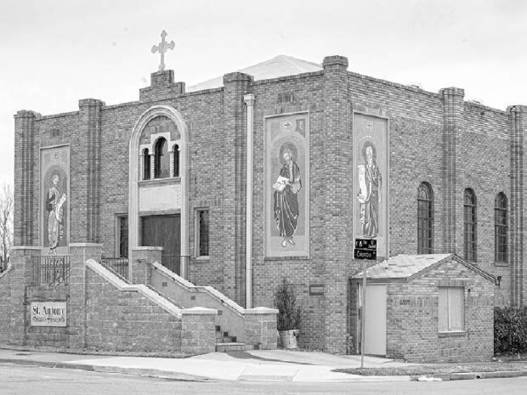
St. Antony Antiochian Orthodox Christian Church in Tulsa. Photo courtesy of St. Antony Antiochian Orthodox Christian Church 
(RNS) The pastor of an Orthodox Christian church in Tulsa, Okla., said the funeral this week for a slain Lebanese-American member of his flock will focus on faith and avoid politics.

The Rev. George Eber of St. Antony Antiochian Orthodox Christian Church told the Tulsa World that the service for Khalid Jabara will be a traditional and typical one for the denomination: long, with chanting, readings from Scripture and brief words from him on the life of the deceased.

“We will avoid all politics,” Eber told the newspaper. “We will keep demonstrators off of our property.

“The funeral is important,” he continued, “to address, ‘Where was God?’ and ‘Where does evil come from?’”

Beyond the church, which will be patrolled by off-duty police hired by the congregation, outrage swirls around the death of the 37-year-old Arab Christian, who was raised in St. Antony’s.

His family says his killing on Aug. 12 was a hate crime, and that the man accused in the case — Stanley Vernon Majors — had violently harassed the family for years. At the time of the slaying, Majors was already facing charges that he tried to run over Jabara’s mother with a car last year; that trial is slated for 2017.

The family faults police for failing to protect Khalid Jabara, in light of his 911 call and Majors’ history of intimidation — which they say he cast in racial and religious terms, taunting his neighbors as “Aye-rab” and “Mooslem.”

Soon after Khalid’s death, #justice4khalid began trending on Twitter.

In addition to many on social media, civil rights groups, including the American-Arab Anti-Discrimination Committee, have decried Jabara’s death. Some have pointed fingers at Donald Trump’s presidential campaign for fanning anti-immigrant and anti-Muslim prejudices.

Many people, Eber told the Tulsa World, mistakenly associate Arabs only with Islam. A significant minority of Arabs in the Middle East, the U.S. and elsewhere are Orthodox Christians.

Source: gazette.com

Cannes ‘burkini’ ban: What do Muslim women think? 

BBC News


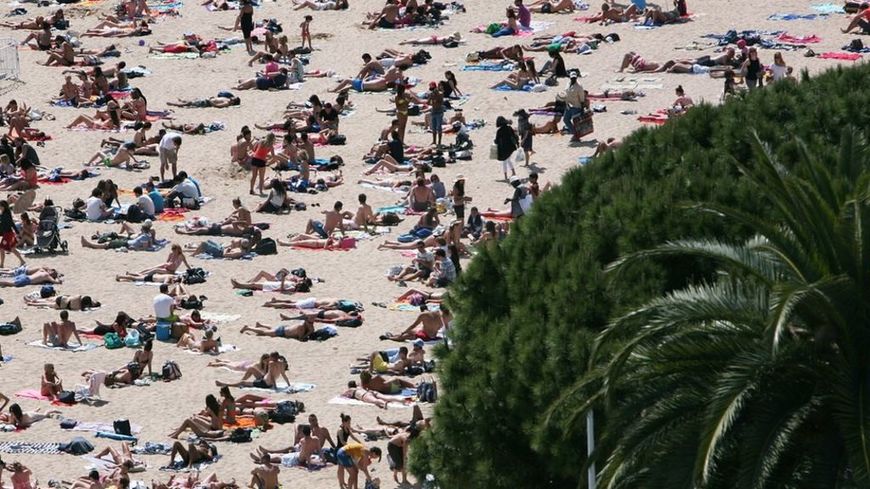
David Lisnar issued the ordinance on the grounds that burkinis, which are popular with Muslim women, “could risk disrupting public order while France was the target of terrorist attacks”.
He also said burkinis were a “symbol of Islamic extremism” which are “not respectful of [the] good morals and secularism” upon which the French state was founded.
Muslim women from around the world have been quick to react to news of the ban.
“This is just an Islamophobic attack on Muslim women in Cannes,” Aysha Ziauddin, who lives in Norfolk, told the BBC.
“The burkini allows me the freedom to swim and go on the beach, and I don’t feel I am compromising my beliefs for that.
“No-one has ever told me to wear it – it’s my own choice.
“How is a woman on a beach swimming in a wetsuit with her head covered a symbol of Islamic extremism?
“Even Nigella Lawson wore one!”
The mayor of Cannes issued the ordinance in late July forbidding beachwear that doesn’t respect “good morals and secularism”
“I own a burkini and I love it,” Sabrina Akram told the BBC. She grew up in Pakistan, and now lives in the US state of Massachusetts.
“I am a practising Muslim, and I believe there should be a choice,” she said.
“I honestly don’t like exposing my body in public, and I like to work fashion into my preferences on how I wish to clothe myself.
“A big part of being in a modern society, part of living in freedom, is allowing people to live their life how they want to live it.
“By putting forward this ban [the mayor of Cannes] is infringing upon a human’s basic right to live how they wish to.
“It’s not the responsibility of a public servant to dictate how I choose to cover my body.”
“I don’t have a burkini, but I do swim wearing a headscarf, tracksuit bottoms and long T-shirt,” Kerry Amr told the BBC.
Kerry, who lives in the town of Telford in the west of England, converted to Islam eight years ago, and although she chooses not to wear a burkini, she believes women should be free to choose what to wear when they go to the beach.
“I think [the ban is] slightly ridiculous,” she said.
“In Victorian times swimmers would wear long baggy trousers, full tops and swimming caps and no-one blinked an eye!
“I fail to see how a woman wishing to cover her body with a particular style of costume whilst swimming can possibly be a symbol of Islamic extremism.
“I accept that there are some horrendously psychotic people out there proclaiming to be fighting on behalf of one group or another.
“However, what a woman chooses to wear on a public beach is not going to make the slightest bit of difference, and just hands ammunition to those who want to… recruit to their twisted ideology.”
Cannes Mayor David Lisnard’s ban on the “burkini” comes at a time of heightened security in France
Maryam Ouiles, from Gloucester, told the BBC she wears the burkini so she can play with her children at the pool and at the beach.
“I think it’s outrageous that you would effectively be asked to uncover some flesh or leave,” she said.
“When did it become a crime to cover yourself?
“People are always complaining that Muslims should integrate more, but when we join you for a swim that’s not right either.
“Why is it necessary for us to show off our bodies when we don’t want to?”

Source: www.bbc.com

Evangelical Lutherans in US: Stop aid to Israel if settlements allowed to stay 

The Jerusalem Post


The Evangelical Lutheran Church in America approved a resolution calling on the US government to end all aid to Israel if Israel does not stop building settlements and “enable an independent Palestinian state.”

Voting at its triennial assembly in New Orleans that ended Saturday, the church also sought a halt to all investment in companies that profit from Israel’s occupation and called on the president of the United States to recognize the State of Palestine.

The aid vote, which passed 751-162, urged church members to “call on their US Representatives, Senators and the Administration to take action requiring that to continue receiving US financial and military aid, Israel must comply with internationally recognized human rights standards as specified in existing US law, stop settlement building and the expansion of existing settlements in east Jerusalem and the West Bank, end its occupation of Palestinian territory and enable an independent Palestinian state.”

The resolution also called on the president not to prevent the application of the State of Palestine for full membership in the United Nations and, in coordination with the United Nations Security Council, to “offer a new, comprehensive and time-bound agreement to the governments of Israel and Palestine, resulting in a negotiated final status agreement between Israel and Palestine leading to two viable and secure states with a shared Jerusalem.”

In the divestment resolution, which passed 821-92, the church adopted a human rights-based investment screen for its social responsibility funds to ensure the church is not profiting from human rights abuses, and mentioned the Israeli-Palestinian conflict by name. It also called for the church to “increase positive investment in Palestine.”

The resolutions were spearheaded by a group within the church called Isaiah 58, which bills itself as “a group of Lutherans working for peace and justice in the Holy Land.”

The Evangelical Lutheran Church in America claims about 4 million members in nearly 10,000 congregations.

Source: m.jpost.com

Lebanon Church leader says Middle East needs Christians and Muslims

Mark Woods

CHRISTIAN TODAY 

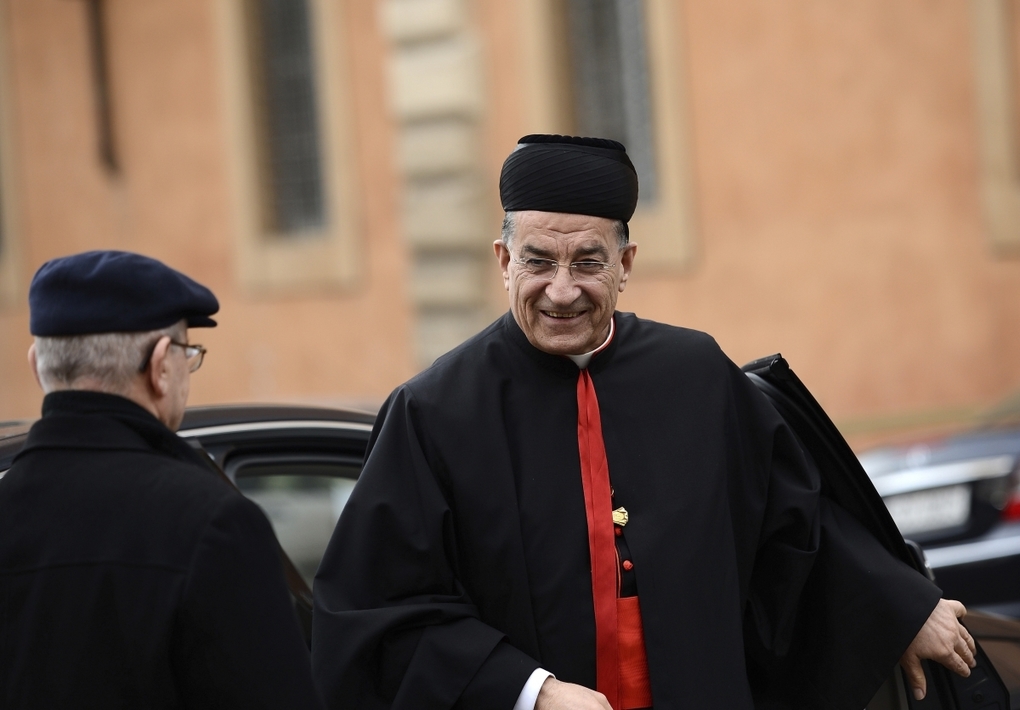
Cardinal Rai has said Lebanese Churches are a symbol of unity.
The head of Lebanon’s Maronite Church, Cardinal Bechara Rai, has issued a call for unity between Christians and Muslims and urged members of parliament to break the deadlock and choose a president for the troubled country, where the position has been vacant for two years.

The cardinal was speaking at the opening of an amphitheatre dedicated to a martyr of the Armenian Genocide in which more than a million Armenians are believed to have been killed by the Turks. Blessed Ignatius Maloyian was executed in 1915 when he refused to recant his faith.

Representatives of Armenian and other Churches were present at the ceremony as well as representatives from political parties and the armed forces.

According to AsiaNews, the cardinal said Lebanon was an example of how Christians and Muslims could coexist: “We base ourselves on the agreement of communal living, separating religion and state, respecting the rights of each religion and its teachings.”

He said Lebanon had “a very special experience in dialogue, common destiny and life…The Christians of the East have had a key role in strengthening cultural and religious diversity.”

He added: “Together with Muslims, we are called to preserve the face of the Arab culture and protect it from the rejection of diversity, from sectarian, ethnic and linguistic differences.”

Today, he said, the Christians of the Middle East were undergoing a new version of genocide, especially in Syria and Iraq.

“Hundreds of children of our churches have died, hundreds of thousands have lost what they had sown throughout an entire lifetime and have embarked on the road of emigration,” he said.

He said the presence of Christians in the East made a vital contribution to the intellectual, theological and cultural life of the region, and that it formed a “cultural and scientific bridge with the West”.

Source: www.christiantoday.com

How Cleveland Muslims reacted to Donald Trump’s RNC speech in private

Aaron Sankin 

The Daily Dot

The moment Donald Trump stepped onstage at Cleveland’s Quicken Loans Arena to officially accept the Republican Party’s presidential nomination, the reality of the situation finally hit Julia Shearson. She takes out her smartphone and snaps a picture of Trump’s face, framed by a wall of American flags, that emanates from the big-screen TV in a comfortable living room on a tree-lined street about a 30 minute drive from the arena.

Shearson had hardly been in denial about Trump having a legitimate shot at the presidency. With a light pink hijab shielding her head from the sweltering mid-July sun, Shearson had spent most of the week leading up to Trump’s speech standing next to a folding table in Cleveland’s Public Square, a few blocks from the Republican National Convention, handing out pamphlets and having conversations with anyone who would listen.

Shearson is the executive director of the Cleveland chapter of the Council on American Islamic Relations (CAIR). Founded in the mid-1990s, CAIR was created to counter the “stereotyping and defamation [of Muslim Americans that] was having a devastating effect on our children and paralyzing adults from taking their due roles in civic affairs.”

She says the daily experience of working for CAIR is “like sliding down a fire pole from one emergency to another.”

One day, she’s leading a diversity training for local police officers. The next, she’s doing legal advocacy for a woman whose manager won’t allow her to wear a headscarf to work. Since its inception, CAIR has always been busy. But, over the past year, with Trump making explicit the anti-Muslim rhetoric that has long bubbled just under the surface of mainstream American culture (and the spike in anti-Muslim hate crimes that has accompanied the candidate’s rise), their work has taken on a new urgency.

At a small house party in the Cleveland suburb of Westlake, I sip lemonade with Shearson and nearly a dozen of her fellow activists as they watch Trump officially become 270 electoral votes away from the Oval Office.

The 2016 presidential election has been particularly dark. Amid a constant drumbeat of terrorist attacks and vicious personal insults, the only enduring moment of levity involved ironic speculation that one of the candidates was a prolific serial killer. For American Muslims, many of whom feel under siege simply for existing, the darkness is magnified.

All of the activists at the party are from the Cleveland area. The GOP drew the nation’s eyes to their hometown, and they were determined to use it to their advantage. The area immediately surrounding Quicken Loans Arena, where the convention was being held, was cordoned off from anyone without the proper credentials and guarded by thousands of heavily armed police officers on strict orders to be as nice as possible to everyone not actively trying to start a riot—and, even then, mustering considerable restraint. As a result, most of the protests were centered around Public Square, a city block recently renovated into a mixture of grass and asphalt specially designed to make the control of large, potentially unruly, crowds more manageable.

On the Thursday Trump spoke, CAIR activists spent much of the day in the square, talking to people wearing bright red “Make America Great Again” baseball caps and handing out packs of Islamophobin, which was just chewing gum in satirical packaging.

CAIR’s goal was relatively straightforward: Simply by being there and talking to people who see them as a threat to society, maybe they could change some minds. That grind is why most of the activists who eventually headed to the party missed most of the evening’s speakers, like former NFL quarterback Fran Tarkenton and libertarian PayPal-founding Gawker nemesis Peter Thiel. The seemingly endless maze of road closures also didn’t make getting out of downtown any easier.

I catch a ride to the party with Ahlem Zaeed. She’s been working during the day as a nurse at a needle exchange doing HIV/AIDS prevention and then spending every night at the CAIR table in Public Square. In the car, she is still wired from spending a few hours amid the tension of the protests, answering pointed questions about Islam from protesters, the phalanx of heavily armored cops standing a few feet away serving as a constant reminder of how violence could break out at the any moment. Just under Zaaeed’s energy is a deep well of tiredness. Pulling double duty all week has clearly been exhausting. She talks about her day job and her night volunteer efforts with the same kind of weary pride. It’s hard work, but doing good is rarely easy.

Zaaeed, whose parents are both Palestinian, began volunteering with CAIR a couple years ago. She has four kids between the ages of nine and 15. As her brood got older, she found she had more free time to volunteer, and her involvement with CAIR gradually increased. She’s thinking about going back to school to get a master’s degree—possibly in public health.

Zaaeed says she decided to work the protests during the convention in order to serve as a first-hand counterweight to some of the pervasive stereotypes about Muslims floating through American culture. “A lot of people don’t know about who a Muslim is other than what comes through TV and the media,” she says.

As we arrive at the home of Ghiath Daghestani, a former CAIR board member, Trump’s daughter Ivanka has just started her speech introducing her father. Everyone sits down on overstuffed couches and watches, except for Zaaeed, who walks into the other room, lays down a small, yellow rug on the hardwood floor, and kneels toward Mecca.

Everyone at the party likes Ivanka. They call her smart, poised, and well-spoken. Her speech was clearly written to read as compassionate and welcoming, which is exactly how it’s received in the room. There is, however, one line from Ivanka’s speech that draws the room’s rancor. “If you’re an American, my father will fight for you,” Ivanka says.

“Unless you’re a Muslim.”

“Or black.”

“Or a woman.”

That sentiment of feeling excluded would come up again and again over the course of the night. The group is skeptical of Trump’s ability to make good on many of his campaign promises, which is hardly unique, but there is also a feeling that, as Muslims, they aren’t who Trump was talking to. The America he wants to make great again is a slice of the country that doesn’t involve them. Watching the convention is an exercise in eavesdropping on a conversation not intended to for their ears.

In that respect, Trump’s candidacy isn’t unique. Muslim Americans have historically been a natural fit for the Republican party, with its focus on conservative family values and a desire the represent the interests of small business owners who often feel over-regulated. In the 2000, George W. Bush won an overwhelming majority of the Muslim American vote. In the wake 9/11, wars in Iraq and Afghanistan, and the GOP’s general tendency toward demagoguery against Muslims, recent election cycles have seen the party capturing single-digit support among Muslims. In a deeply self-critical report released in the wake of the 2012 election, Republican leaders urged the party to reach out to various groups that were typically hostile to the GOP message, like Hispanics, Asians, and young people. Muslims—and Arab Americans in general, a majority of whom subscribe to religions other than Islam—didn’t warrant a mention.

As Trump speaks, the mood grows somber. People banter back and forth, alternately spouting facts that countered parts of Trump’s narrative and nodding in agreement with a, “Yes, that’s true” when he hit on indisputable points like China’s massive theft of American intellectual property or the crushing load of student debt suffocating America’s young adults.

Conversation gradually tapers off as they watch Trump’s speech, until one line hit like an electric shock: “We cannot stand to be politically correct anymore.”

“Uh oh,” says Shearson. “Here come the code words.”

“This is what scares me,” adds A’isha Samad, another CAIR activist.

During his speech, Trump makes a point of reaching out to demographics that typically haven’t been part of the GOP coalition. With a nod to the recent terrorist attack in an Orlando gay nightclub, Trump talks about the importance of protecting the LGBT community from violence and then commends the audience for applauding. The sentiment is laudable, even if the party’s platform has been widely criticized for its anti-LGBT bent, but Trump’s comments sting those in the room—like he is pitting one vulnerable community against another.

In terms of execution, Shearson notes, this is Trump’s best performance yet. But the rapturous cheers he receives when talking about terrorism and the threat posed by refugees fleeing the bloodshed of the Syrian civil war make her nervous. “I wish the camera would zoom in on the faces of the people in the audience,” she sighs, deflated. “Are these our neighbors thinking like this? Who are these people? This is really scary.”

“Trump talks about mass lawlessness, but he’s just scaring people,” says Samad. “All the people in the audience don’t experience mass lawlessness while they’re here in Cleveland, and they don’t experience mass lawlessness when they go home. He’s just trying to make them scared.”

By the end of the speech, Trump has accomplished what he had largely set out to do, whether he thinks of it that way or not—everyone in the room is afraid.

“I was concerned because I heard some code words that have been used in this country for a long time. He’s speaking to a place that we used to be. He’s hearkened to a hatred and a separation of people by using these coded phrases,” charges Samad. “He’s awakened that, and he knows what he’s doing. This is something they used to do all the time. They couldn’t say it outright, so they used these coded phrases—and everybody who knows, knows what it means. He’s doing it, and he’s doing it very well. Those are the people who he’s reaching.”

“Now, when they see me as a Muslim or … [someone else] as an immigrant, they feel freer to be nasty, to be hateful,” she continues. “When he’s talking about America in that way, I don’t think he’s including me or my immigrant brothers and sisters.”

“Muslims, Arabs, Hispanics, immigrants from anywhere in the world, I don’t think he actually sees them in America’s future,” says Nadia Zaiem. “Regardless of what he’s saying, if I’m not going to be seen as a big part of that future, how is that making America great? America, in my opinion, was built on the backs of immigrants. This country was created by immigrants coming from other places to have a better life. And to practice their religions and live their lives in peace and freedom. I think we’re backing away from that.”

Zaiem recalls a story a friend had told her about a recent interaction that was particularly troubling, that illustrates Trump’s America. This friend was standing in line to buy coffee in nearby Strongsville, and an older man kept saying that he wanted “American roasted coffee, not foreign roasted coffee,” and then cut in front of Zaiem’s friend in line. The friend, wearing a headscarf and just wanting to make it through her day, felt isolated and small, like she didn’t belong.

“This is what Trump is doing,” Zaiem says. “He’s convincing people that America is being overrun with foreigners, immigrants, and refugees.”

Zaiem’s father, Isam, a co-founder of CAIR’s Cleveland chapter, says the concept of division, of ‘us vs. them,’ was one he ran into repeatedly while manning the CAIR table in Public Square all week. “I found myself as if I were in a different world,” he says.

Isam recalled one conversation with a Trump supporter a few hours before Trump’s big speech. “The message that he kept coming back to, and he even used these words, ‘What’s in it for me [to let Muslims be part of America]?’” he said. “He kept asking me questions like, ‘If Muslim families … produce five or six or seven kids, in no time, we’re going to have a different America.’ And I said, ‘Yes, so what? What’s the difference?’ I don’t care what color you are. It’s not about you. It’s not about me. It’s about us as a community, as people. You protect my back, I protect yours. We are all in this together.’”

“I kept telling him that we are a nation of immigrants. In this country, except for American Indians, we are all immigrants that came at a different times. Some of us came before others, but we are all immigrants. We cannot just completely shut the door and not allow others to come in,” he continues. “But he kept coming back with all of these questions that really reflect, in a way, fear about becoming a minority in his own country. He wanted to keep it a white majority country. In his mind, he has a superiority, he had a privileged that you cannot take away from him. How you can address that? I really don’t know.”

That conversation, at its core, stayed respectful because, for all of their differences, both sides were really just trying to understand each other. It was tense, to be sure, but democracy is controlled tension.

At the end of the night, Samad drives me back to the Airbnb where I am staying. As we speed down the highway, passing packs of police SUVs parked on the shoulder and an electronic billboard urging people to report any suspicious activity they notice to the FBI tip line (“If you see something, say something”), she tells me about how she got her start in activism.

After missing a court date due to a mix-up from her lawyer, Samad spent a night jail. While locked up overnight, she was forced to take off her headscarf. Samad sued the city, claiming religious discrimination. CAIR was one of the groups that helped her with the suit, and she decided to start volunteering.

I ask if she had seen the small child playing in the fountain that afternoon across the plaza from where CAIR had set up their table. She hadn’t; her view had been blocked by a line of cops in riot gear and throngs of angry protesters. I had taken a video and, when she pulls in from of the house where I was staying, I play for it her on my phone.

“That’s what it like to be free. That’s what it’s like to be really free and really just not care what people think,” she sighs. “I’m just scared that things aren’t going to get better, that they’re just going to get worse.”

“I guess all you can do is cross your fingers,” I say with a halfhearted shrug as I step out of the car.

Source: www.dailydot.com

Interview with Prominent Arab American Researcher, Dr. Shibley Telhami

  BY: Kristina Perry/Contributing Writer WASHINGTON, DC: Dr. Shibley Telhami is one of the leading researchers on public opinion polling and research, examining American foreign policy priorities. His research often focuses on opinions toward the Middle East, Muslims, and Arab communities. His recent research presented at the Brookings Institute in Washington, DC examined the shift … Continued

464 Results (Page 16 of 39)