
Subscribe
to receive news by email

Poll
Will the Trump Administration Shift U.S. Policy in Favor of Palestine?
- No (87%)
- Yes (13%)
 Loading ...
Copyright © 2026 Arab America
Go topHow Arab Clubs preserve Arab Identities
Creative Commons Attribution-Share Alike 3.0
By Londyn Sewell/Arab America Contributing Writer
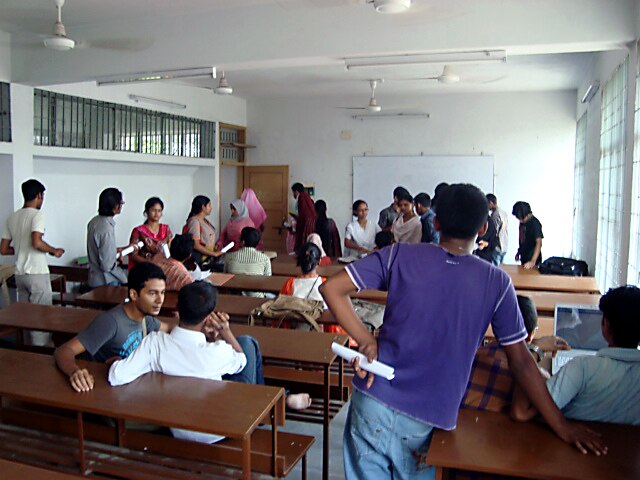
Arab identity on college campuses isn’t preserved in one single space, it’s sustained through a network of different types of student organizations. From cultural clubs to political groups, each one plays an important role in maintaining language, community, and tradition.
Arab Clubs
Arab clubs are the central hub for cultural expression on campuses across the US. These organizations bring together students from across the Arab world to celebrate shared traditions and experience while also being able to acknowledge differences.
Hosting events such as cultural nights, performances, and events to actively engage with their heritage rather than passively remember it. For many, especially those who have left their home countries, this may be their first time they fully experience certain traditions in a communal setting.
Arab Clubs create everyday spaces where students can have their voices heard, share stories, and connect over similar upbringings. This sense of familiarity is important, allowing identity to be lived, not just remembered.
By upholding these cultural practices in a consistent and visible way, Arab Clubs act as the foundation for preserving Arab identity on campuses.
SWANA (Southwest Asian and North African)
SWANA clubs take the idea of Arab identity and place it within a bigger regional context that includes Southwest Asia and North Africa as a whole.
Rather than only focusing on Arabs, organizations bring together a wider range of students from the region that include both Arab and non-Arab identities. Making it more inclusive as they recognize the cultural, ethnic, and linguistic diversity that exist across the region.
SWANA creates such an environment where shared experiences and connections have a home to flourish and grow rather than limiting identity to just one group.
Challenging stereotypes and misconceptions instead of pining down Arab identity to a single narrative. This allows Arab students to better understand their place within a larger cultural and geopolitical landscape.
Students can explore what it means to be Arab while recognizing overlapping identities with neighboring cultures.
Ethnic Clubs
Within the wider Arab identity, there are so many distinct ethnic and national identities. Such as Egyptian, Lebanese, Palestinian, Moroccan, and Sudanese. Ethnic-specific clubs allow students to dive deeper in their respective heritages.
These organizations often focus on more localized traditions and customs that might not be fully represented in general for Arab spaces. For example they might highlight specific cultural practices, foods, and historical stories unique to their country or community.
This level of specificity is important because it preserves the richness of these ethnic groups.
There is a risk of culture being generalized or faded, ensuring that students can connect with the exact version of their identity that resonates most with them.
Political Advocacy Clubs
Political organizations, particularly those focused on issues that affect the Arab world, play a major role in connecting their identity with awareness and activism.
Groups like Students for Justice in Palestine create spaces where students can engage with political realities that impact their communities.
These clubs educate members and even non-members on history, current events, and global perspectives, helping students as well as the community understand their identity in a broader context.
In a way, they can reclaim the narratives and misconceptions that are often misrepresented in mainstream media.
Advocacy work like protest, campaigns, and educational events helps strengthen identity because it turns that identity into action. Instead of learning about their culture in a passive way, students are actually standing up for it, speaking on it, and educating others on why it matters.
That experience makes their connection to their culture feel more real and meaningful.
This connects identity and activism, reinforces pride and it ensures that cultural preservation is tied to real impact.
Religion Based Organizations
Religion is deeply intertwined with many Arab students. Faith based organizations provide an important space where both can coexist. These organizations often host religious celebrations like Ramadan Iftars, Eid gatherings, and Christmas and Easter events depending on the community.
Most importantly highlighting the religious diversity within the Arab world. Often being tied to a single religion, these clubs show the reality of these different communities creating a more inclusive understanding.
Arab identity on college campuses is not preserved in one place, it thrives through so many organizations that contribute in different ways. Arab Clubs build community, SWANA provide a broader context, ethnic clubs protect specificity, political groups connect identity to action, and religious organizations tie culture to faith.
Together ensuring that Arab identity is not only maintained but continuously adapted and passed on.
Want more articles like this? Sign up for our e-newsletter!
Check out our blog here!