
Subscribe
to receive news by email

Poll
Will the Trump Administration Shift U.S. Policy in Favor of Palestine?
- No (87%)
- Yes (13%)
 Loading ...
Copyright © 2026 Arab America
Go topMaltese’s Arabic Past
By: Diksha Tyagi/Arab America Contributing Writer
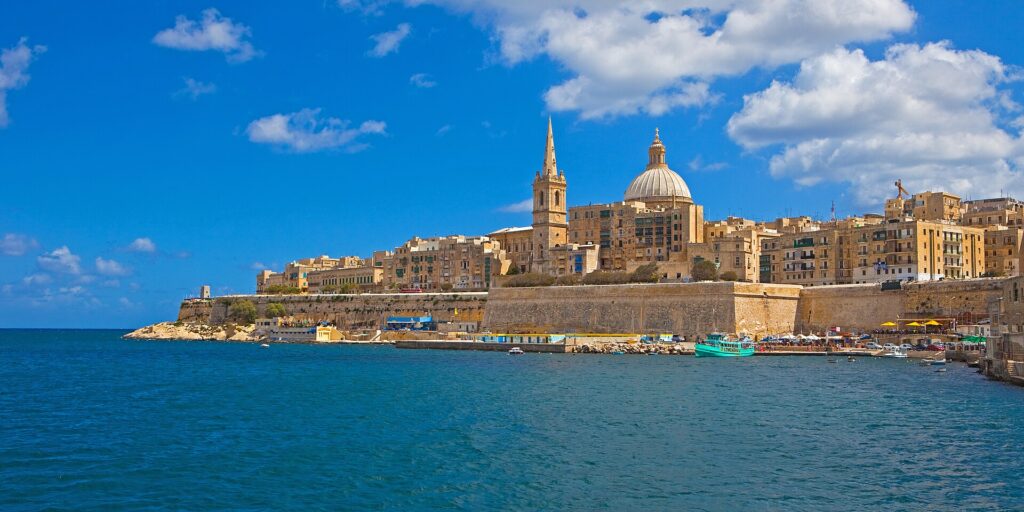
Maltese is the official language of the Mediterranean island of Malta and the only Semitic language officially recognized in the European Union. More than that, it in fact descends directly from Arabic. It retains Arabic vocabulary and grammatical structures, but is written in the Latin alphabet. Arab America contributing writer Diksha Tyagi will explore how Maltese developed and why it stands alone today.
The Background of Arabic
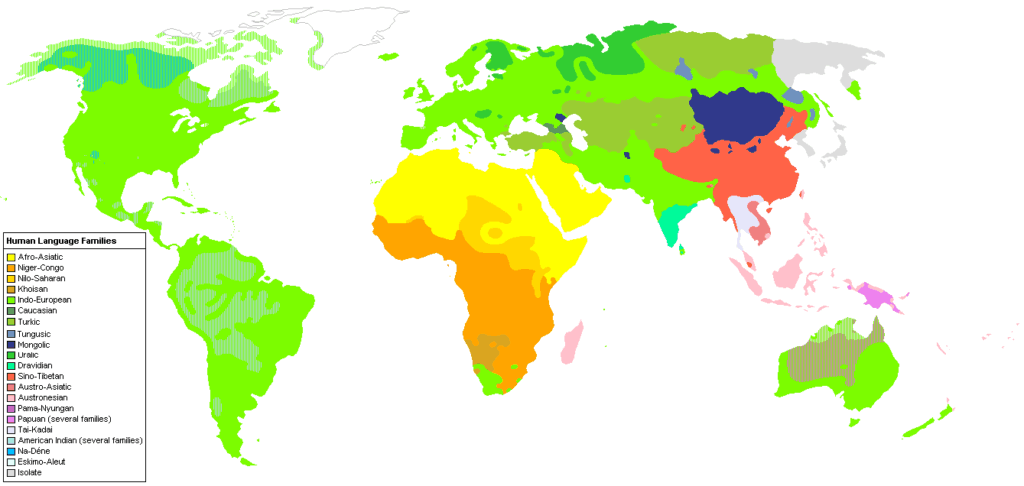
Arabic is categorized as a Semitic language, a major branch of the Afroasiatic language family. This is the fourth largest language family in the world by number of speakers. Proto-Afroasiatic, the reconstructed ancestor of Afroasiatic languages, is believed to have been spoken as far back as 10,000-14,000 years ago.
Arabic evolved from Proto-Afroasiatic through Proto-Semitic, the language of the Semitic branch. It became a distinct language around the first millennium BCE as Semitic language speakers spread across the Arabian Peninsula. After the Islamic expansions of the seventh and eighth centuries, Arabic spread into North Africa and parts of southern Europe. Spoken in parts of southern Italy and Sicily, once Malta came under Islamic rule in the 9th century, Arabic fully spread to the Mediterranean island.
The Evolution of Maltese
Prior to Islamic rule, Malta was controlled by the Byzantine Empire who spoke primarily Greek and Latin. However, Arabic gained prominence as Malta did not have one homogenous language and due to sustained Arab settlement. The Arabic that was brought to Malta were Siculo-Arabic dialects, already influenced by the romance languages in Sicily. With the governance of Arab settlers, Arabic became the functional language of the island.
Following the Norman conquest of Malta in the 11th century, Malta became part of the Kingdom of Sicily. Sicilian and later Italian became official languages, and it was during that period where Latin script began to be used. The 19th century, where the British briefly took over, standardized Latin script for Maltese and led to English influence in Maltese. Yet, unlike Iberia and Sicily, Arabic didn’t disappear after Islamic rule. This was due to Malta’s isolation, which limited later population replacement, and because Malta didn’t experience mass expulsion of Arabic speakers. Rulers “never bothered to interfere” with the language being spoken, even despite having other official languages. Instead, Maltese, losing contact with outside Arabic speakers in 1446 CE, began to develop on its own and become the language it is today.
Maltese Today
Grammatically, Maltese is the closest to Arabic. Sentence structure and verb conjugations are much closer to Arabic than to Romance languages, classifying Maltese as a true Semitic language. However, the vocabulary of Maltese reflects its complex history. Most quotidian words find their origin in Arabic, while administrative and institutional terms come from Italian. Words for contemporary objects and themes often derive from English. Therefore, Maltese is structurally Semitic, but its modern-day usage reflects its singularity.
Maltese is particularly unique within the European Union as its only Semitic language. The vast majority of the EU’s languages come from the Indo-European family with a few exceptions in the Uralic family. However, only Maltese has this distinct background and is one of the EU’s official languages. Other Semitic languages, Amharic and Hebrew, as well as Arabic, are not within the same political boundaries.
Once spoken in medieval Iberia and Sicily, Arabic in Europe eventually declined to exist only in Malta. Even then, Maltese’s Arabic origins had been denied by many. Yet, the connection to Arabic that Maltese retained through multiple conquests is a living reminder of the Mediterranean’s complex history and our interconnected present.
Want more articles like this? Sign up for our e-newsletter!
Check out our blog here!