

Subscribe
to receive news by email

Poll
Will the Trump Administration Shift U.S. Policy in Favor of Palestine?
- No (87%)
- Yes (13%)
 Loading ...
Copyright © 2026 Arab America
Go topMerging Hezbollah into a Lebanese National Guard
By: Ghassan Rubeiz / Arab America Contributing Writer
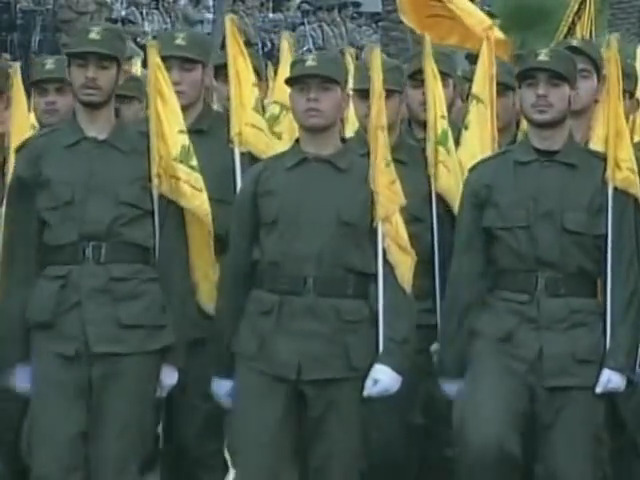
Iran’s influence on Hezbollah will be affected by the developing situation of Tehran’s regime over the next crucial weeks. And Lebanon’s Hezbollah, Iran’s closest ally, is examining its options as the tension inside and outside Lebanon rises.
The US keeps on pressuring Lebanon’s fragile state to disarm Hezbollah with force and totally. Washington and Tel Aviv insist that the Lebanese militia must surrender all its weapons throughout Lebanon. Is Washington willing to risk driving this fragile state into a new round of civil war?
Hezbollah remains active away from the southern border. It draws its militia from the Shiite community, Lebanon’s largest constituency. The Shiites are also overrepresented in the national armed forces, the army which is expected to do the disarming of Hezbollah. Furthermore, Israel refuses to withdraw from the territories it occupied during its confrontation with Hezbollah last year, whereas Hezbollah has partially fulfilled the ceasefire terms by withdrawing from south of the Litani River. Israel has fulfilled none of its obligations, yet it demands complete Hezbollah disarmament. The IDF occupies five strategic highland border locations. Israeli forces attack southern Lebanon, Beirut’s suburbs, and the eastern region almost daily.
Can the Lebanese think of an innovative and graceful exit? Perhaps, Lebanon needs a new security framework that channels Hezbollah’s immense resources to serve new circumstances: a fragile Lebanese state with a devastated economy and ravages of war; Syria’s willingness to be a cooperative border state; a more aggressive Israel playing by new rules; highly demanding but supportive US policy; greater Arab Gulf support; conditional readiness for support from the international community; and a resourceful Lebanese diaspora willing to take a new constructive role.
Arguably, the formation of a socially mixed Lebanese National Guard could absorb Hezbollah’s organizational and human resources while fundamentally transforming its mission. Without a viable alternative for its mission, Hezbollah risks becoming a burden to all Lebanese communities, including its own base. Despite a ceasefire that has held for over a year, Israeli airstrikes continue wherever the IDF claims to “suspect” a Hezbollah presence at the struck target. Many Lebanese blame Hezbollah for the country’s paralysis, despite its willingness to disband its armed forces once the Lebanese state is strong enough to deter Israel. But most are skeptical about Hezbollah’s willingness to totally disarm, regardless of the strength of the state.
It is ironic that Hezbollah presently decides to continue investing in its military capabilities, thus willing to expose its own community to bear the brunt of Israeli aggression. Many believe that the Shiite community should prioritize rebuilding over fighting.
In a new role, Hezbollah could help Lebanon become strong and safe by contributing to a socially mixed National Guard. Such a new agency would draw its constituents from all Lebanese communities and pursue a fundamentally different mission: relief, reconstruction, rehabilitation, and reconciliation- throughout the nation.
Former Hezbollah members would find employment in reconstruction, healthcare, and social services. Some fighters would join the regular armed forces. This transformation would allow the Shiite community to maintain pride in continuing to contribute to Lebanon’s well-being while distancing itself from Iran’s influence. After disarming, Hezbollah could continue to resume its civil functions as a regular political party. Crucially, Israel’s pretext for remaining on the five strategic locations within the border—to eliminate Hezbollah as a purported military threat—would lose legitimacy, enabling international pressure to compel Israeli withdrawal.
Political reform must match what would be a historic transformation. To make this radical move, Hezbollah needs partners and new incentives. The Lebanese state must reciprocate by granting the Shiite community greater political representation, including rotation of top governmental posts—presidency, premiership, parliament speaker, army chief—among the major religious sects: Shiite, Sunni, Maronite, Druze. Such radical constitutional reform will take time. But it must begin now.
Moreover, US engagement in Lebanon has to change its character. A troubled state rarely pulls itself from a quagmire without responsible external support. The kind of support Lebanon receives from the US comes at the cost of sovereignty. US military support for Lebanon’s armed forces should be phased out over a few years. Foreign support could continue through academic, cultural, and humanitarian aid channeled through NGOs rather than state institutions. Washington must also acknowledge Israel’s role in destabilizing Lebanon: the creeping occupation, the highly disruptive 1982 invasion, and decades of supporting armed separatist border militias. Without US pressure on Israel to respect Lebanese sovereignty, expecting Lebanon to reform while under constant attack is unrealistic and unfair.
To conclude, in asking Hezbollah to transform, a smart formula of security must emerge, the Lebanese state must take some new steps towards reform, Israel change its triumphalist policy and the US modify its approach to foreign assistance. And this transformation of Hezbollah from a sectarian militia to become part of a well-represented National Guard offers a path to overcome Lebanon’s internal paralysis while removing Israel’s pretext for occupation. It requires courage from Hezbollah, fairness from the state, and honest engagement from the United States. The alternative is continued decline, ongoing Israeli attacks, and the slow erosion of Lebanese sovereignty. During the next few weeks, the world will be watching the US negotiating with Iran, the outcome of which will have a significant impact on Hezbollah’s options and Lebanon’s future.
Ghassan Rubeiz is the former Middle East Secretary of the World Council of Churches. Earlier, he taught psychology and social work in his country of birth, Lebanon, and later in the United States, where he currently lives. He has contributed to political commentary for the past twenty years and has delivered occasional public talks on peace, justice, and interfaith topics. You can reach him at rubeizg@gmail.com
The views and opinions expressed in this article are those of the author and do not necessarily reflect the position of Arab America. The reproduction of this article is permissible with proper credit to Arab America and the author.
Want more articles like this? Sign up for our e-newsletter!
Check our blog here!