
Subscribe
to receive news by email
Poll
Will the Trump Administration Shift U.S. Policy in Favor of Palestine?
- No (87%)
- Yes (13%)
 Loading ...
Copyright © 2026 Arab America
Go topMohamed Oufkir: The Moroccan King's Most Feared Man
By: Taim Al-Faraje / Arab America Contributing Writer
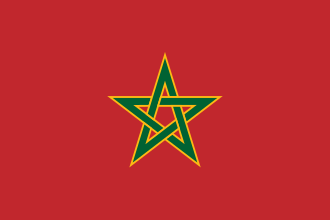
By the early 1970s, Morocco’s political climate seemed to be very shaky. They found themselves at the middle of many political disputes: their border dispute with Algeria, their ideological dispute with Egypt, and worst of all, their negative stance towards the Arab League, leading to their collaboration with Israel. Soon after independence from France and Spain, they entered a war with Algeria over a border dispute. Algeria, being led by a Pan-Arab, Arab Nationalist, Arab Socialist government, had the full support of the more powerful Arab countries like Egypt and Syria, and to some extent, the world. Morocco, on the other hand, was supported by the Western capitalist countries such as France, Spain, America, and even Saudi Arabia, another Western-aligned Arab Kingdom.
As a result, opposition to the Monarchy grew in Morocco, as the Moroccan people favored aligning with their Arab and socialist brothers. The two sides of this war would serve as an early showcase of Morocco’s foreign policy and would go on to demonstrate why it has had a hard time maintaining good relations with much of the Arab world.
Who Was Mohamed Oufkir?
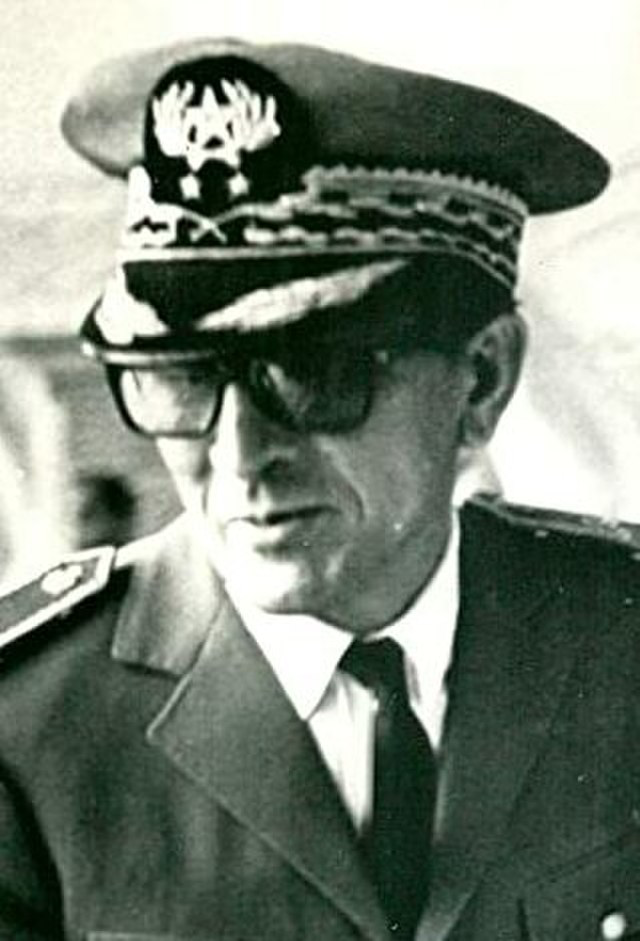
Contrary to what the title may suggest, Oufkir was a very loyal officer to the Moroccan King. He grew up in a Berber village, attended a Berber college, and enrolled in a military academy in 1939. This led to him enlisting in the French army in 1941 as a reserve lieutenant. 1944 marked the beginning of his career, as he was called up to fight during World War II, where he participated in the Italian Campaign. Three years later, he fought in the First Indochina War as part of the French Far East Expeditionary Corps. He was recognized for being brave, being promoted to Captain, and being named as part of the National Order of the Legion of Honor in France. Oufkir continued to prove himself as brave, disciplined, and focused through his achievements throughout different wars, which would translate to his military rank in Morocco.
In 1949, Oufkir joined the military cabinet of the French supreme commander for Morocco and Tunisia, Raymond Duval, who was known to be brutal in his suppression of North African uprisings. This led to Oufkir becoming the assistant of Ben Arafa, the resident-general of Morocco in 1953.
Ben Arafa was a cousin of Mohamed V, the previous sultan of Morocco. Prior to the rule of Ben Arafa in 1953, Mohamed V had been exiled by France, as he was too accepting of nationalist movements and refused to suppress protests. Although Oufkir was appointed as Ben Arafa’s assistant, he undermined his rule, believing him to be a puppet leader and unfit to lead the Moroccan people. He pleaded with France, which eventually gave in and reappointed Mohamed V as the sultan in 1955. After Mohamed V negotiated independence in 1956, Oufkir was appointed to a high-ranking position in the Moroccan Royal Armed Forces.
Oufkir’s Tendencies Post-Independence
It was during the period between independence and his coup, 1956-1972, when he became the most loved by the monarchy, and the most hated by the people. He attained the nickname “Butcher of the Rif” for his brutal suppression of Riffian uprisings throughout the years, and for his brutality and absolute loyalty to the Moroccan King in general. He developed a close relationship with the CIA during this time, and even forged close ties with Israel, visiting in 1964 to observe their security protocols and hoping they’d help with palace security in Rabat. Considering this was the time when Egypt and the Arabs really distanced themselves from America and became harsher in their stance towards Israel, this shows why Morocco was such a political outlier among the Arab nations.
1972 Moroccan Coup
Years prior to 1972, Morocco had seen a few coup attempts by officers in the Army, most famously in 1971. Throughout all this time, Oufkir’s loyalty was put to the test, and he consistently passed. Not once did it seem that he’d even thought about betraying the King, and the King continuously put more and more trust in him for this reason. This is what made the 1972 coup so confusing.

After the 1971 Coup, Oufkir was promoted to the position of Minister of Defense, and there’s a rumor that he facilitated the first coup to place himself there. The coup happened on August 16, 1972, when King Hassan II was coming back from a personal visit to France. As he entered Moroccan airspace, a few Moroccan fighter jets on Oufkir’s orders began firing at the King’s Boeing 727. They managed to damage the airplane and kill a few passengers inside; however, King Hassan survived. During the attack, the King grabbed the radio and told the rebel pilots to stop shooting as “the tyrant is dead,” a trick to keep himself safe and to make the pilots stop shooting. The jet landed safely in Rabat with minor damages.
Later that same day, Oufkir was found dead. Although the Moroccan authorities tried to claim it was death by suicide, his gunshot wounds tell a different story. After the coup, many of Oufkir’s family members were sent to a bunker in Bir-Jid and put on house arrest. When asked why the King would imprison family members who had nothing to do with the plan, he stated it was because Oufkir would’ve done the same to the King.
Motive For the Coup
The motive for the coup is beyond confusing. Some try to claim that Oufkir would’ve put a regent in place of the king temporarily, while others say he wanted to establish another Arab socialist republic like the rest of the Arab world wanted to do at the time, although it’s unclear and no true evidence points towards this.
The 1987 Tunnel Escape
For 15 years, Oufkir’s family wouldn’t see the light of day, until 1987 when they dug out of the bunker using their hands and spoons. They’d be recaptured, although a series of daring moves would eventually lead to their permanent exile in France.
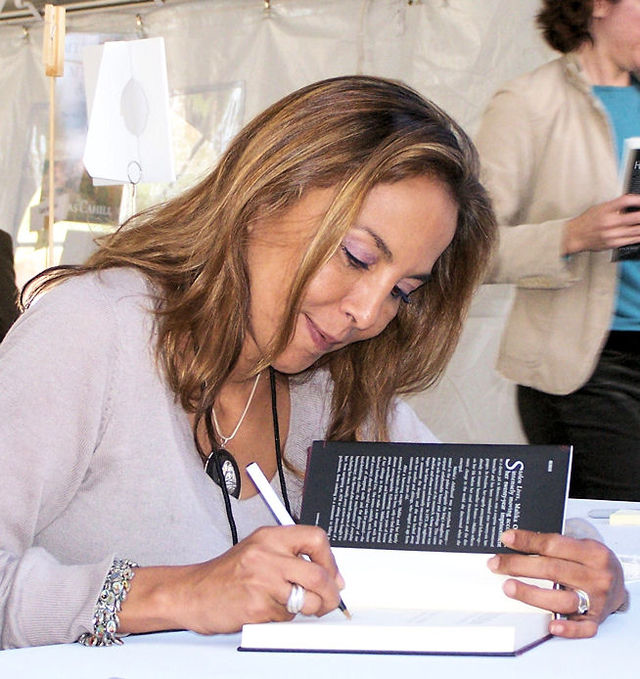
The story of Mohamed Oufkir is inspiring, dispiriting, revealing, and at the very least, confusing. It shows how complicated Moroccan and wider Arab politics can be, especially since all motives for the story will only be told by people who aren’t Oufkir himself.
Want more articles like this? Sign up for our e-newsletter!
Check our blog here!