Subscribe
to receive news by email
Poll
Will the Trump Administration Shift U.S. Policy in Favor of Palestine?
- No (87%)
- Yes (13%)
 Loading ...
Copyright © 2026 Arab America
Go topMoroccan Americans and the EPCOT Pavilion: Immigration and Cultural Representation
By: Emma Campbell / Arab America Contributing Writer
Moroccan Diaspora and the EPCOT Connection
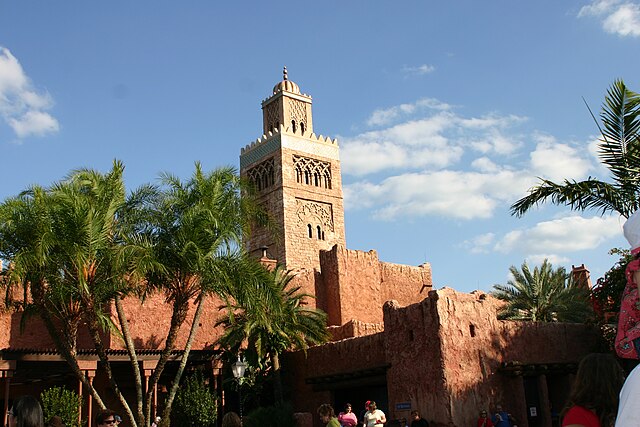
Arab American communities earn recognition for their diversity and resilience. However, within this framework, Moroccan Americans occupy a unique space. Although smaller in number than other Arab American groups, Moroccan Americans make their presence felt through vibrant communities across the US and initiatives that bring Morocco into American public life. One of the most visible examples of this is the Morocco Pavilion at EPCOT in Orlando, Florida. This represents not only Moroccan culture but also a model of government-led cultural diplomacy.
Moroccan American Population in Florida
Although Moroccan Americans are not among the largest Arab American communities in the US, they are concentrated in several states. This shapes distinct cultural lives all across the nation. According to 2025 census data compiled by Neilsberg, New York has the largest Moroccan population. Their population is around 18,000. Florida follows closely behind, with 14,000 Moroccan residents.
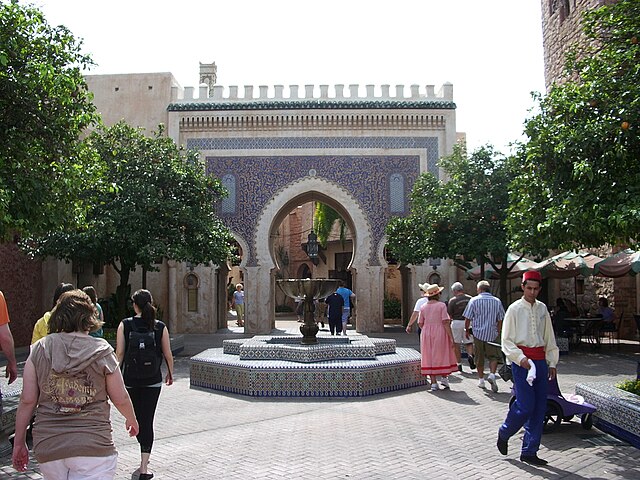
These concentrations are largely East Coast urban hubs, where economic opportunities and established Arab American networks provide social support. However, Moroccan immigrants have been drawn to the US by opportunities unique to their community. Disney’s EPCOT Morocco Pavilion in Orlando, Florida, has influenced many Moroccans with its cultural and employment possibilities. When the pavilion opened in 1984, the Moroccan government sent artisans and cultural consultants to Florida. They helped design, construct, and operate the space authentically. These skilled workers often stayed for extended periods, contributing to a localized Moroccan community in Orlando. As Disney consistently hires individuals from Morocco to work the pavilion through its Cultural Representative Program (CRP), Moroccans continue to support the pavilion’s operations and cultural programming.
Therefore, Moroccan Americans in the US represent both traditional, urban-based migration patterns. Alongside this, cultural exchanges and employment opportunities have also driven migration. Whether through family networks on the East Coast or professional opportunities like those at EPCOT, Moroccan Americans have established vibrant communities. These remain strong connections to cultural roots while integrating into American society.

The Morocco Pavilion at EPCOT: A Cultural Showcase of Diplomacy
The Morocco Pavilion opened on September 7, 1984, becoming the first country added to the World Showcase after its 1982 debut. Unlike many other pavilions, Morocco developed its pavilion in collaboration with the Moroccan government, especially the Moroccan Tourism Board. This underscores a broader strategy of cultural diplomacy, positioning the pavilion as a tool to educate US visitors about Morocco.
The Moroccan Tourism Board and government representatives continue to act as cultural consultants. This ensures ongoing accuracy and relevance even after Disney assumed full ownership of the pavilion businesses in 2020. Previously, the government fully funded, helped design, and sponsored the pavilion. This partnership between Disney and the Moroccan government illustrates a unique model in which a foreign state can collaborate with private cooperation. Here, the Moroccan government preserves its national culture abroad. For Moroccan Americans, this means that their labor and expertise contribute directly to an official representation of Morocco within the US.
The Moroccan Tourism Board and Oversight Rule
The Moroccan Tourism Board played a critical role not only in authenticating the pavilion’s design but also in managing its long-term cultural integrity. By supervising artisans, sponsoring cultural programming, and consulting on renovations, the board has helped ensure the pavilion remains a credible and respectful representation of Morocco. Even after Disney fully acquired the businesses in 2020, the Moroccan Tourist Board continues to influence how Moroccan culture is displayed, demonstrating the ongoing partnership between government oversight and diaspora labor. Simultaneously, this maintains Moroccan cultural visibility in the US. This arrangement illustrates how Moroccan migrants balance local work with official cultural representation, actively linking diaspora communities to both employment and homeland diplomacy.
EPCOT and the Preservation of Moroccan Heritage in the US
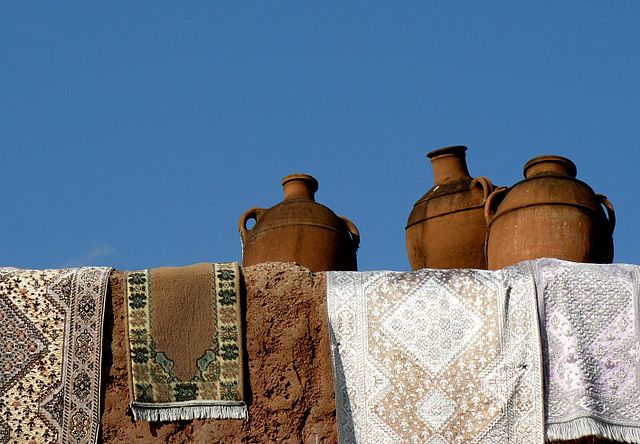
The story of Moroccan Americans extends beyond residential communities to the global stage of cultural diplomacy. Through skilled labor at the EPCOT Morocco Pavilion, diaspora professionals have played a direct role in shaping US perceptions of Morocco. This shows how migration and employment can intersect with national representation. The Moroccan government and Tourism Board continue to ensure that this cultural presence remains authentic and respected. Their ongoing involvement highlights a unique partnership between homeland institutions and diaspora communities. Together, these dynamics illustrate how Moroccan Americans contribute not only to the social fabric of the United States but also to the preservation and projection of Moroccan heritage abroad.
Want more articles like this? Sign up for our e-newsletter!
Check out our blog here!