
Subscribe
to receive news by email

Poll
Will the Trump Administration Shift U.S. Policy in Favor of Palestine?
- No (87%)
- Yes (13%)
 Loading ...
Copyright © 2026 Arab America
Go topOne Heritage Two Faiths: Lent and Ramadan Unite Arab Communities in 2026
By: Nourelhoda Alashlem / Contributing writer
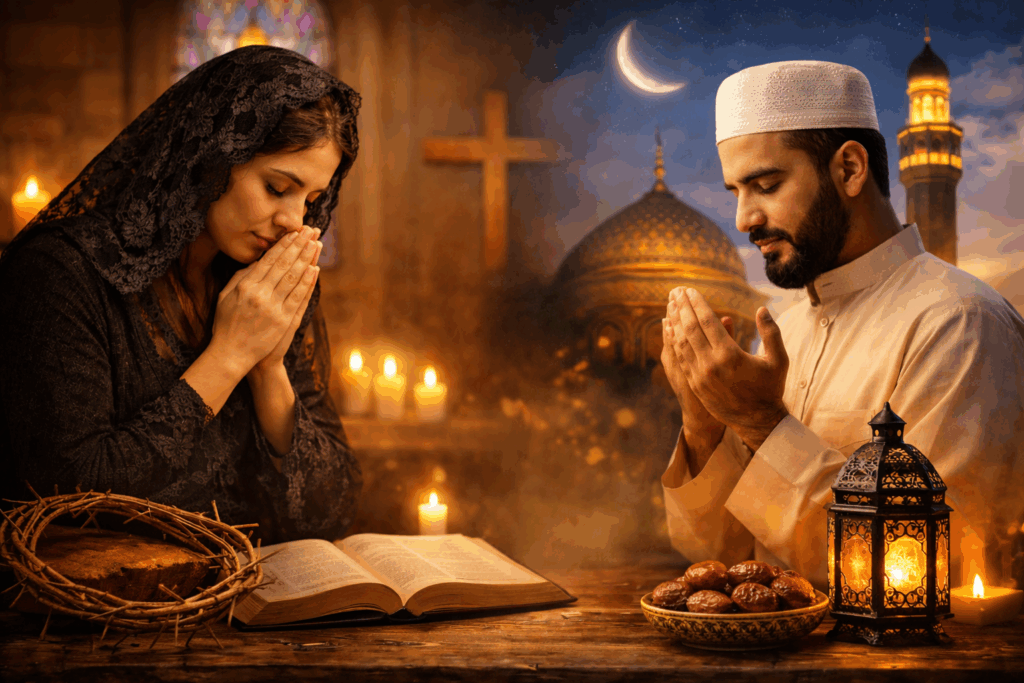
Lent and Ramadan are aligning for the first time in more than 30 years, bringing Christians and Muslims into sacred seasons at the same time. Beginning on the evening of February 17, 2026, Muslims enter Ramadan, the holiest month in Islam. However, today, Muslims begin fasting on the 18th. Similarly, on that same day, many Christians observe Ash Wednesday, marking the start of the 40-day journey of Lent toward Easter.
For Arab Americans, especially in states like New Jersey, New York, Illinois, Texas, California, Michigan, and the Washington, DC area, where Christian and Muslim communities live side by side, this rare crossover feels deeply meaningful.
What is Ramadan?
Ramadan is the ninth month of the Islamic lunar calendar and is considered the holiest month in Islam. Muslims believe it is the month in which the Qur’an was first revealed to the Prophet Muhammad.
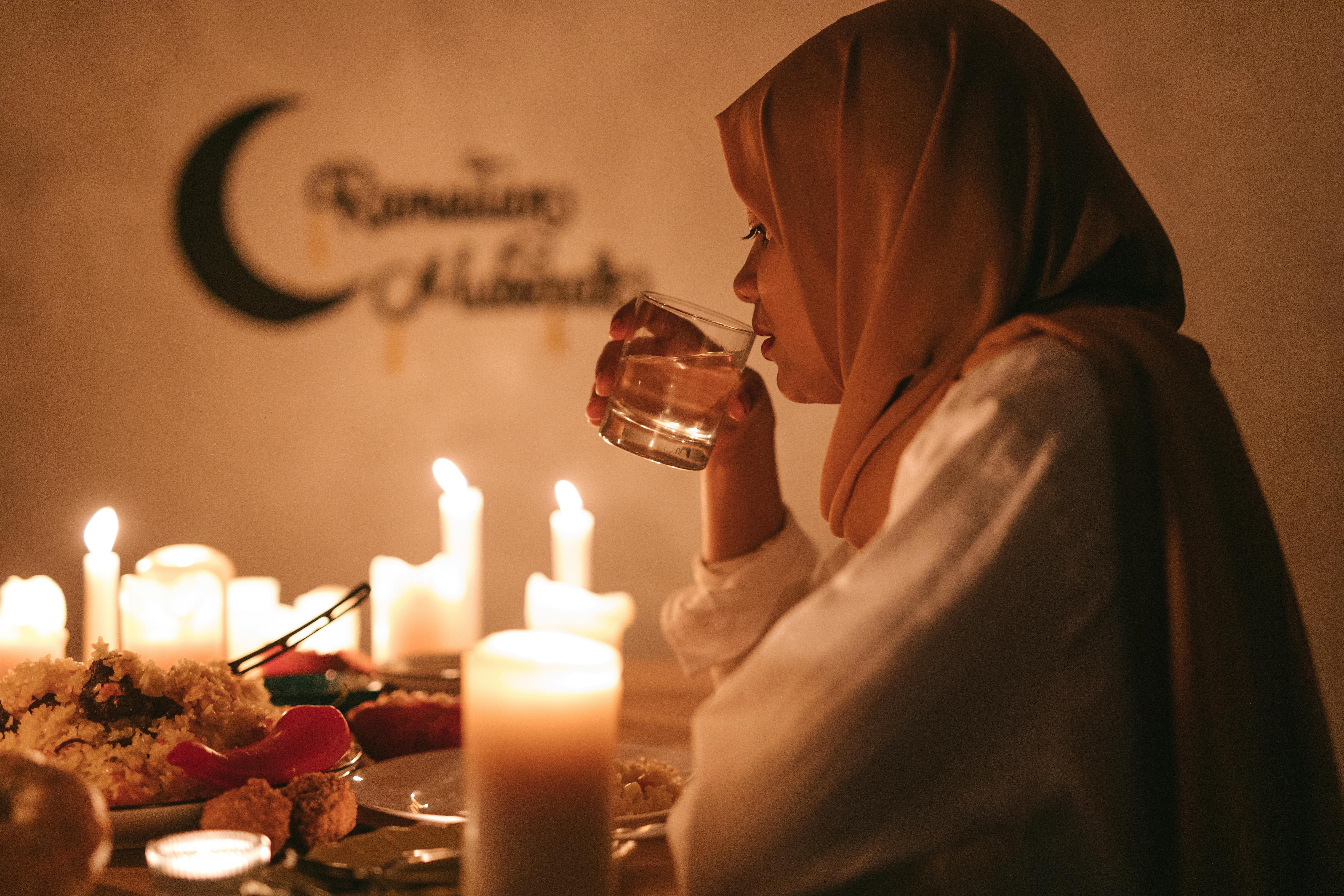
From dawn until sunset, observant Muslims abstain from food and drink as an act of devotion and spiritual discipline. The fast is meant to have self-control, gratitude, and closeness to God. Evenings are marked by iftar, the meal that breaks the fast, often shared with family, friends, and community members. The month ends with Eid al-Fitr, a major three-day Islamic holiday marking the end of the holy month of Ramadan. It shows gratitude to Allah for the strength to complete the month-long dawn-to-dusk fast, celebrating with communal prayers, charity (Zakat al-Fitr), family gatherings, feasting, and gift-giving.
Because Ramadan follows the lunar calendar, it shifts each year. It completes a full cycle approximately every 33 years, which is why this overlap with Lent is so rare.
What is Lent?
Lent, commonly referred to as الصَّوْم الكَبير (al ṣawm al kabīr), meaning “The Great Fast,” is a 40-day Christian worship season of fasting, prayer, and charity that begins today on Ash Wednesday, February 18, 2026, and continues until Holy Thursday. It is observed primarily by Catholics, Orthodox Christians, Anglicans, and many Protestant denominations. The season is meant to prepare believers for Easter through repentance and self-reflection.
Lent mirrors the 40 days Jesus spent fasting in the wilderness before beginning his public ministry. On Ash Wednesday, Christians receive ashes on their foreheads as a public sign of repentance. Throughout the season, many abstain from meat on Fridays, while Orthodox Christians often follow a stricter fast that excludes meat, dairy, and eggs.
A Moment of Overlap and Its Significance
Both Ramadan and Lent celebrate fasting, prayer, and charitable giving. Both result in major religious holidays, such as Eid al-Fitr and Easter. While the biblical foundations differ, the structure and intention of the seasons reflect similar commitments to discipline and preparation.
Despite narratives that attempt to separate Christians and Muslims, Arab communities have long shared language, culture, and history across faith lines. This overlap makes that shared reality more visible and allows Arabs to come together. The crossover in 2026 will not occur again for many years. For Arab Americans, it provides an opportunity to recognize both religious traditions within the same period of sacred time.
This year, iftar gatherings and Ash Wednesday services are taking place within the same week. Churches and mosques in the Arab majority cities in the United States are observing their respective traditions simultaneously. In many Arab households, relatives and friends are participating in parallel forms of fasting.
In a year when both communities fast together, the calendar itself becomes a reminder that religious difference and cultural unity can coexist.
Want more articles like this? Sign up for our e-newsletter!
Check out our blog here!