

Subscribe
to receive news by email
Poll
Will the Trump Administration Shift U.S. Policy in Favor of Palestine?
- No (86%)
- Yes (14%)
 Loading ...
Copyright © 2026 Arab America
Go topPalestinian Resistance Through Art: Tatreez
By: Luma Alaraje / Arab America Contributing Writer
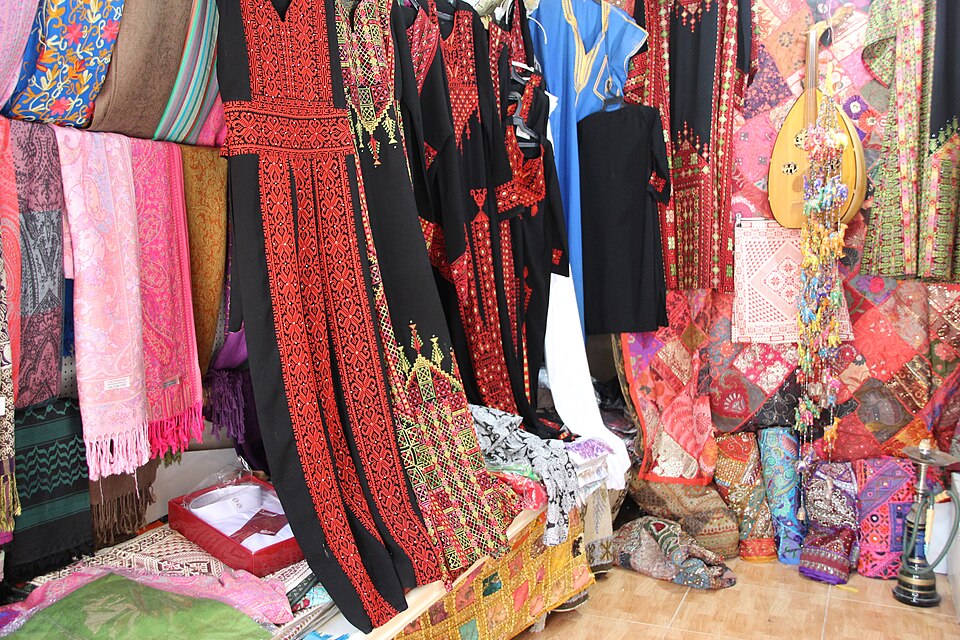
Tatreez, the traditional Palestinian art of embroidery, has long been an important part of Palestinian culture and identity. However, for generations, Palestinian women have used tatreez for much more than decorating clothing. Through the patterns and designs they create; Palestinian women have preserved their cultural identity and maintained a connection to their homeland. As women gathered to embroider, these moments became opportunities to build relationships, exchange ideas, and discuss the political realities of their lives as Palestinians. What may have appeared to be an ordinary act of embroidery became a space for community, solidarity, and resistance. As Palestinian history has been shaped by displacement and occupation, tatreez has also become a way for women to express their identity and resist the erasure of their culture.
The History of Tatreez
Palestinian women have practiced tatreez for generations. Traditionally, Palestinian women incorporated tatreez into clothing. They sewed it into thobes, headdresses, and hijabs. The patterns, colors, and styles of tatreez varied across regions, allowing clothing to reflect the identities of different Palestinian communities and cities. Older generations often passed down these designs to younger generations, preserving not only the art itself but also the cultural knowledge and connection to it. The patterns were more than decorative, they reflected the communities and experiences of the women who created them. Through tatreez, Palestinian women were able to express their identities while maintaining a connection to their heritage.
Tatreez was historically an important part of Palestinian women’s everyday lives. Women often practiced it collectively, by gathering in homes and community spaces to work on their respective projects. These gatherings provided opportunities for women to share stories, discuss their experiences, and exchange ideas. While their hands were occupied with tatreez, their conversations extended far beyond the fabric in front of them. Palestinian women would discuss their families, their communities, and the political realities surrounding them. Through these conversations, women could develop a shared understanding of their experiences and the issues affecting their communities. The relationships formed during these gatherings became an important part of preserving Palestinian identity across generations. Tatreez was not necessarily political in every setting, but the spaces it created allowed women to discuss the realities of their lives and the future of their communities.
Tatreez and Political Resistance
As Palestinian history became increasingly shaped by displacement and occupation, tatreez took on an even greater significance. After the Nakba in 1948, Palestinians found it necessary to use their culture to maintain their connection to their homeland. For many Palestinians, the traditions they carried with them became a way to uphold their identities despite being separated from their homes and communities. Similarly, Palestinian women used tatreez to continue practicing their traditions that had been passed down through generations, even as the circumstances surrounding them changed.
Tatreez also became a way for Palestinian women to express their political identity. During the first Intifada in 1987, Palestinian women used tatreez as an outlet for political expression. They began using traditional patterns alongside national symbols and political imagery, creating clothing that reflected their experiences and their resistance. These embroidered dresses, often referred to as “Intifada dresses,” became a way for women to express their Palestinian identity and participate in the broader movement against Israeli occupation. At a time when displaying Palestinian national symbols could carry significant risks, embroidery provided women with another way to express their identity and solidarity with their people.
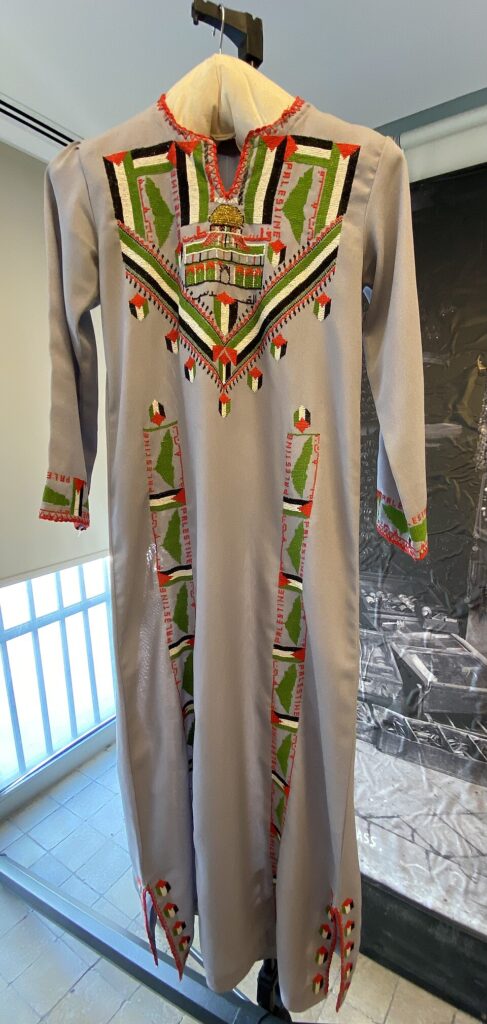
The use of tatreez during the first Intifada demonstrated how a traditional cultural practice could take on a political meaning. Women were not only preserving the embroidery patterns passed down to them but also incorporating their experiences and political realities into their work.
Tatreez Today
Through its designs, tatreez became a way to communicate resistance and maintain a connection to Palestinian identity. The practice shows that resistance does not always take place through demonstrations or political movements. It can also exist through the preservation of traditions, the sharing of stories, and the determination to maintain a collective identity.
Today, tatreez continues to hold cultural and political significance for Palestinians in Palestine and throughout the diaspora. Younger generations are learning embroidery as a way to connect with their heritage, while Palestinian artists and designers continue to incorporate traditional patterns into contemporary clothing and artwork. For many Palestinians, wearing tatreez is a way to express their identity and maintain a connection to their homeland. The continued practice of embroidery allows traditions to be passed down, ensuring that the stories and experiences of previous generations are not forgotten.
Arab America Foundation is placing tatreez items for bidding in the silent auction of our Connect Empowerment Summit 2026! This is the perfect chance to get your own tatreez garments, such as traditional thobes, shawls, and scarves! Check out those items (and more!) and place your bid here!
Want more articles like this? Sign up for our e-newsletter!
Check our blog here!