Subscribe
to receive news by email

Poll
Will the Trump Administration Shift U.S. Policy in Favor of Palestine?
- No (87%)
- Yes (13%)
 Loading ...
Copyright © 2026 Arab America
Go topPathbreakers of Arab America— Juliette Kayyem
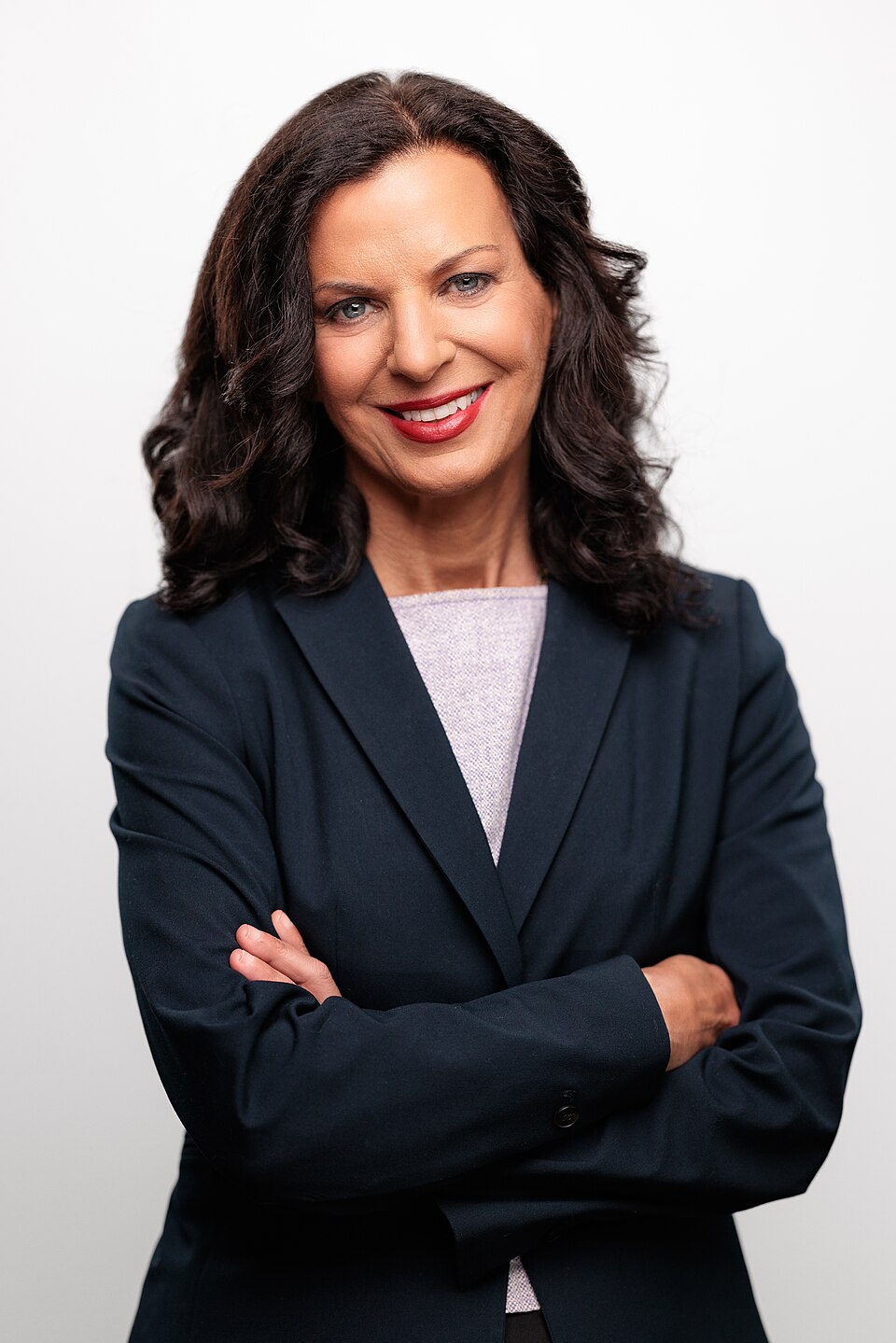
By: John Mason / Arab America Contributing Writer
This is the one-hundred and fourteenth in Arab America’s series on American pathbreakers of Arab descent. The series features personalities from various fields, including entertainment, business, sports, science, the arts, academia, journalism, and politics. Our 114th pathbreaker, Juliette Kayyem, a first-generation Lebanese Arab, has spent the last two decades managing complex policy initiatives and organizing government responses to major crises in both state and federal government. In academia, the private sector, government and media, Kayyem is a national leader in homeland security and crisis management. She has also been a vocal advocate for Arab Americans and has taken significant steps to support their rights and interests.
In academia, the private sector, government, and media, Juliette Kayyem became a national leader in homeland security and crisis management
Juliette N. Kayyem was born in Los Angeles to Lebanese Christian parents on August 16, 1969. Her family’s immigration pattern is typical of other immigrant families; in her case, they immigrated from Lebanon first to Kentucky, then to California. Juliette especially recalled the significant role her mother played in her upbringing and education. One memory was of her mother, who often carried her immigration papers in a Ziploc bag, emphasizing the importance of belonging and identity. If she carried her Ziploc bag, her mother could claim, “I belong.” Kayyem’s own experiences and background have shaped her advocacy for Arab Americans and their contributions to the nation. In her personal life, Kayyem is the mother of three children and is married to First Circuit Court of Appeals Chief Judge David Barron.
Being academically inclined, Kayyem graduated from Harvard University with a bachelor’s degree in 1991 and from Harvard Law School with a Juris Doctor degree in 1995. She began her legal career almost immediately on graduating from law school, first at the U.S. Department of Justice, where she worked her way up to the position of an advisor to Attorney General Janet Reno until 1999.
Back in her adopted state of Massachusetts, Kayyem was appointed the state’s first Undersecretary for Homeland Security by Governor Deval L. Patrick in January 2007. That department was charged with overseeing the National Guard, the commonwealth’s strategic security planning, and “the distribution of homeland security funds consistent with the Governor’s priorities.”
Then, moving back to Washington in 2009, Kayyem became reinvolved in the nation’s security sector. U.S. Department of Homeland Security Secretary Janet Napolitano appointed Kayyem as Assistant Secretary for Intergovernmental Affairs. Later in 2015, Homeland Security Secretary Jeh Johnson appointed Kayyem to the Homeland Security Advisory Committee, calling on her expertise in security and crisis issues.
In the midst of her U.S. Government career, in 2013, “it was reported that Kayyem was considering a bid for Governor of Massachusetts in the 2014 election,” and subsequently she officially announced her candidacy. Her platform included raising the state minimum wage and an earned sick day mandate for workers. At the state party convention on June 14, 2014, Kayyem failed to receive the 15% of delegate votes required to make the primary ballot.
Since 2001, during much of the time Kayyem was working in state and federal positions, she has occupied the position of resident scholar at Harvard’s Belfer Center for Science and International Affairs. She is currently the Robert and Renee Belfer Senior Lecturer and faculty chair of the Homeland Security and Global Health Projects. She also taught courses on law and national security. In the fall of 2011, Kayyem returned to the Kennedy School as a lecturer in public policy and continued her role as a member of the Belfer Center board of directors.
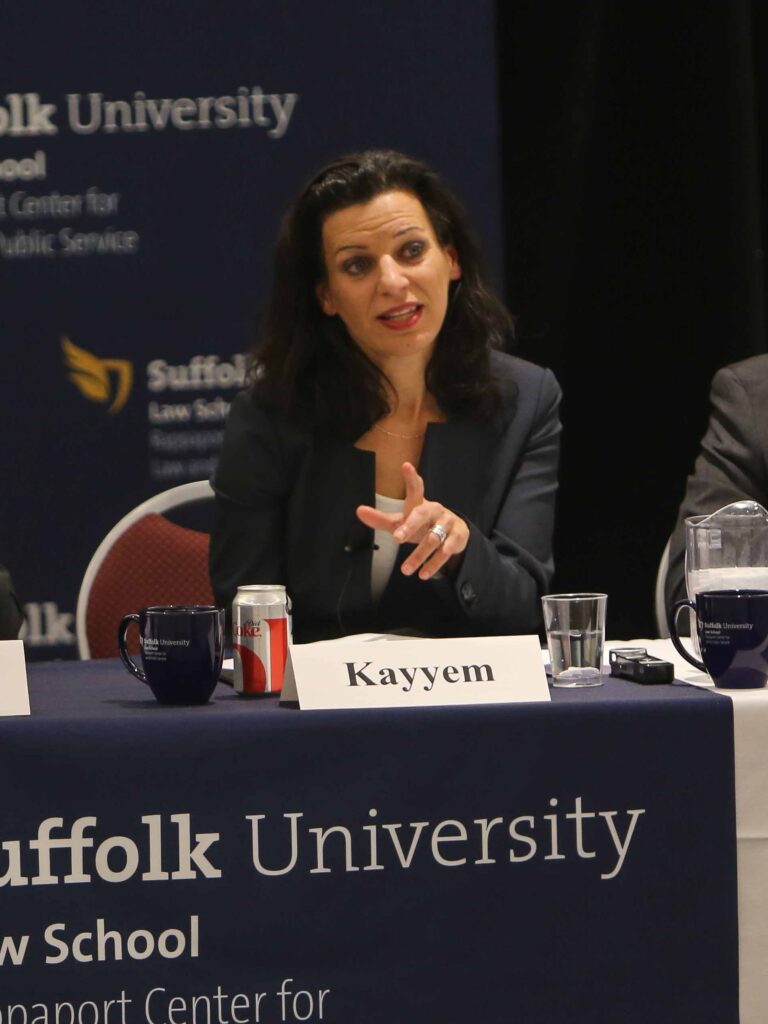
Kayyem has created quite a name for herself in the broadcast media sector. CNN/’Fortune Magazine’s’ ‘People to Watch’ feature named her for on-air analyses for NBC, MSNBC News, and CNN. She has continued her columnist role, this time through a bi-weekly ‘Boston Globe’ column distributed through the New York Times wire service. For that role, Kayyem was selected as a finalist for the 2013 Pulitzer Prize for Commentary “for her colorful, well-reported columns on an array of issues, from women in combat to oil drilling in Alaska.”
A vocal advocate for Arab Americans, Kayyem has taken significant steps to support their rights and interests.
As a former government official and a prominent figure in the Arab American community, Kayyem has been instrumental in addressing issues related to civil liberties and the need for a balance in counterterrorism measures. Reviewers characterize Kayyem’s work for her commitment to civil rights and her efforts to combat the use of secret evidence against Arab and Muslim communities. She has also been involved in various initiatives to enhance domestic preparedness and ensure the safety and security of communities across the nation.
A case in point of Kayyem’s support was her appointment by House Minority Leader Richard Gephardt (D-Mo.) in 1999 to serve on the 10-member National Commission on Terrorism, whose charge was to review national policy on preventing and punishing terrorism. Her appointment was a replacement for an earlier appointment of a controversial Muslim leader, who drew the ire of American Jewish groups. So as not to raise the anger of Muslim Americans, Gephardt explained his rationale for the replacement as based on a security clearance issue—the Muslim didn’t have one, and Kayyem did.
Jewish organizations commended Kayyem’s appointment, stating that she “appears to have a strong background in national security issues and a clear and unambiguous understanding of the terrorist threat to the United States, as do the other appointees to the commission.” Muslim organizations, however, were not happy with the exclusion of an American Muslim from the Commission.
According to a Kennedy School statement, “As a member of the National Commission on Terrorism, Juliette Kayyem brought a passion for civil liberties and a sympathetic ear for Arab-American concerns to the congressionally appointed terrorism panel. A former Justice Department lawyer and a Lebanese American, she served as a driving force on the Commission, which condemned secret evidence and ethnic stereotyping in a report last year that otherwise called for stronger measures to combat the threat of terrorism.”
The Boston Globe went even further in its praise: “Kayyem gained visibility when she waged ‘a one-woman war’ in the Justice Department against the use of secret evidence, which she believed unfairly targeted America’s Arab and Muslim communities.” A fellow Commission member averred, “Juliette is a sophisticated observer of how bad terrorism can be, but she sees the need for a balance, and she tips in the civil liberties direction.”
It is hard to add anything more significant about our Pathbreaker, except that we need her on our side!
Sources:
-“Juliette Kayyem,” Wikipedia Series on Arab Americans, 2026
-“Meet Juliette Kayyem,” Arab American Institute, April 22, 2020
-“Juliette Kayyem, Biography, Harvard University, 5/7/2024
-“New Appointee to Terror Panel Gets Thumbs Up from Jews, Arabs,” Jewish Telegraphic Agency, 8/3/1999
-“Kayyem fights secret evidence,” Harvard Kennedy School, Belfer Center, 11/30/2016
John Mason, Ph.D., focuses on Arab culture, society, and history and is the author of LEFT-HANDED IN AN ISLAMIC WORLD: An Anthropologist’s Journey into the Middle East, New Academia Publishing, 2017 and of his new novel, WHISPERS FROM THE DESERT: Zaki, a Little Genie’s Tales of Good and Evil (2025), under his pen name, Yahia Al-Banna. He has taught at the University of Libya in Benghazi, Rensselaer Polytechnic Institute in New York, and the American University in Cairo. John served with the United Nations in Tripoli, Libya, and consulted extensively on socioeconomic and political development for USAID and the World Bank in 65 countries.
The views and opinions expressed in this article are those of the author and do not necessarily reflect the position of Arab America. The reproduction of this article is permissible with proper credit to Arab America and the author.
Want more articles like this? Sign up for our e-newsletter!
Check out our blog here!