
Subscribe
to receive news by email

Poll
Will the Trump Administration Shift U.S. Policy in Favor of Palestine?
- No (87%)
- Yes (13%)
 Loading ...
Copyright © 2026 Arab America
Go topSheshbani: Libya’s Hidden Ashoura Tradition
By: Nourelhoda Alashlem / Contributing Writer
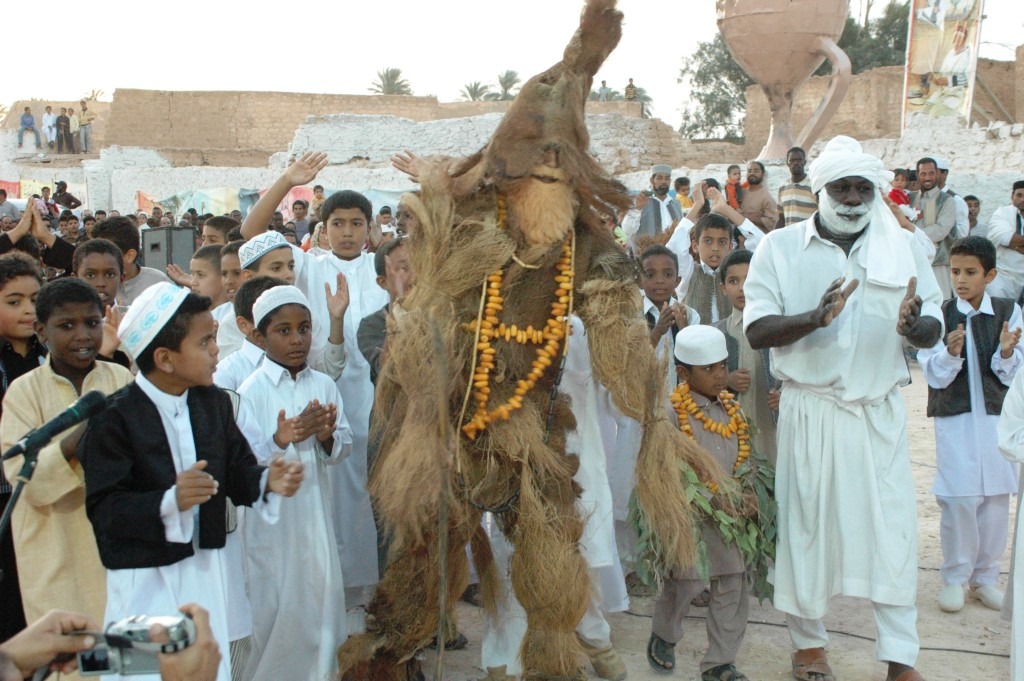
The figure Sheshbani (شيشباني) is a Libyan tradition tied to Ashoura, a holiday in the Islamic calendar remembered for when Prophet Musa (Moses) split the sea and was saved. The tradition is one that many remember from childhood, through generations, but it is rarely explained or documented in the media. On the night before Ashoura, the masked figure appears and dances through neighborhoods with groups of children, creating a scene that is loud, energetic, and impossible not to follow.
Who is The Masked Figure?
The Sheshbani figure is usually a young man who completely hides his identity. He covers his body in rough palm fibers, sometimes mixing in scraps, feathers, or small objects. He fully conceals his face so no one can recognize him, staying true to the idea of fully embodying the character.
The palm fibers are coarse and uneven, giving him a rough appearance that stands out in the streets. Sheshbani often carries a drum, using it to draw attention as he moves. He does not speak at all in most cities, except when he is responding to donations. His presence, the sound, and the crowd chanting carry the ritual. The figure becomes less about who he is and more about what he represents in terms of expressions.
The Origins
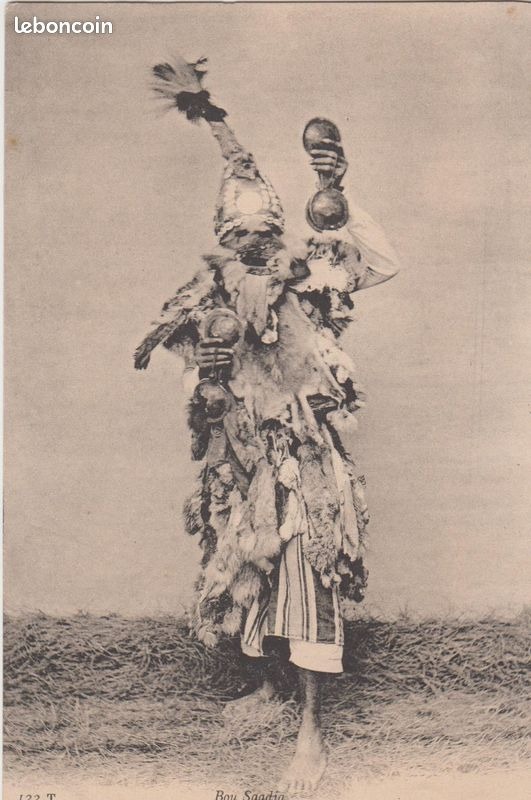
People do not agree on a single origin for Sheshbani, but multiple explanations exist. Some accounts trace the tradition back over 1000 years, linking it to the Fatimid period, while others suggest it may be even older. There are also strong connections to Amazigh (Imazighen) cultural practices, with similar masked figures appearing across North Africa. In Northern Africa, specifically the Maghreb region, figures like Bou Saadia in Tunisia, Algeria, and Libya. In Morocco, figure Bilmawen(Buljood) also appears in similar forms, involving masked or costumed characters dancing through neighborhood streets. These similarities imply that Sheshbani may not be unique to Libya but rather a part of a larger North African, ancient Amazigh tradition.
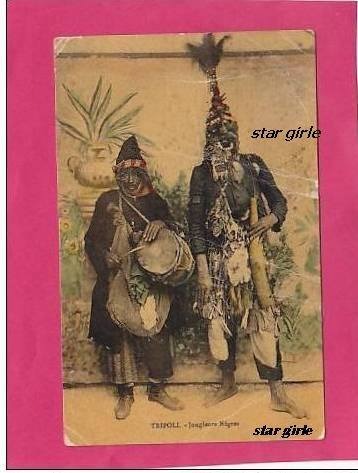
Another explanation connects the tradition to historical events in Libya. Some accounts describe how prisoners, particularly during Ottoman and Qaramanli periods, relied on public generosity. People often described them as moving through communities to receive food and support. Children may have later imitated these scenes and turned them into a “performance.”
There are also linguistic interpretations. Some suggest the name “Sheshbani” comes from altered or merged words over time. One explanation links it to Italian words related to food, as main donations would be chickpeas, which are “ceci,” and bread (“pane”) in Italian. These two words combine to form the phrase “Ceci-pane,” which sounds like “Sheshbani” and may have gradually adapted into local speech over time.
None of these explanations is definitive in nature. The tradition exists through an oral storytelling tradition rather than a single recorded origin.
What Happens on Ashoura Night?
On the night of Ashoura, Sheshbani moves through neighborhoods with groups of children following him. He dances to the rhythm of a drum as they go from house to house, knocking on doors and chanting:
“Sheshbani ya bani, hadha hal al-shaybani”
“Hadha halu wa ahwalu, rabbi yqawi mazalu”
They also repeat lines like the following (translated):
“Sheshbani on a horse, prepare yourself, owner of the shop.”
“Sheshbani on a camel, prepare yourself, owner of the place.”
As they pass, families step outside and bring offerings such as money, chickpeas, or fava beans, which people commonly associate with Ashoura and donate to those in need. When Sheshbani sees someone go inside to bring something, he calls out, “She went to bring, may she be rewarded.” If no one gives anything, he responds, “She went to bring, may the wolf take it.”
The group continues through the entire neighborhood and repeats the same process at every door. They then gather and distribute the collected food. Often, families share it so they can prepare Ashoura meals.
Food traditions vary by city. In Misrata, couscous with fava beans and boiled eggs is commonly prepared. In Yefren, cooks make dishes like wheat-based meals, including Harissat El Gama7 (هريسة القمح), which are sometimes served with osban and dried jerky meat. Across other areas, communities use similar combinations of grains, beans, and simple ingredients, depending on local customs.
However, throughout these different cities, the structure remains the same: a masked figure, a group of children, the famous chant, and a sequence of visits across the neighborhood. While the practice is less common today, it remains part of Libyan cultural memory.
What remains unclear is not how people perform the tradition, but why it has lasted this long without a single agreed-upon explanation. Sheshbani continues to exist even as the practice fades. This reality calls for urgent efforts to revive this endangered tradition.
Want more articles like this? Sign up for our e-newsletter!
Check out our blog here!