

Subscribe
to receive news by email

Poll
Will the Trump Administration Shift U.S. Policy in Favor of Palestine?
- No (86%)
- Yes (14%)
 Loading ...
Copyright © 2026 Arab America
Go topSmall Prison Inside a Big Prison: Incarcerated Palestine
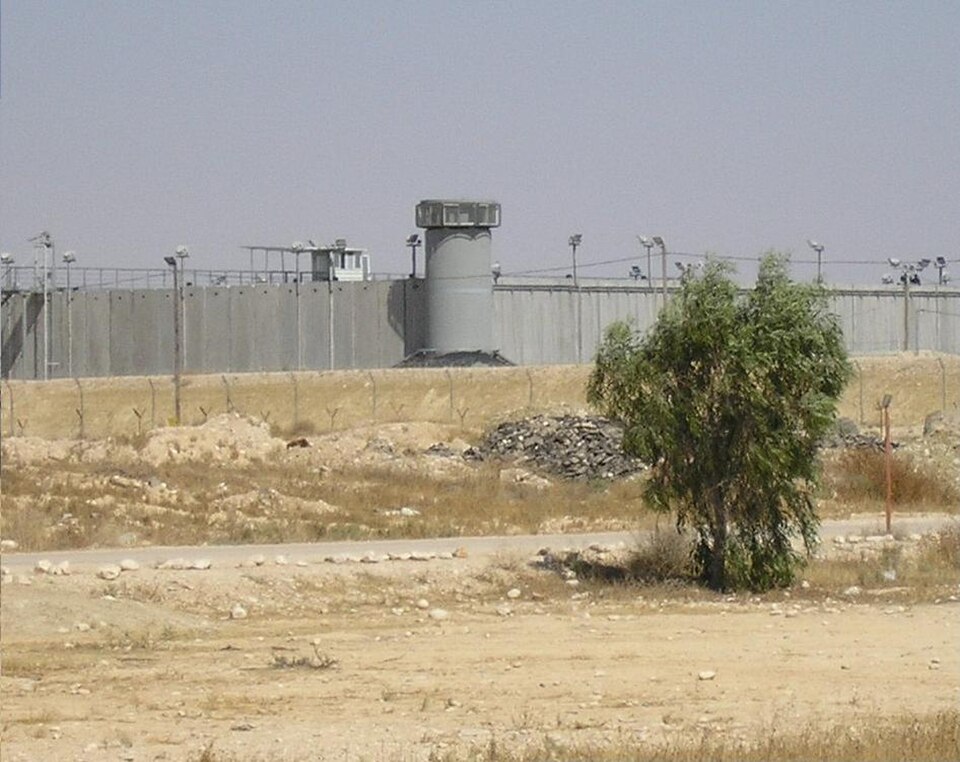
Photo by Wikimedia Commons
By: Rami Balin / Arab America Contributing Writer
Recently, Palestinian Chilean singer Elyanna, a loud voice for Palestinian liberation on the world stage, released a pop music video filmed in a prison, which immediately drew significant criticism from many of her fans who called out the sheer insensitivity of using the prison setting in times when Palestinians, especially women, are facing incredibly harsh conditions and abuse in Israeli prisons. Responding to the backlash, she clarified that the song was not about a love interest but about a quest for freedom, admitting that perhaps she went too far with the metaphor. This explanation didn’t override the triggering nature of the video itself, nor did it change the socio-political context it was created in.
It is quite ironic that despite the myriad human rights abuses that Israel is committing on a daily basis this conversation is sparked when a Palestinian woman “goes too far.” Nonetheless, hopefully this prompts people to learn about the Israeli prison-industrial complex and the carceral systems that Palestinians are subjected to.
Palestinians in Israeli Detention
In 2025, the UN Committee Against Torture held a probe concerning Israel – a routine check that wasn’t in any way a reaction to the ongoing genocide and already documented violations of human rights concerning unlawful imprisonment, humiliation and other aspects of Israeli treatment of Palestinians. The conclusion of the Committee was as follows: “Israel appears to pursue a deliberate policy of torture and collective punishment of Palestinian detainees.” The report details, among other things, the severe spike in violence and ill treatment since October 7, 2023. While this is an authoritative conclusion, it doesn’t lead to any direct consequences for the state of Israel, like all non-binding UN resolutions.
For human rights organizations such as Adalah, the findings of this commission weren’t news at all – in fact, they brought the evidence against Israel to the table. According to them, conditions in Israeli prisons are systemic and are accommodated within Israeli legal system. Abuses include physical violence, systemic policy of starvation, humiliation, sexual violence and rape by objects and in some instances dogs, surgical procedures performed on prisoners without anesthesia, unhygienic conditions that cause severe health problems and many more. Moreover, in 1987, at the very beginning of the First Intifada, Israel became the first country in the world to officially and proudly legalize torture, referring to it as “moderate amounts of physical pressure.”
Escalation of Abuse
Prolonged detention of Palestinians is not new in itself, however, human rights abuses in Israeli detention escalated since October 2023. In that timeframe, more than thirty laws were passed in the Israeli Knesset, aimed at worsening the already appalling conditions for Palestinians inside Israeli prisons as well as broadening the scope of reasons and pretexts to swell the population of incarcerated Palestinians. In November 2024, Knesset passed a bill amending the Youth Law, now allowing for imprisonment, even for life, of children from the age of twelve. Children can be imprisoned for so-called “terror offenses,” which include stone throwing. International organizations such as the Red Cross have been barred from all detention facilities where Palestinians are held. In a drastic spike of violence, at least 94 Palestinians have been killed in Israeli custody since October 2023, including Gazan doctor Adnan al-Bursh. According to Lisa Hajjar, a sociologist whose research focuses on torture, “we see a return back to the most brutal and violent forms of interrogation tactics and dehumanizing conditions of confinement that existed in the early years of the occupation.”
There are two types of detention for Palestinians in Israeli Prison Service: criminal detention, which only includes Palestinian citizens of Israel; and security detention, including women and minors, under administrative detention without charge or trial, extended every six months indefinitely. Since October 7, 2023, this second type has included Palestinian citizens of Israel who are accused of speech-related offenses, for example posts on social media. This carceral system is a crucial element of the Israeli apartheid, enabling the abuses experienced by Palestinians only.
Military Detention
In 2001, two months after 9/11, then-US president George Bush issued an order which allowed people deemed to be “unlawful combatants” to be held incommunicado for prolonged periods of time without interventions. Seen as being outside the law, unlawful combatants were described as neither civilians nor prisoners of war, but rather a security threat in a different category. Shortly after, Israel adopted its own unlawful combatants law. Currently it includes prolonged military detention without judicial oversight and is applied to all Palestinians from Gaza, effectively classifying all Gazans as terrorists and thus providing a legal basis for Israeli authorities to keep arbitrarily kidnapped Palestinians in high security detention facilities. Such facilities, for example Sde Teiman, have drawn comparisons to concentration camps because of the conditions inside and systemic human rights violations documented in testimonies of survivors and in footage from security cameras. For example, the detainees inside were handcuffed, blindfolded and forced to kneel the whole time they were in detention, among other abuses. Meanwhile, conditions experienced by Palestinians in military detention facilities and in the Israeli Prison Service are very alike.
In the context of the ongoing genocide, tracking people who are considered missing is extremely hard, and for the moment it is not possible to acquire comprehensive data of how many Palestinians are being held in such facilities. In extremely rare cases, attention drawn to particular prisoners puts pressure on the Israeli authorities to allow minimal legal access. Hussam Abu Safiya, a doctor and director of Kamal Adwan hospital in Gaza, has been imprisoned for nearly two years and continues to be subjected to constant torture. Despite many people calling for his release, he remains in Israeli detention, his condition critical.
While media focuses on big names and events that seem sensational, everyday oppression and abuses that put Palestinian freedoms, lives and futures at risk don’t make the headlines. Having become ambient, these human rights violations go largely unnoticed, as do the Palestinian victims of the apartheid system. Although Elyanna’s music video is undoubtedly problematic, perhaps it can be a reminder, an incitement that prompts deeper conversations about Palestinian carcerality, agency and possibilities for change.
Amplify your voice for Hussam Abu Safiya and all Palestinian prisoners. None of us are free until we are all free.