
Subscribe
to receive news by email

Poll
Will the Trump Administration Shift U.S. Policy in Favor of Palestine?
- No (86%)
- Yes (14%)
 Loading ...
Copyright © 2026 Arab America
Go topMacklemore Dropped From Ed Sheeran's Tour After Pro-Palestinian Stage Protest
By: Megan Guzman Abbott / Arab America Contributing Writer
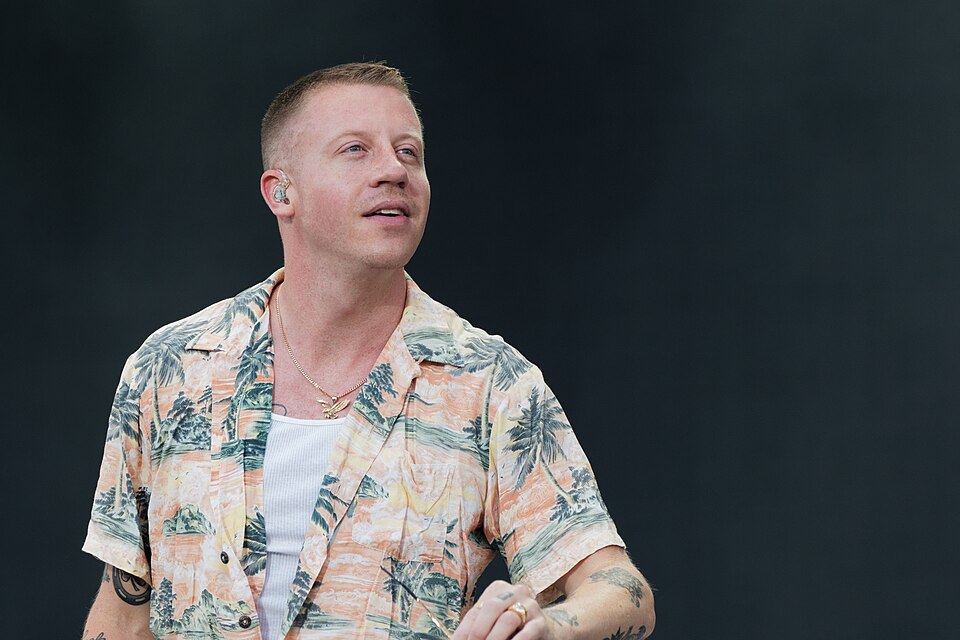
This Monday, Macklemore was removed from Ed Sheeran’s The Loop Tour, which quickly turned into a larger dispute over Palestine, artistic expression, and the influence of concert venues and promoters. Following Macklemore’s pro-Palestinian protest during Ed Sheeran’s New Jersey shows, four other artists connected to the tour (Finneas, Aaron Rowe, Lukas Graham and Irish folk band Beoga) have announced that they will withdraw from upcoming dates.
Macklemore’s “Free Palestine”
Macklemore has publicly supported Palestinian rights for years, dating back to October 2023 when he began speaking on the war in Gaza and signed the Artists4Ceasefire letter. His advocacy became stronger by May 2024, when he released his protest song, “Hind’s Hall” in May 2024.
Macklemore has performed “Hind’s Hall” repeatedly since its 2024 release, approximately 18 times. During his September 4 performance at MetLife Stadium in New Jersey, he said that part of the reason he wanted to join Ed Sheeran’s tour was to use the stadium stage to say “Free Palestine,” wanting people in Palestine to know that they had not been forgotten. At his second MetLife appearance on September 5, Macklemore again spoke about Palestine but this time specifically spoke to Jewish people in the audience, saying that criticism of Israel should not be understood as criticism of Jewish people.
And yet this created a large backlash across the United States, including a petition from the Israeli American Council calling for Macklemore to be removed from the tour. Several U.S. venues further communicated to the tour promoter that they would not host shows if Macklemore stayed on the lineup.
The Role of Robert Kraft and the Venues
New England Patriots owner Robert Kraft owns Gillette Stadium, one of the venues that would be hosting Sheeran’s tour, and has been an active and public supporter of Israel.
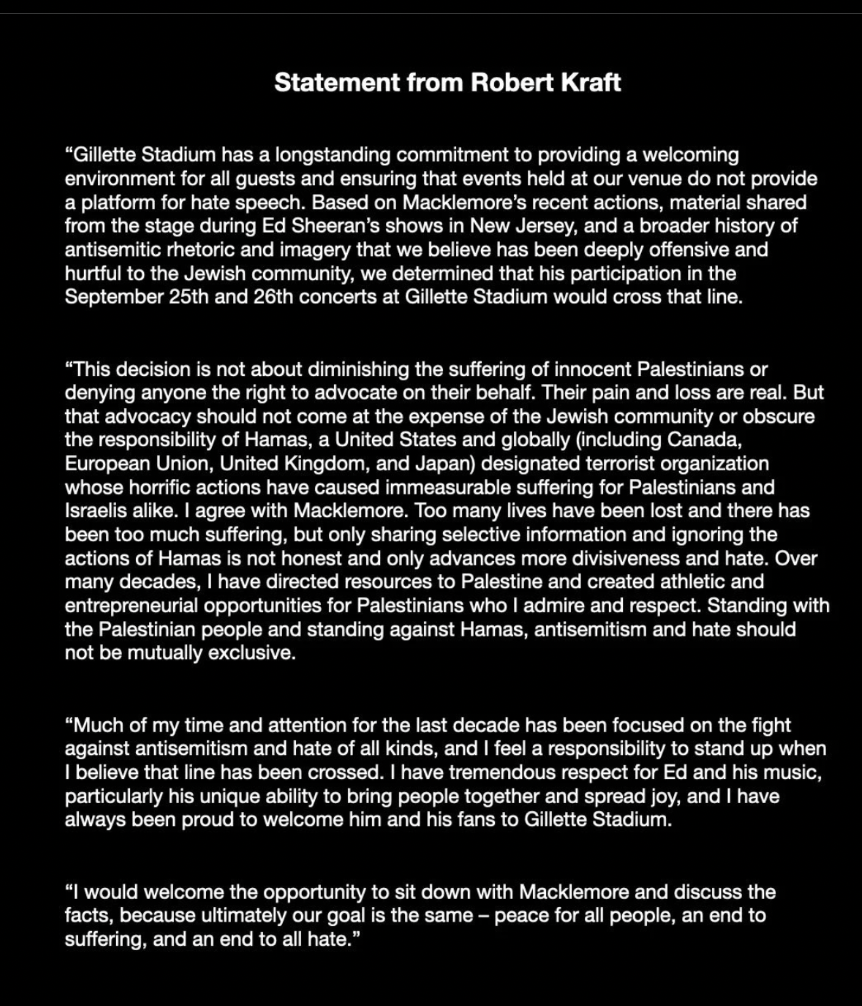
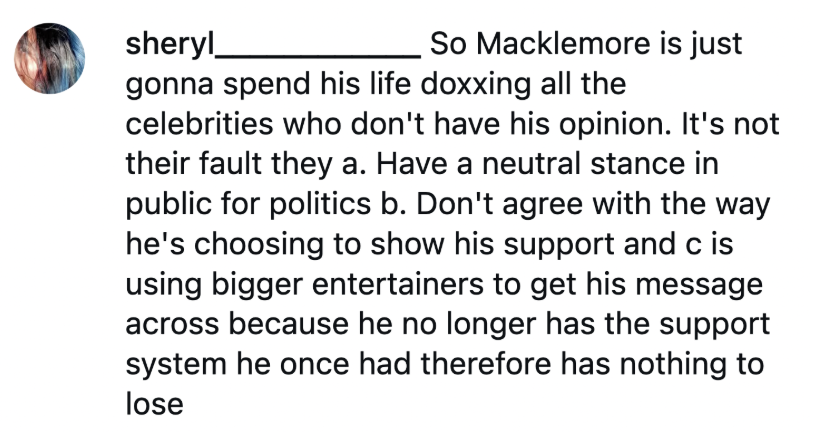
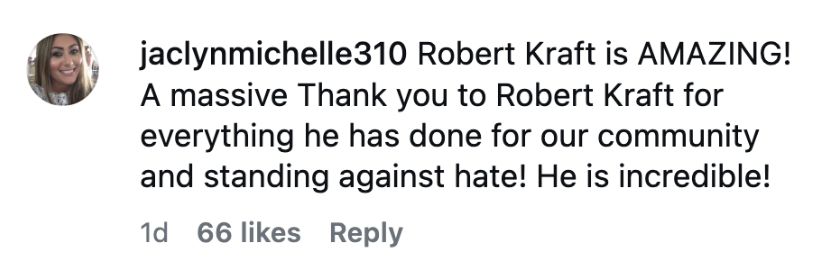
Macklemore said in his statement posted on Instagram Monday that Kraft had rallied other stadium owners against his participation in the tour. Kraft later defended his decision, saying it was based on the rapper’s recent comments and imagery that he deemed offensive to the Jewish community. He also argued that advocacy for Palestinians should not obscure Hamas’s responsibility.
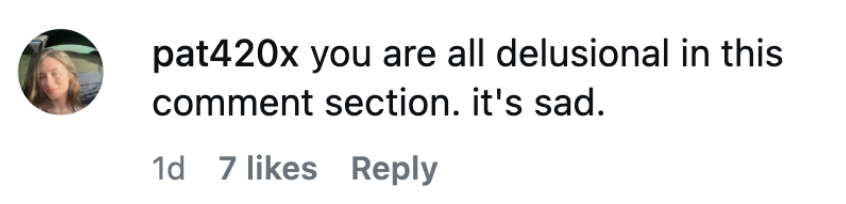
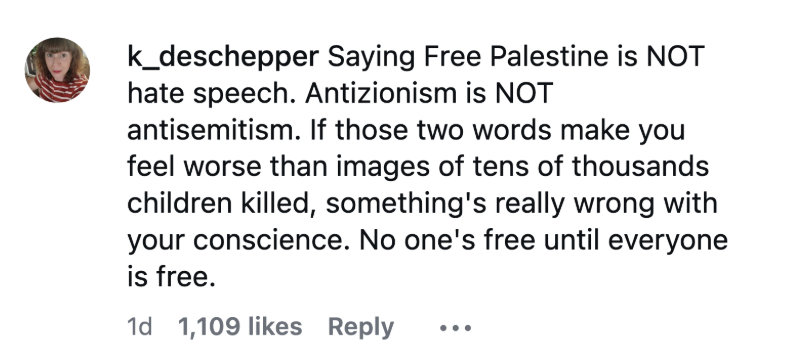
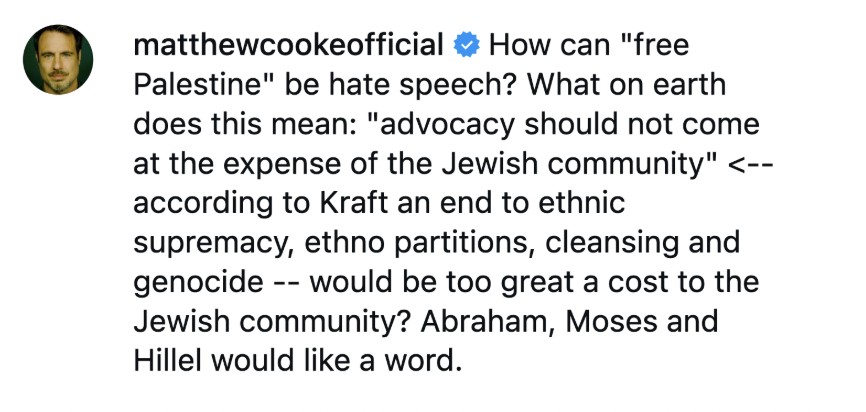
Nevertheless, his statement has caused much division on social media platforms.
Ed Sheeran Responds
On Tuesday, Sheeran released a statement addressing the controversy and making clear that he said the decision to remove Macklemore was not his.
Sheeran said he was “appalled by the conflict between Israel and Palestine” and described the suffering on both sides as a human tragedy. Yet according to Sheeran, the situation changed after his NJ shows, when venues on upcoming tour dates said they would pull their shows if Macklemore remained on the tour. He said he spent the week speaking with venues, promoters, and activists in hopes of finding a resolution, but he says the venues’ decision was final.
Sheeran then emphasised that he aims to not use his music platform or popularity for politics because his audience includes young people and children from different backgrounds, and he aims to focus on peace for everyone.
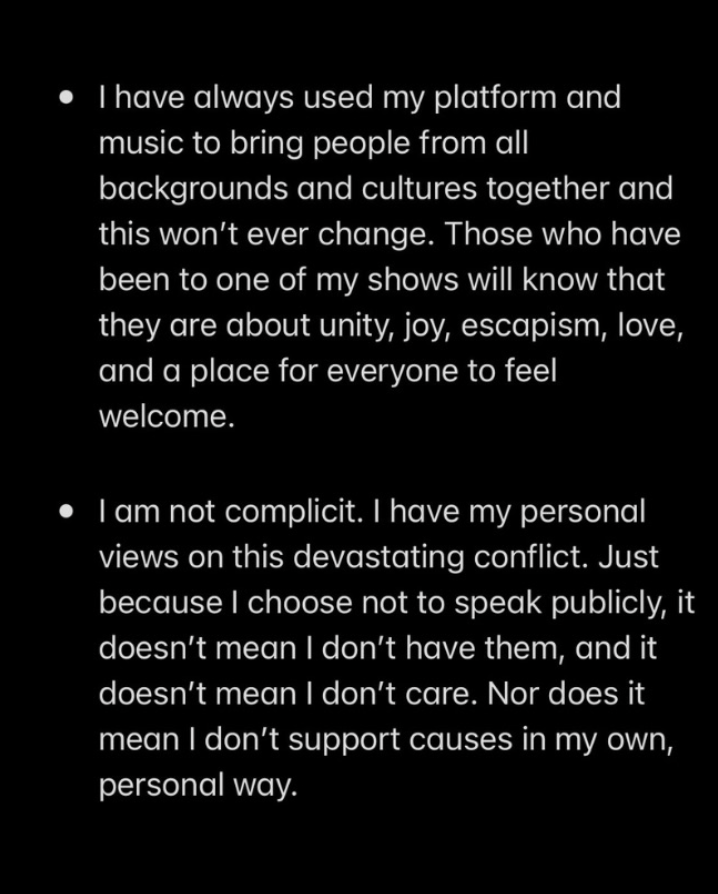
You can read more of his statement at: https://www.instagram.com/p/DdT-6KGAtuI/?img_index=1
And while he wants to protect the children who watch, he shows Ms.Rachel, an American educator, YouTuber, and singer-songwriter for children with 21.3 million subscribers on YouTube. She has also worked as a child advocate, especially for Palestinian kids in Gaza, and has become a vocal point of her Instagram page and other social media platforms. Being a role model for children across the US and abroad, she has even made comments on Ed Sheeran, saying:
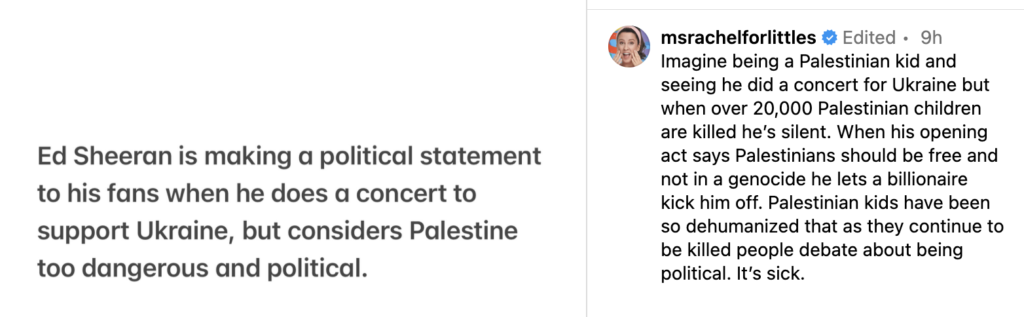
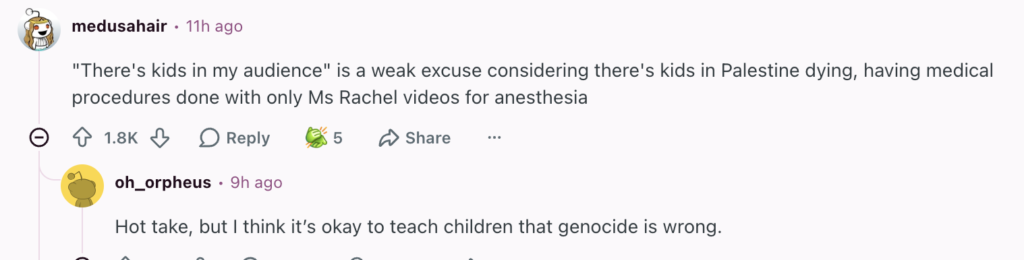
You can read more of her statement at: https://www.instagram.com/p/DdUSjvHM1jD
Artists Walking Away
Following Ed Sheeran’s statement came a large number of performers leaving his tour:
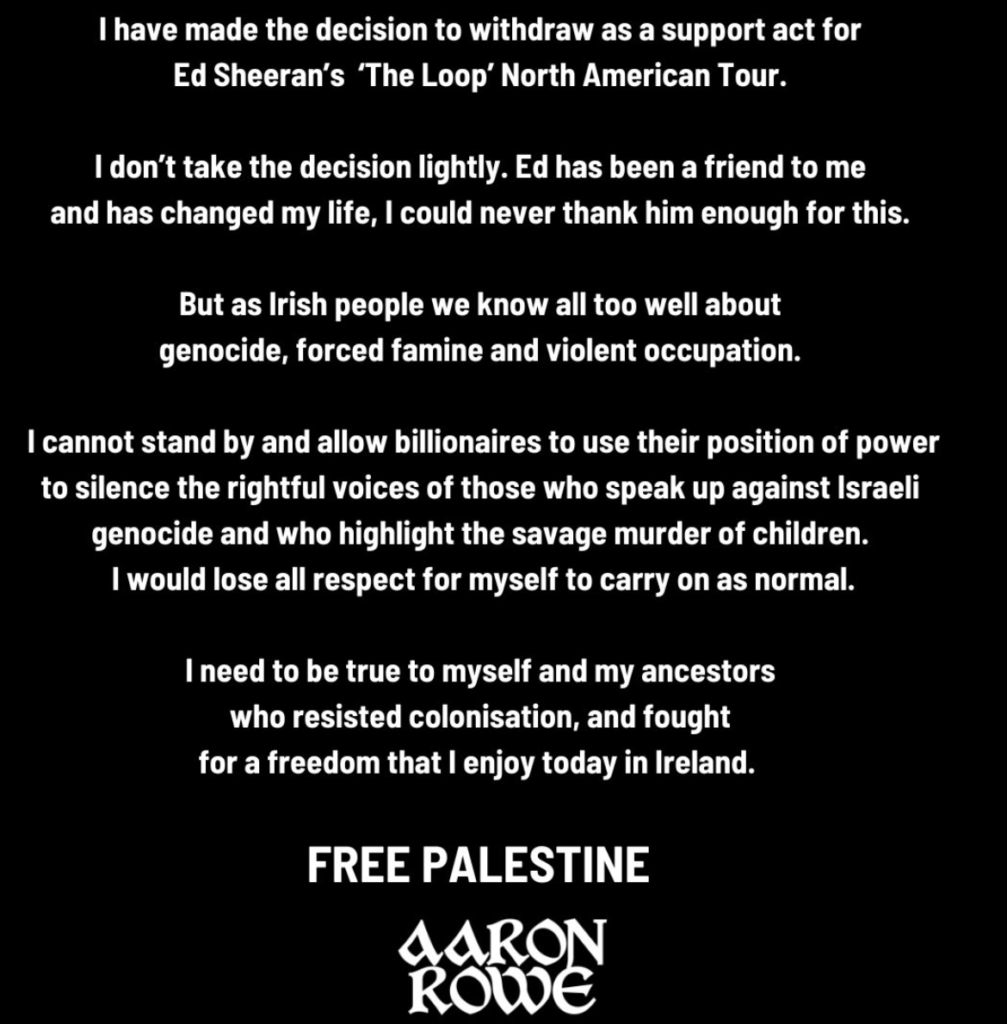
Aaron Rowe: Irish singer-songwriter who was scheduled to perform announced that he would not be performing. Rowe acknowledged his friendship with Sheeran but said he could not continue performing while artists were being silenced for speaking about Palestine. He spoke about Ireland’s own history of colonization and occupation and ended his statement with “Free Palestine.” You can see more at: https://www.instagram.com/p/DdUUf5lokZe
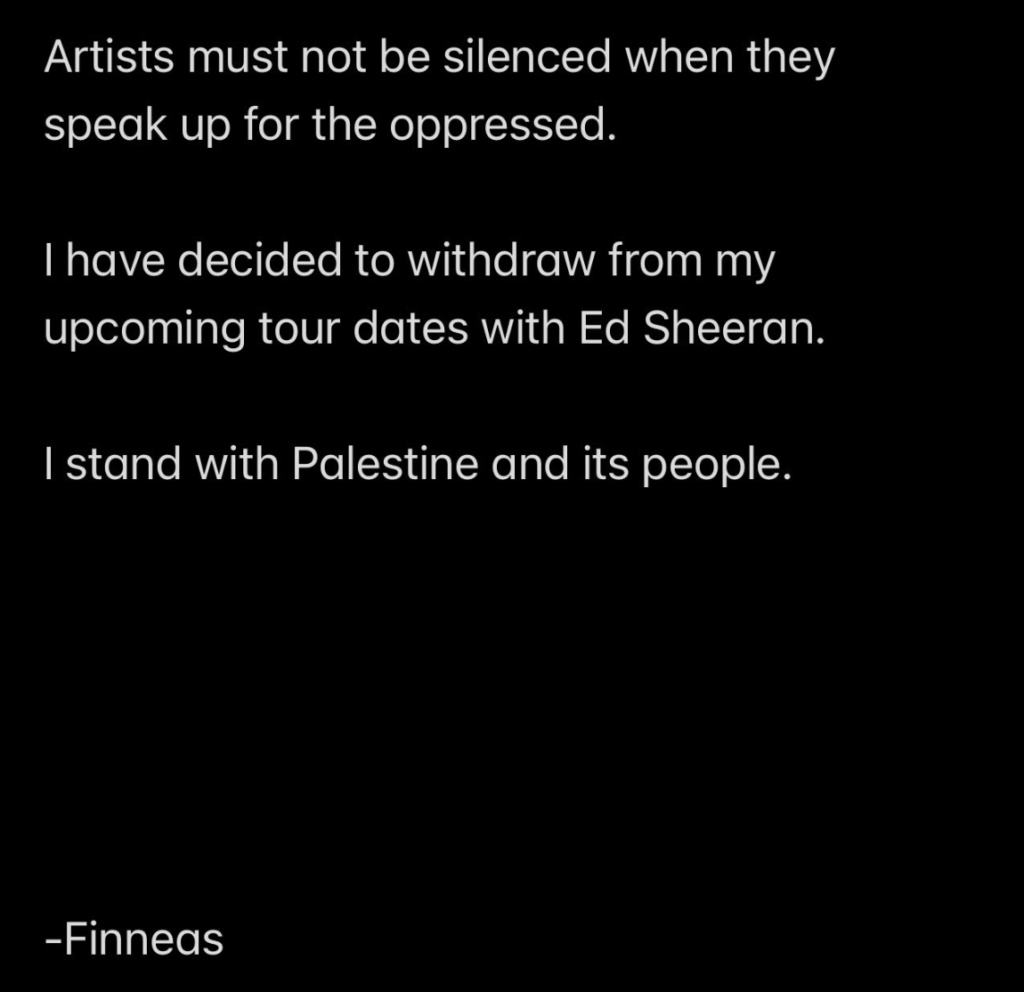
Finneas: Grammy-winning producer and brother of Billie Eilish, also announced that he would withdraw from his South American dates. “Artists must not be silenced when they speak up for the oppressed,” Finneas wrote. “I stand with Palestine and its people.” You can see more at: https://www.instagram.com/p/DdUdYF1zZ4d
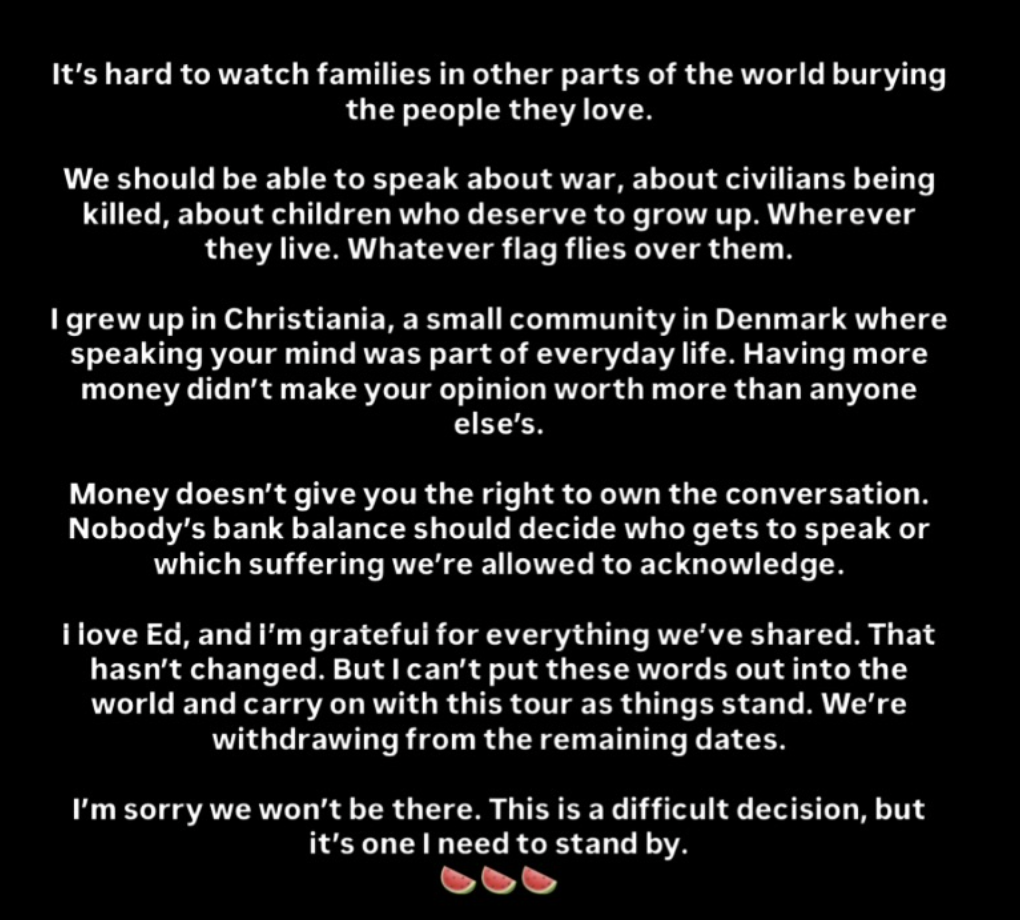
Lukas Graham: Lead singer of the Danish pop band, also withdrew from the tour. He said artists should be able to speak about war, civilians, and children affected by violence regardless of where they live. He added that money should not determine who gets to participate in these conversations. You can see more at: https://www.instagram.com/p/DdUf8-ct9hE
Beoga, an Irish folk group that has performed with Sheeran in the past, also announced its departure from the remaining U.S. dates. The band said it did not want to perform in venues where artists advocating for Palestine could be silenced. You can see more at: https://www.instagram.com/p/DdUZjukjXfn/?img_index=1
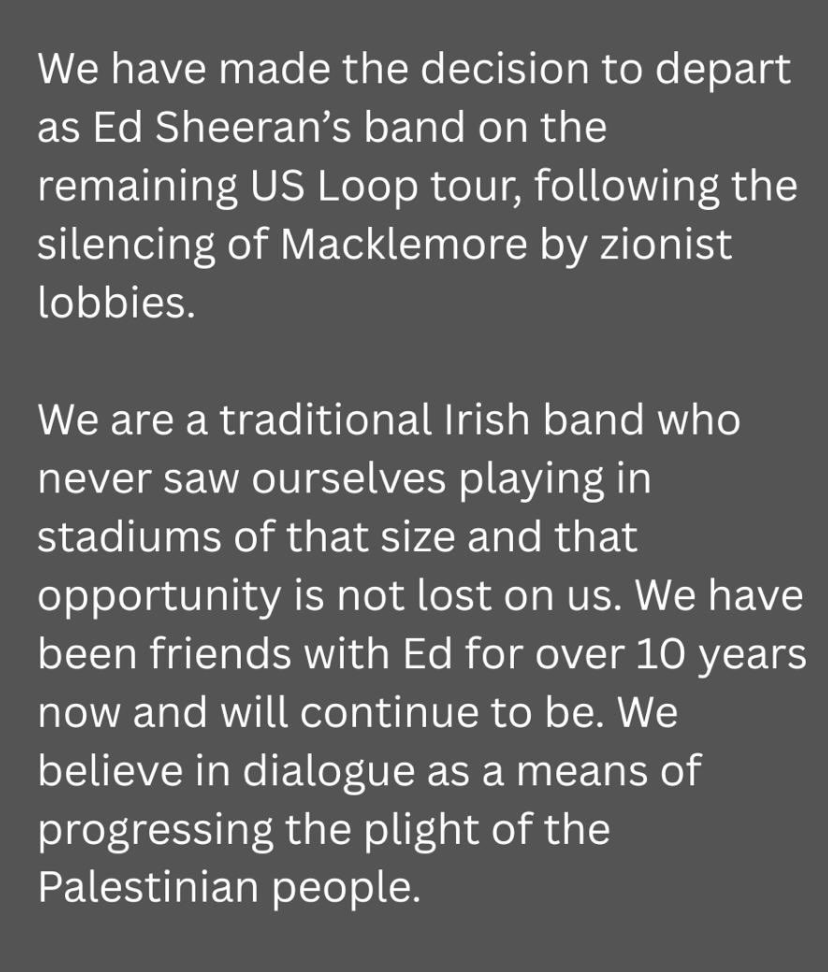
Together, the departures mean that all four supporting acts connected to Sheeran’s upcoming tour dates have now withdrawn.
A Larger Debate Over Political Speech
The controversy has expanded beyond the tour itself, raising questions about how much freedom musicians have to make political statements while performing at major commercial venues and who really controls what can be said on those stages.
For Ed Sheeran, however, the situation is much more complicated. He continues to remain neutral on the situation and has defended his decision to keep his own concerts separate from political advocacy.
The controversy now leaves Ed Sheeran’s remaining tour dates without the artist, as the debate over Macklemore’s removal continues to unfold.
For an industry where performers, promoters, venues, and audiences all share the same stage, the question that remains unanswered is: Who gets to decide when an artist’s political message crosses the line, and who has the power to silence it?
Want more articles like this? Sign up for our e-newsletter!
Check out our blog here!