
Subscribe
to receive news by email

Poll
Will the Trump Administration Shift U.S. Policy in Favor of Palestine?
- No (87%)
- Yes (13%)
 Loading ...
Copyright © 2026 Arab America
Go topThe Rise of Saudi Cinema
By Londyn Sewell/Arab America Contributing Writer
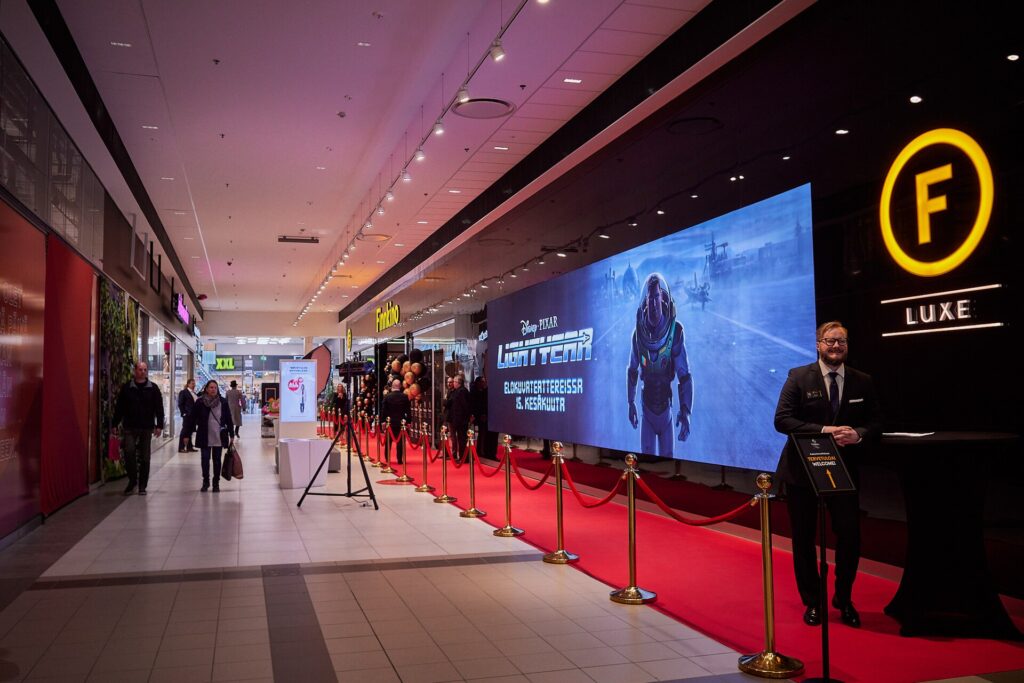
Saudi Arabia’s film industry is moving fast, and the numbers tell the story. In just six years since cinemas reopened after a thirty-year ban. The Kingdom’s film sector has generated close to $1 billion in revenue. With packed theaters, new studios, and a wave of local productions, Saudi cinema is no longer an experiment. It is becoming a serious industry with regional and global ambitions.
The Middle East is now home to the world’s fastest-growing film market. The Gulf sits at the center of that growth. Public investment, rising private participation, and a young, eager audience have created the conditions for a creative surge. International festivals, high-profile productions, and expanding infrastructure are drawing global attention to the region.
The Red Sea International Film Festival in Jeddah is a clear sign of that shift. The event has become a magnet for filmmakers, actors, and producers from around the world, while giving Saudi and Gulf storytellers a major platform. It reflects a broader push to position the Kingdom as a regional hub for cinema.
Investment, Infrastructure, and Economic Impact
Saudi Arabia’s model has been particularly striking. The local film market is growing at an estimated 25 percent a year, the fastest rate in the region. Around 17 million cinemagoers are now regular visitors to theaters. Supporting an industry that aims to build 2,000 cinema screens across the Kingdom by 2030.
Investment has followed demand. The government recently launched a $100 million Saudi Film Fund to support local content and talent. In Riyadh, Al-Hisn Big Time Studios has opened across more than 10,500 square meters. Offering modern production facilities designed to meet international standards. These developments are helping local filmmakers scale up, while also attracting foreign productions looking for new locations.
The economic impact is already visible. A single film production can employ hundreds of people, from set designers and technicians to actors and marketing teams. According to the Ministry of Investment, the broader entertainment sector could contribute 4.2 percent to Saudi Arabia’s economy by 2030 and create around 450,000 jobs. Partnerships with global players such as Vox Cinemas and Netflix have further integrated the Saudi market into the international entertainment ecosystem.
Beyond economics, cinema is playing a deeper role in Saudi society. As the Kingdom shifts from mainly consuming foreign films to producing its own, movies have become a way to record history, explore social issues, and national identity. For a young population, local cinema offers a creative outlet and the sense that world-class entertainment can be made at home.
Industry Challenges
There is, however, an ongoing debate within the industry. Filmmaker Prince Sultan bin Mohammed Al-Faisal has noted that many Saudi films currently feel similar in tone, often aimed more at international audiences than local ones. His call for greater diversity highlights a key challenge for the next phase of growth: telling stories that feel distinctly Saudi, while still resonating abroad.
Cinema also carries strong soft power potential. Hollywood, Bollywood, and Nollywood show how film can shape global perceptions. Saudi Arabia is increasingly aware of this influence. By investing in film, the Kingdom can project a more nuanced image internationally, attract tourists, and strengthen cultural diplomacy as it reshapes its foreign policy.
Regional Growth and the Road Ahead
Institutional support is expanding to match these ambitions. The Ministry of Culture established the Film Commission in 2020 to oversee sector development. Its initiatives include production incentives, filmmaker training programs, and efforts to build a culture of film criticism through conferences and education.
Across the Gulf, similar momentum is building. The UAE holds around 30 percent of the Middle East’s cinema market, with Dubai a popular filming destination. Bahrain, Kuwait, and Oman are at earlier stages, but plans such as Oman’s proposed $30 million Film City point to growing regional interest. Elsewhere in the wider region, Morocco’s long-established film culture offers lessons on balancing local storytelling with international appeal.
The Gulf region is carving out a place for itself in global cinema. As national visions across the region aim to transform economies and societies, film has emerged as a powerful tool to amplify local voices.
Sustaining this momentum will depend on creative freedom, smart regulation, and continued investment. If those pieces stay in place, Saudi Arabia’s cinema boom may be only the beginning.
Want more articles like this? Sign up for our e-newsletter!
Check out our blog here!