Subscribe
to receive news by email

Poll
Will the Trump Administration Shift U.S. Policy in Favor of Palestine?
- No (87%)
- Yes (13%)
 Loading ...
Copyright © 2026 Arab America
Go topThe Saudi Industry That’s Revving Up
By: Robert Jackson/Arab America Contributing Writer
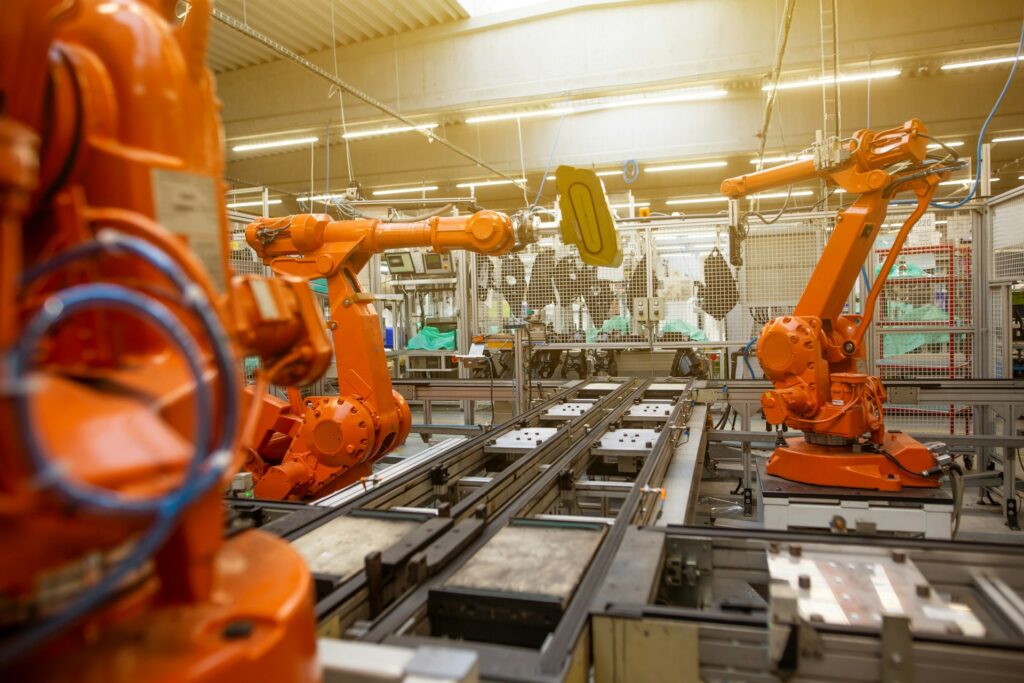
Saudi Arabia, long known as the world’s leading oil exporter, is accelerating an ambitious shift toward economic diversification under its Vision 2030 agenda. A central pillar of that transformation is the development of a robust automotive sector. With the goal of turning a historically import-dependent market to an emerging hub for vehicle manufacturing, especially electric vehicles (EVs).
A Dominant Market in the Region
Saudi Arabia is one of the largest automotive markets in the Middle East and among the top 20 globally in terms of vehicle imports and sales. The kingdom imported over 93,000 imports in 2023 alone, a nearly 40% increase compared with the previous year.
This surge highlights not just strong consumer demand but also Saudi Arabia’s central role within the Gulf Cooperation Council (GCC) automotive market, where it accounts for more than half of total vehicle sales. These sales have traditionally been dominated by imported gas powered vehicles.
From Importer to Producer
Despite strong demand, domestic vehicle production in Saudi Arabia has historically been limited. For many years the automotive presence was largely restricted to commercial vehicle assembly and imports. However, the landscape is rapidly changing as Saudi leaders seek to build a manufacturing base that can compete internationally and reduce dependence on imports.
At the heart of Saudi Arabia’s industrial policy is Vision 2030, a long-term plan to diversify the economy away from hydrocarbons and into high-value sectors like technology, renewable energy, and advanced manufacturing. Under this framework, the government has set ambitious targets that include achieving annual production of over 400,000 passenger vehicles by 2030.
Saudi Arabia’s sovereign Public Investment Fund (PIF) is the key driver behind much of the industry’s expansion. Strategic investments and partnerships aim to anchor global automakers within the kingdom. Some examples include Lucid Motors and Ceer Motors. The former, a US-based EV company, majority owned by PIF, has established one of the region’s most high-profile automotive manufacturing facilities in King Abdullah Economic City (KAEC) near Jeddah. The latter, Ceer Motors, launched in 2022 as Saudi Arabia’s first national automotive brand. Ceer is a joint venture between the PIF and Foxconn, the largest manufacturer of iPhones. Ceer’s focus on electric sedans and SUVs designed for the GCC and broader regional markets, encapsulates the kingdom’s commitment to electric mobility. Collectively, these investments are reshaping Saudi Arabia’s automotive ecosystem and pushing their economy in a new more sustainable direction.
The Rise of Electric Vehicles and Sustainability Initiatives
A key driver of change in the Saudi auto industry is the global shift toward electric cars. Saudi policymakers have embraced this trend. By 2030 Saudi policymakers hope to have 30% of cars in Riyadh be EV by 2030. This is a clear signal that electric vehicles will play a central role in the nation’s future transit landscape.
Import data underscores this evolving pattern: Saudi Arabia has recorded significant increases in imported EVs in recent years, with tens of thousands of plug-in and hybrid vehicles entering the kingdom annually. Broader sustainability initiatives, including investments in charging infrastructure and battery production, also support local EV production. Saudi Arabia has secured billions of dollars in funding to support EV batteries, metals, and mineral supply chains. This push underlines Saudi Arabia’s goal of shrinking its reliance on imports of key components while aligning with long-term environmental goals.
Strategic Supply Chains and Supporting Industries
Developing a competitive automotive industry requires more than just assembly plants; it depends on robust supply chains and skilled human capital. Saudi Arabia is investing in industrial clusters and incentive frameworks designed to attract component manufacturers, high-tech suppliers, and service providers. Partnerships with foreign companies like BMW will help fasttrack development even more.
However, while progress has been rapid, the Saudi auto industry faces several key challenges. The first among these problems are underdeveloped supply chains. The local supplier base for components such as electronics, semiconductors, and batteries is still behind established automotive hubs in Asia and Europe. The second challenge will be workforce development. Training and retaining a workforce capable of supporting advanced manufacturing, robotics, and software integration is critical. Initiatives like the National Automotive and Vehicles Academy (NAVA) are essential but will take time to scale. The final difficulty will be the fierce competition. The auto industry is full of competitor companies, many of which are well established. There is also the issue of gas-powered cars. While there are more EVs than ever, gas powered cars still dominate the market.
A New Automotive Era for Saudi Arabia
Saudi Arabia’s automotive industry is in the midst of an unprecedented transformation. From a market once dominated by imports, the kingdom is rapidly building a domestic manufacturing ecosystem grounded in electric mobility, cutting-edge technology, and diversified partnerships.
If current trajectories hold, Saudi Arabia could be producing thousands of vehicles annually by the end of the decade, a mix of EVs and traditional models, while also exporting to regional markets. Saudi Arabia’s combination of capital, strategic vision, and international collaboration provides a strong blueprint for the next chapter of automotive innovation in the Gulf and beyond.
Want more articles like this? Sign up for our e-newsletter!
Check out our blog here!