
Subscribe
to receive news by email

Poll
Will the Trump Administration Shift U.S. Policy in Favor of Palestine?
- No (87%)
- Yes (13%)
 Loading ...
Copyright © 2026 Arab America
Go topTracing History: Identity in Palestinian Music
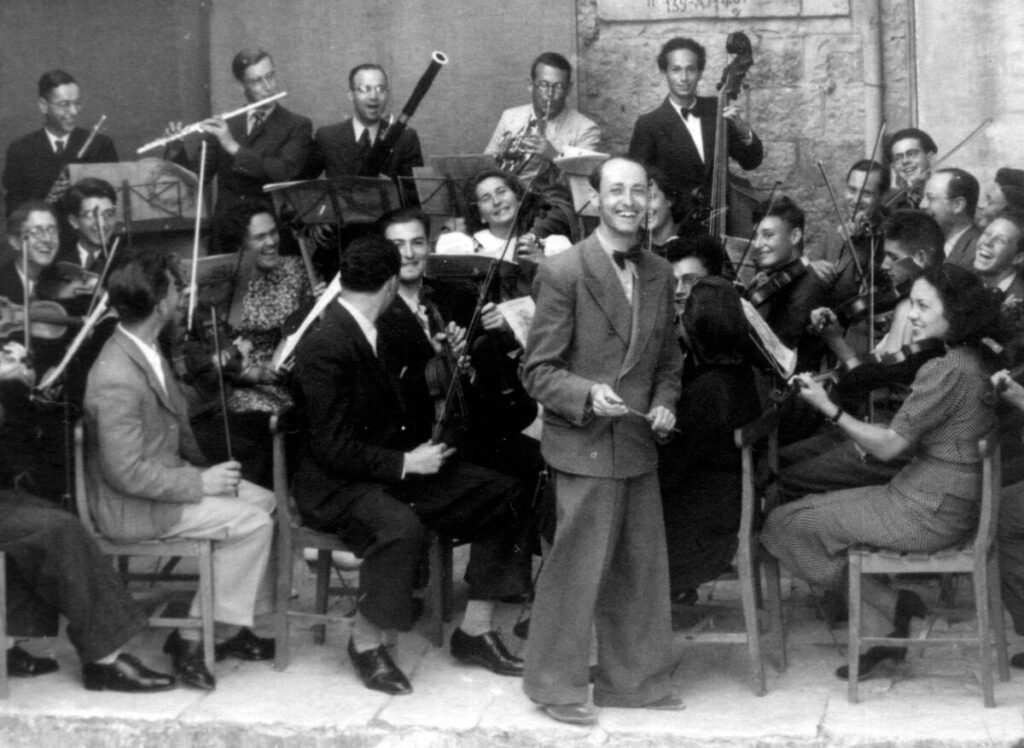
Tracing the history of Palestinian music reveals a rich, textured tapestry of writing and symbolism. Palestinian folk music provides a glimpse to both the joy and struggles of the Palestinian people. At the heart of that music is a reflection of the Palestinian experience, and most importantly, the Palestinian identity.
Before the Nakba
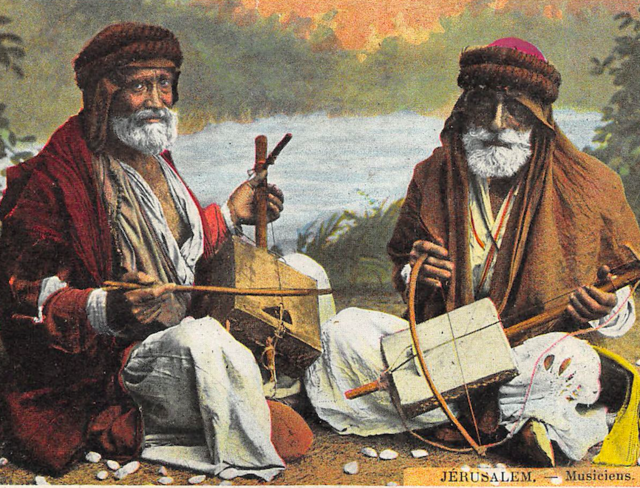
Little is known about the development of folk music prior to the 20th century. Oral tradition was the primary method of transmission for music and poetry, which were passed down through generations. Al-Zajal, a poetry form traced back to as early as the 10th-12th century, was the ancestor of Palestine’s modern music. Zajal involved oral poetry backed by percussion, covering heavy topics like life, love, death and nostalgia. Its presence was strongest in the Levant, where the influence on Palestinian tradition is apparent.
In rural areas, farmers adopted a handful of working songs. Weddings were the hub of celebration and music, and the Dabke was commonplace during wedding ceremonies. During the Ottoman period, Palestine was home to restless traveling musicians who hosted local performances and concerts. Musicians and Zajaleens (storytellers who practiced Zajal) traveled through Palestine en route to Egypt or other parts of the Levant.
Prior to the occupation, the music of Palestine evolved rapidly, particularly during the British Mandate period. Western music began to dominate the global stage in the early to mid-1900s, which influenced Palestinian music. Palestinian musicians made use of the piano and guitar and took inspiration from jazz and classical music.
Songs of Resistance
After the tragedy of the Nakba, Palestinian music, particularly folk music, took a drastic shift. It stayed true to its roots, while adopting themes of unity and embracing nationalism. The Palestinian nationalist movement long predates the Nakba, but it manifested in music more frequently and emphatically. The desire for self-determination wasn’t a statement, it was a core part of the peoples’ shared identity.
Radio stations in Jerusalem were shut down, and the study of music continued in secret at Birzeit University. A small number of displaced composers kept creating music, evolving the Palestinian sound further from Western inspirations. Anthems speaking of displacement and violence which focused on rallying people to the cause were popular post-Nakba.
After 1967, groups like al-Bara‘em and al-Ashiqeen infused the classic Palestinian sound with continued promotion of a national identity. Composition modernized, while nationalism reached a more widespread audience in Palestine and beyond.
In the 80s, the famous band Sabreen came into prominence. Composer Said Murad took inspiration from Palestinian poetry as well as Arab and Western music styles. The result was a distinct flavor of Palestinian music that defined the modern era. Sabreen’s sharp songwriting highlighted the relevance of Palestinian identity in the contemporary age.
Infamous rap group DAM released their first song in the late 90s, rapping in Arabic, English, Hebrew. They blend sounds across the Middle East in their sampling and were unafraid to speak on Palestinian politics.
The 2000s and Beyond
The First and Second Intifada, periods of severe political unrest, saw a spike in protest music. The foundation of hip hop group Ramallah Underground came at the height of the Second Intifada, and boasted politically charged music that resonated with youth culture. In an interview with mixmag, the group’s co-founder Muqata’a describes his experience as a “colonised subject”.
He recounts the immense sadness he felt upon visiting Haifa, knowing his identity limited his ability to create music with friends outside the West Bank. In fact, the center of Muqata’a’s new music is empowerment, demonstrating the significance of identity in Palestinian music.
A key factor in the evolution of Palestine’s music is the development of Dabke as an art form. The emergence of Electronic and Afro-Dabke is part of the modern era of Palestinian music, and showcases identity in a unique way. Most notably, Arab Idol winner and prolific singer Mohamed Assaf released the defining song of modern Palestinian resistance, “Anna Dammi Falastini” (My Blood is Palestinian).
Palestinian identity is a rock that has weathered the storm of occupation and war. It has inspired the musical traditions and politics of neighboring countries, while platforming a unique identity. Now, the music of Palestine has taken a wide variety of forms, and it will continue to evolve. Nonetheless, identity will remain the foundation of Palestine’s music and remain a salient point in songwriting. Through its expression in music, one thing is clear: Palestinian identity is built on undying hope.
Want more articles like this? Sign up for our e-newsletter!
Check out our blog here!