

Subscribe
to receive news by email

Poll
Will the Trump Administration Shift U.S. Policy in Favor of Palestine?
- No (86%)
- Yes (14%)
 Loading ...
Copyright © 2026 Arab America
Go topUnder Chemical Conditions: The Lasting Consequences of Chemical Warfare in the Arab World (Part 2)
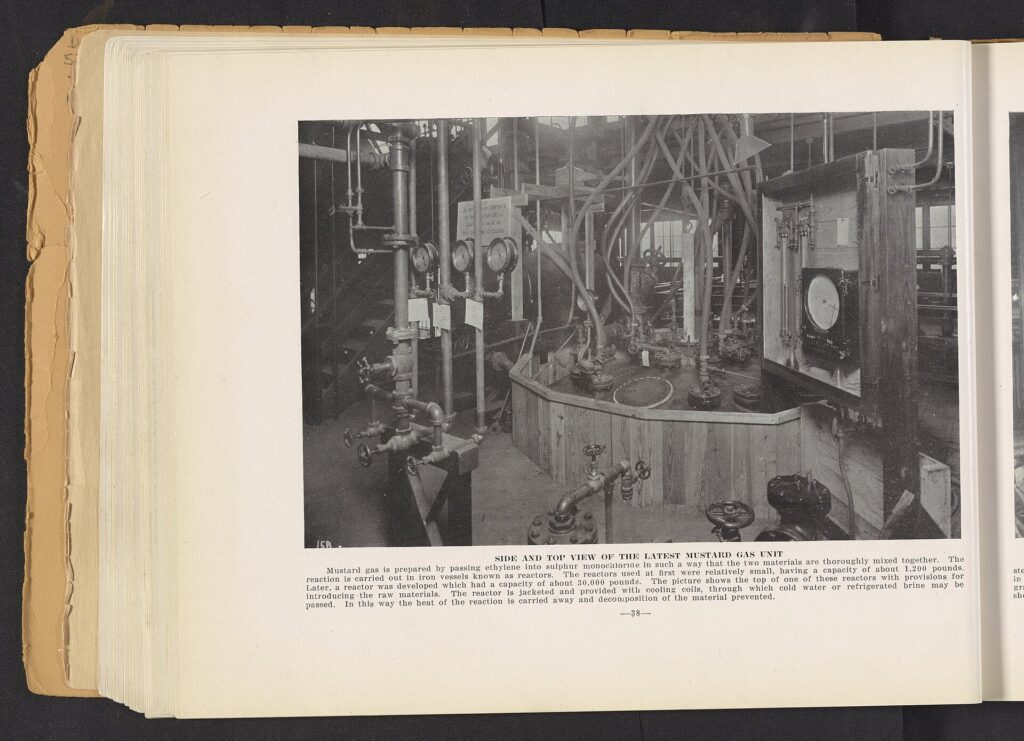

At the most fundamental level, wars across history have had a considerable set of notations on the ‘expected hazards’ given the logical exchange of major casualties. Military, economic, and political combative efforts were anchored on such familiarity of outcomes or the predicted schemas of war.
Statistical data on the Great Wars, however, found a peculiar rise in casualties outside the paradigms put forth at the wars’ inception, particularly in disease/non-battle injuries (DNBI). Four years after the armed conflict between Iraq and the U.S.-led international coalition, backed by significant military contributions from Arab nations, a number of war participants have complained about “symptoms… of multi-system nature… and/or non-specific…”
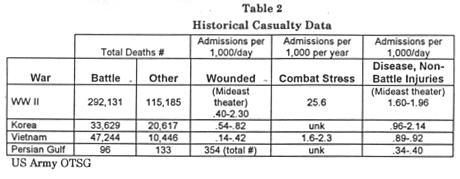
The media and other governmental bodies, including the Defense Science Board, the United States Department of Defense’s advisory committee, have come out and assessed the gaining traction of the then high DNBI rates. Until then, reports on symptomatic remnants of chemical weapons usage emerged as non-diagnostic, which eventually came to be the impetus of the Gulf War Syndrome.
Still, the Gulf War of 1990 was not but an accumulation of manufactured violence over the course of the Arab Cold War parallel to the planted seed of chemical agents by the Egyptian chemical program in the 1960s.
*This is the second installation of a three-part series that looks into the long-standing effects and consequences of chemical weapons usage within and against the Arab World. See this article for part 1.
Run-down of Egyptian early stockpiles
The clearest claim in the literature is that Egypt used mustard and phosgene in North Yemen from 1963 to 1967, especially against royalist forces sheltered in caves where conventional air attack was less effective. Employed with strategic effect, the Yemen war was a formative proving ground for the delivery of chemical munitions, resulting in the loss of 14,000 lives.
More than the opportunity to test battlefield effects, the relative ease of use and the muted international response encouraged Cairo to expand its stockpile, and the Western Desert came to be identified as
one of the key locations for stockpiling chemical ammunition, hosting the primary storage for Egypt’s military ammunition depots through a network of concealed tunnels that satellite imagery could not locate, along with specific areas in the western regions of the Suez Canal.
Egyptian officers were trained in the Soviet Union at the Red Army’s Academy of Chemical Defense, which would have given them practical knowledge relevant to offensive chemical weapons use. West German specialists in missiles and chemical-biological weapons assisted Egypt, as reports from the Central Intelligence Agency point to the Abu-Za’abal Chemical Plant in the Al-Qalyubia Governorate as the ‘main front’ for studying toxic compounds such as fluoroacetate and oxazepine (the company was also secretly known as Military Plant No. 801; see Part 1).
1967 Six-Day War and Egyptian deterrence thinking
Following the Six-Day War, when Israel’s preemptive air assault in the Sinai Peninsula, Egypt gradually abandoned the expectation that parity could be achieved through regular military means alone. Cairo’s refusal to use chemical warfare may well be a reflection of the asymmetry created by Israel’s nuclear development.
By the 1990s, Egyptian officials such as Osama El-Baz, former office director for President Hosni Mubarak, were openly arguing that Egypt required sufficient capabilities to deter Israel and defend its national security against Israel’s nuclear, chemical, and biological arsenals. As a larger regional bargain, Cairo would not fully renounce these capabilities until a credible zone free of mass destruction existed in the Middle East, a condition that remained unmet because Israel signed but did not ratify the Chemical Weapons Convention.
In this context, Egyptian parity does not simply indicate matching Israel tank-for-tank or jet-for-jet, rather a credible deterrent balance predicates the shattered Arab confidence in conventional military victory. Almost fifty years later, a New York Times investigation recast the June 1967 war as more than a conventional military crisis, and revealed the depth of Israel’s weapons of mass destruction and the foundational crisis it underscored for Egyptian deterrence.
1973 Yom Kippur War
Open-source assessments describe institutional research and development activity inside the Egyptian military and Military Plant No. 801 undertook studies and manufacturing related to sulphur and nitrogen mustards and to organophosphorus nerve agents such as sarin, and later reportedly VX-type compounds and glycolate hallucinogens.
Analysts conclude Egypt moved from research to production in the early-mid 1970s, filling a range of delivery munitions (aerial bombs, artillery shells, rockets, mortar bombs, mines) in order to make chemical weapons operationally useful across battlefield systems.
Before the coordinated surprise attack against Israel by Egyptian and Syrian forces in October 1973, Egypt had been supplying Syria with limited chemical weapon materials for research. By 1972, it reportedly agreed to transfer a full arsenal to Syria for cash (of about $6 million), including sarin and mustard-filled munitions.
While no use of chemical agents by both forces occurred during the campaign itself, Egyptian forces placed at least some air units on alert to deliver nerve agents if political-military direction authorized it. Nevertheless, Egyptian senior officers later signaled willingness to use WMD if Israel employed nuclear weapons, a clear deterrent instrument amid the high-stake escalation scenario.
Egypt-Iraq growing relations
The military catastrophe of 1967 deepened divisions across the Arab world and reshared regional alignments. The scale of defeat accelerated polarization and the formation of antagonistic blocs, and it pushed state security concerns back to the center of Arab politics.
Within the security-preoccupied environment, Egypt’s diplomatic isolation after the 1978 peace treaty between Egypt and Israel made Cairo eager to reclaim influence and military leverage by unconventional means.
Shortly after the treaty, therefore, Egypt quietly rebuilt ties with Baghdad. Ultimately, it saw value in backing a state that could counterbalance both Iran and the Gulf monarchies that had turned against Cairo. Once Egypt signed peace with Israel, an economic boycott was imposed as many Arab governments saw Egypt’s peace treaty with Israel as a betrayal of the Arab front and of the long-standing policy of not making a separate settlement before a comprehensive Arab-Israeli solution. In their view, Cairo had broken Arab consensus by recognizing Israel and exiting the confrontation with it on its own terms.
Iraq-Iran war
In the early 1980s, as Iraq moved into open conflict with Iran, the former paid Egypt a substantial sum, reported as $12 million, in exchange for technical and logistical support tied to chemical warfare. The assistance reportedly sought to cover with producing and storing toxic agents, and facilitation of chemical-manufacturing inside Iraq. The partnership funneled industrial expertise and corporate ties that enabled Iraq to set up production facilities, including the Egyptian branch of the German company Walter Thosti Boswau (WTB) International.
As bilateral relations warmed, the two governments broadened cooperation from chemical capabilities to delivery systems. In 1984 Egypt, Iraq, and Argentina entered a trilateral agreement to co-develop a long-range ballistic missile (often called Cóndor II; Iraq later referred to a related program as Badr-2000, valued at around $15 million). The project aimed to produce a missile with roughly a 900-1,000 kilometer range capable of carrying heavy payloads on the order of several hundred kilograms—payloads that could include conventional explosives of chemical/biological warheads.
From about 1984 onward, Iraq employed blister agents (mustard) and nerve agents (tabun and sarin) in attacks against Iranian troops and Kurdish civilians, until Argentina repealed the missile program with Iraq in the early 1990s. The industrial know-how and dual use-inputs of the enclosed proliferation case all occurred against the backdrop of the war and at the corporate front-lines of the ensuing Gulf War, just two years after its cessation.
Want more articles like this? Sign up for our e-newsletter!
Check our blog here!