
Subscribe
to receive news by email

Poll
Will the Trump Administration Shift U.S. Policy in Favor of Palestine?
- No (87%)
- Yes (13%)
 Loading ...
Copyright © 2026 Arab America
Go topWhy Algeria is Raising Defense Spending
By: Robert Jackson / Arab America Contributing Writer
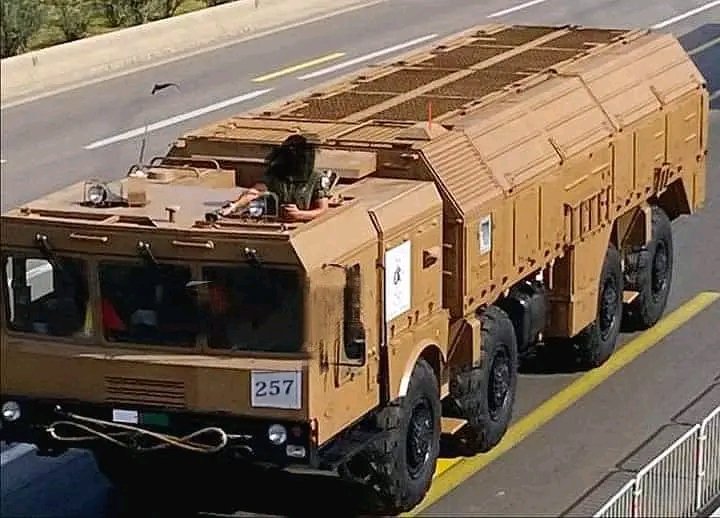
Algeria’s defense budget has continued to climb to a staggering $25 billion, making up about 20 percent of the government budget. For context, in 2023, Russia spent 18.9 percent of its government budget on the military during wartime. This escalation in spending despite economic pressures reflects a complex mix of strategic concerns, geopolitical competition, and domestic political calculations.
Motivations
The most obvious driver of this spending surge is the regional security environment. To the East is the unstable Libya, a nation long plagued by conflict. To the South, Algeria has a long, porous border stretching into the Sahel, a region wracked by jihadist insurgencies, smuggling, and military coups d’état. To the East is Morocco, with which Algeria has been a persistent rival, especially over Western Sahara. In such a setting, Algeria has chosen to spend big on a capable military to provide deterrence.
Another key factor is domestic politics. The military remains deeply entrenched in Algerian politics, whether directly or indirectly. Some analysts argue that robust defense spending helps reinforce the army’s influence in political and economic life. Indeed, in 2025, Algeria drafted a “General Mobilisation Law” streamlining the mobilization process. This underscores how “national security” narratives can justify expanded military power.
Algeria is not only modernizing its forces but also has showcased itself as a regional heavyweight. Maintaining and expanding its military superiority to neighbors who are themselves upgrading their capabilities appears central to Algiers’ long-term strategy. Although these motivations paint a picture of practical spending in a hostile region, the importance of national prestige ranks highly, as can be seen when taking a closer look at the military’s shopping list.
What Algeria is Buying
Algeria’s military modernization is nothing to sneeze at. It involves state-of-the-art systems, mostly procured from Russia. A headline-grabbing component is the purchase of Russian 5th-generation Su-57 stealth fighters. In early 2025, Algerian state media confirmed the purchase of these jets, making Algeria the first Arab country and the first African country with 5th-generation aircraft. Algeria is also the first export customer for these jets. According to sources, the first of these airplanes has already been delivered and entered active duty service.
With production delays for the Su-57, Algeria has also begun operating Su-35S aircraft. In March 2025, reports confirmed the Algerian Air Force received its first Su-35S fighter jets. The Su-35, a highly maneuverable jet with potent radar and weapon capabilities, bolsters Algeria’s airpower while it waits for more Su-57s to be delivered. Beyond the air force, Algeria is reportedly pushing for a broad deal with Russia worth $12–17 billion over a decade, targeting submarines, advanced air-defense systems, and Su-34 bomber aircraft. According to other sources, the country is also eyeing new surface vessels to upgrade its naval capabilities. This pattern is consistent with Algeria’s long-term strategy of modernizing across all domains: air, land, and sea. Notably, most of these systems’ primary purpose would be against other states, not insurgent threats.
Complications
This massive defense outlay comes at a cost. Algeria’s 2026 budget projects total expenditures of about $135 billion, but it anticipates a $40 billion deficit, roughly 12.4 percent of GDP. That is a steep increase, yet the government claims it plans to reduce this shortfall by 35 percent in 2026.
The fiscal stress is compounded by Algeria’s heavy reliance on volatile oil and gas revenues. While hydrocarbons remain the backbone of its income, the price per barrel is subject to global swings. If oil and gas prices were to drop, Algeria would not be able to sustain its spending. With youth unemployment at nearly 30 percent in 2024, spending on military procurement doesn’t make fiscal sense, especially when the vast majority of its equipment is being imported.
This imbalance raises serious questions about the long-term sustainability of Algeria’s militarization. Such debt-fueled defense spending risks entrenching a cycle where military priorities crowd out social investment, further weakening Algeria’s fiscal standing.
Broader Implications
Algeria’s surge in defense spending carries implications far beyond its borders. In the Sahel and Maghreb region, an increasingly assertive Algerian military is reshaping the security landscape. By projecting power via advanced air capabilities and naval assets, Algiers may enhance its influence over neighboring states like Mali, Niger, Libya, and Tunisia. This is also fueling an arms race with Morocco, which has itself pursued greater military capabilities, such as the possible acquisition of American F-35 5th-generation jets.
Domestically, the military’s entrenched role in government raises questions about the civil-military balance and democratic accountability. By funneling one of the largest shares of its national budget into defense, the Algerian regime is reinforcing the army’s dominance in public life.
In a wider geopolitical sense, Algeria’s militarization could influence how external powers engage with North Africa. Western countries may view Algeria as both a strategic partner and a cautionary tale: its dependence on Russian weaponry complicates cooperation, but its stability and military capacity could make it a valuable counterweight to instability in the Sahel or to external actors seeking influence in the Mediterranean.
Want more articles like this? Sign up for our e-newsletter!
Check out our blog here!