
Subscribe
to receive news by email

Poll
Will the Trump Administration Shift U.S. Policy in Favor of Palestine?
- No (87%)
- Yes (13%)
 Loading ...
Copyright © 2026 Arab America
Go topWhy Military Strikes Won’t Stop Iran’s Nuclear Program — And Could Make It Worse
By Aziz Hellal / Arab America Contributing Writer
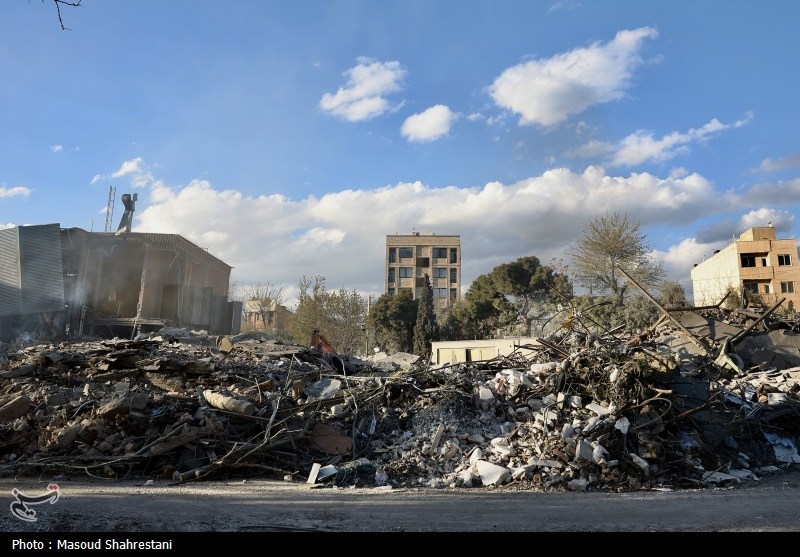
As smoke continues to rise over the region and the world watches the Strait of Hormuz with growing concern. One thing is becoming clear: the military strikes launched by the United States and Israel in late February were not the end of a conflict. They opened a more complicated and dangerous phase.
While the initial goal was to destroy Iran’s nuclear program and weaken or even change the Iranian regime, the reality on the ground suggests otherwise. Instead of a quick victory, the region is moving toward greater instability
What began as an attempt to weaken Iran is now pushing the region toward a broader and more unpredictable war. The real question is whether these attacks can stop Iran’s nuclear program—or whether they push Iran to think nuclear weapons are more necessary?
You Can Bomb Facilities, But Not Knowledge
Military strikes can damage nuclear sites, but they rarely end a program completely. A program like Iran’s is not just about physical facilities—it is built on a foundation of knowledge, expertise, and decades of research. Even if key sites are destroyed, the scientific base remains, making it possible to rebuild and continue the program.
In fact, external attacks can often push a country to accelerate its efforts as a matter of deterrence. Iran’s past experience with sabotage and covert attacks shows that such pressure often strengthens, rather than weakens, the commitment to continue.
How War Strengthens Hardliners
War does more than destroy infrastructure; it reshapes domestic politics. When a nation is under attack, hardliners often gain influence by arguing that nuclear weapons are the safest path to survival. In many cases, outside bombing does not weaken national resolve. Instead, it can create a “rally around the flag” effect, where fear and anger push more people to support a harder line.
North Korea serves as a clear example: despite decades of sanctions, it prioritized its nuclear program to deter foreign intervention. Today, Iran may be drawing a similar lesson. If Iran’s leadership concludes that conventional forces and its network of allies in the region are not enough, nuclear weapons may begin to look like the most reliable form of protection.
Airstrikes Alone Are Not Enough
Military strikes can cause serious damage, but they are unlikely to change the regime or end a complex nuclear program. Some of Iran’s key nuclear sites, including Fordow near the city of Qom and Natanz in central Iran, are hard to destroy from the air. Fordow is built deep inside a mountain, and parts of Natanz are underground. That makes complete destruction by airstrikes much more difficult. In many cases, trying to fully eliminate a program like this—or change the regime behind it—would require ground forces
Sending ground troops to Iran would be very difficult. Iran is a large country with mountains and a big population, which would make any military operation much harder than many other wars in the region. American public opinion is also not ready for another major war in the Middle East after Iraq and Afghanistan. A ground invasion would be expensive, risky, and politically difficult. For that reason, airstrikes alone may not achieve the goals that were announced.
The Danger of a Wider War
The problem isn’t just that airstrikes might fail. They could also start a much bigger war across the entire Middle East.
Iran has strong allies in Lebanon, Iraq, and Yemen, and many of them are already fighting. Hezbollah has been attacking from Lebanon, and militias in Iraq have targeted U.S. bases in Iraq and others in the Gulf. In Yemen, the Houthis have shown they can cause global trouble by attacking ships in the Red Sea.
This means a war would not stay limited to Iran. Instead of stopping a nuclear program, military strikes could pull many different groups into the fighting and push the whole region into a massive conflict.
The Economic Cost of Escalation
This war can also hurt global trade and energy supplies in a direct way. Since the conflict began, the Strait of Hormuz has been largely closed, causing a major disruption in shipping. This matters because Hormuz is not just for oil and gas. It is a vital route for petrochemicals—the raw materials used to make everything from plastics and clothing to medicines and electronics.
Because of the fighting, the global supply chain is under extreme pressure. When these materials do not reach factories on time, production slows down. As a result, prices go up for consumers around the world.
The Houthis in Yemen can also threaten ships near Bab al-Mandab. If the sea routes near Iran and Yemen stay unstable, the economic cost of the war will continue to rise. This will likely push more countries to call for an immediate end to the fighting to save the global economy.
A Chance for Diplomacy?
A recent development may offer a short pause in the conflict. President Donald Trump has announced a two-week ceasefire with Iran. High-level talks are expected to take place in Islamabad, Pakistan, this Friday. The deal was reached just hours before a major military deadline. It also includes a plan to reopen the Strait of Hormuz for shipping.
However, the situation remains very uncertain. The ceasefire is only temporary, and both sides have warned that the fighting could start again at any moment. The next two weeks will be critical. They will show whether these talks lead to a real end to the war or if this is simply a short delay before more escalation.
Finally, while military strikes may look like a quick solution to Iran’s nuclear program, the reality is much more complicated. These attacks might slow the program for a while, but they cannot erase the knowledge and expertise that Iran has built over decades.
In fact, more violence could convince Tehran that nuclear weapons are the only real way to protect itself from future attacks. If that happens, the war will not reduce the nuclear threat—it will make it much worse.
Want more articles like this? Sign up for our e-newsletter!
Check our blog here!