
Subscribe
to receive news by email

Poll
Will the Trump Administration Shift U.S. Policy in Favor of Palestine?
- No (86%)
- Yes (14%)
 Loading ...
Copyright © 2026 Arab America
Go topPathbreakers of Arab America—Hannah Lillith Assadi
By: John Mason / Arab America Contributing Writer
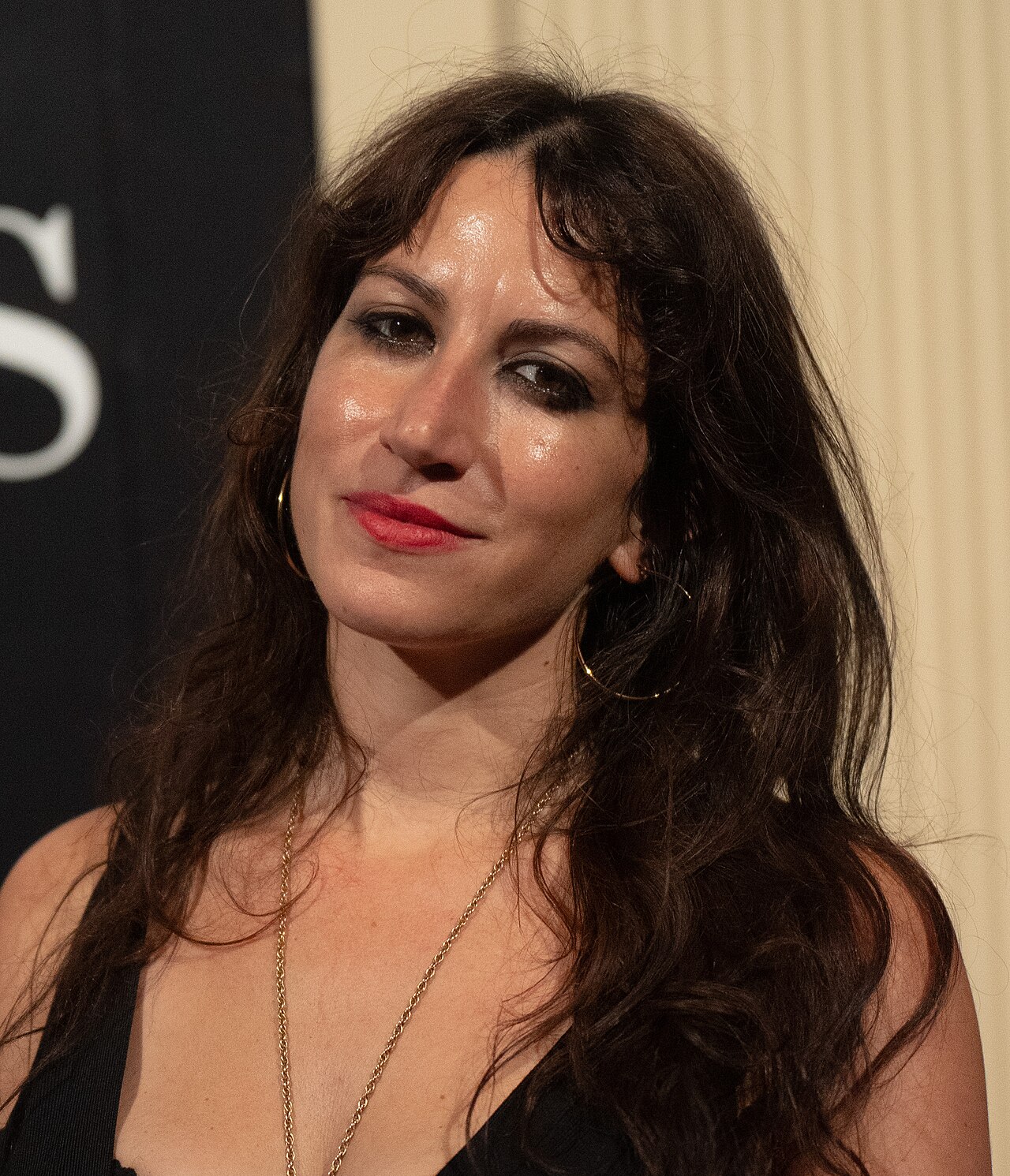
This is the 139th of Arab America’s series on American pathbreakers of Arab descent. The series includes personalities from entertainment, business, sports, science, arts, academia, journalism, and politics, among other areas. Our 138th pathbreaker is Hannah Lillith Assadi, an award winning Arab Jewish American novelist best known for her poignant storytelling about her dual heritage, reflecting a rich blend of influences, including her Palestinian father and Jewish mother’s mixed religious, cultural and national backgrounds. Hannah’s dual heritage has shaped her worldview, infusing her writing with themes of identity, belonging, and the intersections of different traditions.
From an early age, Assadi’s life drew her into a complicated yet rich milieu that shaped her worldview and writing.
Hanah tells an intriguing story about her birth. Her mother met her father in a bar in New York City. She writes, “I do know one thing: The risk they took that night in each other is the risk, which is required of us, of all of us, to stay human.” In short, as Hannah describes,
“It was love at first sight.” That night was also the first-year anniversary of the massacre at Sabra and Shatila, “in which an estimated 3500 Palestinians had been killed by Israel’s proxy militia, in the month when 241 US marines were killed by a suicide bombing in Beirut.”
Hannah’s mother grew up in the only Jewish family in her small Southern hometown. She avers, “In Alabama, the punishment for this audacity (being Jewish) had most often involved waking up to her family’s dogs poisoned in the night. As if the dogs were at fault for this utterly anthropocentric religious affiliation.” Her father was a Palestinian born in Safed in 1943. During the Nakba in 1948, his family was forced to flee, first finding refuge in Syria and later settling in Kuwait. His life was marked by displacement and travel, moving through various countries—including Italy—before eventually arriving in the United States. While Hannah was born in New York City, her parents raised her in Scottsdale, Arizona. A sign of toleration, the Assadi’s celebrated both the Jewish and Islamic High Holidays and Eid.
While little is written of Hanna’s early life in Scottsdale, her peripatetic life saw her writing her first novel in Paris, ‘Sonora.’ She didn’t think the novel was publishable. Nevertheless it was—published by Soho Press in 2017, ultimately receiving the Rosenthal Family Foundation Award from the American Academy of Arts and Letters. It was a finalist for the PEN/Robert W. Bingham Prize for Debut Fiction.
Assadi moved to New York City in the mid-2000s, where she attended Columbia University, earning a Bachelor of Arts in Middle Eastern Literature and Creative Writing, followed by a Master of Fine Arts in Fiction. She lives in Brooklyn as of 2022 and is married and has two children. Assadi teaches fiction writing at the Columbia University School of the Arts and the Pratt Institute. According to Wikipedia, “She has said she is spiritual, but is neither Jewish nor Muslim, as “religion doesn’t speak to her.”
Assadi’s poetic language and symbolic imagery in her writing has been called “literary journalism” at its best
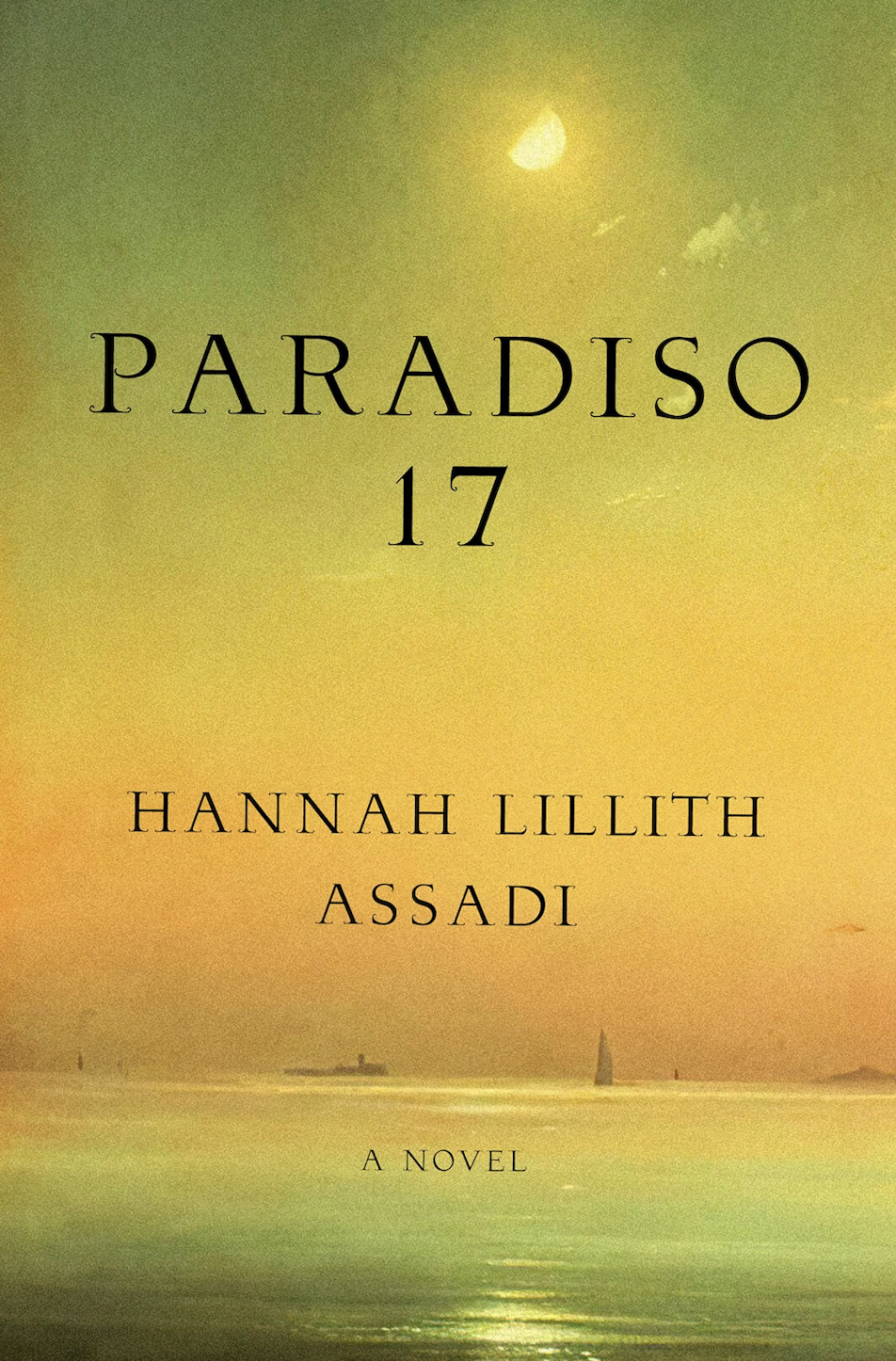
Following her first novel, ‘Sonona,’ Hannah penned her second, ‘The Stars Are Not Yet Bells,’ named a “Best Book of 2022” by The New Yorker and NPR. In a starred review, Publishers Weekly wrote “The beauty of Assadi’s prose and the splendid depiction of a love that transcends death make for a singular rendition of an oft-told story.” Her third novel, ‘Paradiso 17,’ was published by Knopf in March 2026, for which the Kirkus Reviews gave the novel a starred review. In a Goodreads review, one reader shared, “the novel’s powerful depiction of Palestinian displacement and resistance, praising its emotional resonance and vivid storytelling.” It also noted how “Assadi’s narrative blends personal memoir with political commentary, making it both intimate and politically charged.”
In Hanna’s subsequent novel, ‘What Keeps Us Human: How My Palestinian Father Met My Jewish Mother,’ (Alfred A. Knopf, 2026) she describes how they met, which we mentioned earlier. While her mother and father fell in love at first sight, Hanna uses this novel to describe on how it is possible to overcome impossible barriers to love. There, Assadi depicts her father’s death poignantly, “39 Octobers later, my father passed away in the American desert, and within the first year’s anniversary of his death arrived October 7, 2023. In the early weeks of Israel’s horrific retribution, followed by 24 months and counting of genocide in Gaza, I have often asked myself: Would my parents have made it through this?” She laments that after so much time away, “My father couldn’t know then that he would never see Palestine again.” And then, another equally poignant lament, “Nor that the Jewish woman sitting across from him at the bar would be at his side until his last day.”
Assadi’s “Voices for Gaza” Speech transcends her more moderate political voice to confront the realities of Gaza, Palestine, and genocide
Hannah Lillith Assadi’s “Voices for Gaza” address, delivered at The Town Hall in New York City on September 21, 2025, was part of a powerful gathering of Palestinian writers, activists, and allies to confront the realities of Gaza, Palestine, and genocide. (Here we use direct quotes from YouTube to describe the event.)
“Hosted by Aasif Mandvi and moderated by John Freeman, the event brought together a diverse community to share testimonies, art, and political reflection, with Assadi’s speech standing out for its blend of personal history, literary voice, and urgent solidarity.Assadi’s remarks drew on her own life as the daughter of a Palestinian father who fled the Nakba in 1948, a displacement that shaped her identity and creative work. In her speech, she wove together the collective trauma of Palestinian people with her personal memories, echoing the themes of her acclaimed novel Paradiso 17, which follows a Palestinian exile’s journey across the globe. She spoke of the ‘beautiful and painful’ Palestinian story, the weight of inherited grief, and the necessity of holding space for both mourning and resistance.
The event’s atmosphere was one of deep solidarity, with speakers demonstrating the value of unity in the face of ongoing violence and erasure. Assadi’s words resonated with this ethos, affirming that art and literature can be acts of witness and survival. She did not shy away from the political and moral dimensions of the Gaza conflict, framing it within a broader narrative of displacement, loss, and the search for home. Her tone was both intimate and expansive, inviting listeners to see their own lives connected to the struggles of others.
In “Voices for Gaza,” Assadi also underscored the role of storytelling in sustaining hope. By sharing her father’s story and her own creative process, she highlighted how narrative can preserve memory, challenge erasure, and inspire action. Her speech thus functioned as both a personal testimony and a public call to recognize the humanity and resilience of Palestinian people.
Overall, the address was a moving example of how literature and lived experience can intersect to address urgent political realities. It reinforced Assadi’s reputation as a writer who blends lyrical prose with unflinching engagement with the world’s injustices, and it contributed to the event’s mission of fostering solidarity, truth-telling, and collective endurance.”
In conclusion, Hannah Lillith Assadi has built a distinguished literary career marked by acclaimed novels, prestigious awards, and politically resonant storytelling. Politically, her writing consistently engages with exile, diaspora, and the Palestinian experience, blending personal narrative with broader human rights concerns.
Sources:
Wikipedia – Paradiso 17 (with citations to NYT, WIRB, Alta Online), 2026
Wikipedia – Hannah Lillith Assadi (Kirkus review)
YouTube, Hannah Lillith Assadi’s “Voices for Gaza” address, delivered at The Town Hall in New York City on September 21, 2025
Goodreads – ‘The Stars Are Not Yet Bells,’ 2026
The Guardian, Nov 18, 2026
WTOP NewsWTOP, Nov 19, 2026
KQEDKQED, Nov 19, 2026
John Mason, Ph.D., focuses on Arab culture, society, and history and is the author of LEFT-HANDED IN AN ISLAMIC WORLD: An Anthropologist’s Journey into the Middle East, New Academia Publishing, 2017 and of his new novel, WHISPERS FROM THE DESERT: Zaki, a Little Genie’s Tales of Good and Evil (2025), under his pen name, Yahia Al-Banna. He has taught at the University of Libya in Benghazi, Rensselaer Polytechnic Institute in New York, and the American University in Cairo. John served with the United Nations in Tripoli, Libya, and consulted extensively on socioeconomic and political development for USAID and the World Bank in 65 countries.
The views and opinions expressed in this article are those of the author and do not necessarily reflect the position of Arab America. The reproduction of this article is permissible with proper credit to Arab America and the author.
Want more articles like this? Sign up for our e-newsletter!
Check out our blog here!