
Subscribe
to receive news by email

Poll
Will the Trump Administration Shift U.S. Policy in Favor of Palestine?
- No (86%)
- Yes (14%)
 Loading ...
Copyright © 2026 Arab America
Go topWhat We Carry: Intergenerational Trauma Among Arabs
By: Luma Alaraje / Arab America Contributing Writer
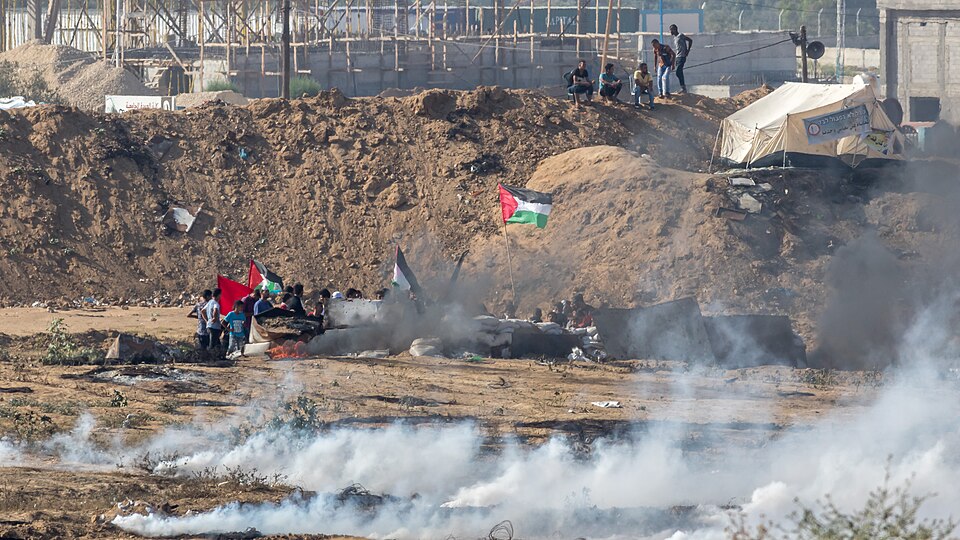
Trauma does not always end with the generation that experiences it. For many Arab and Middle Eastern communities, particularly Palestinians, decades of displacement, violence and ongoing genocide have left psychological wounds that persist far beyond those directly affected. From inherited grief to the lasting effects of forced displacement, intergenerational trauma shapes how entire communities of Arabs understand their identities, histories and futures.
For Palestinians in particular, the ongoing genocide in Gaza has brought renewed attention to the psychological consequences of long-lasting violence and the ways that trauma can extend across generations. While the physical destruction of homes and communities remains visible, the emotional consequences often receive less attention. Families who have experienced displacement and the loss of loved ones carry those experiences into their future generations through their memories and relationships. Understanding intergenerational trauma allows us to examine not only what these communities have endured, but also how those experiences continue to influence generations that follow them.
Generations of Displacement
To understand intergenerational trauma among Palestinians, it is important to recognize that their experiences cannot be separated from the history of displacement and violence that has shaped Palestinian life for generations. The 1948 Nakba, meaning “catastrophe” in Arabic, resulted in the mass displacement of approximately 700,000 Palestinians from their homes. For many families, this meant losing not only their homes and land, but also their communities, livelihoods and connections to their ancestral villages.
The effects of this displacement did not end with the generation that experienced it. Memories of lost homes, family members, and forced migration continued through stories passed down to children and grandchildren. Research involving three generations of Palestinian refugees has found that memories and narratives of the Nakba remain significant to younger generations, even when they did not experience the original displacement themselves.
Through interviews with 30 participants, the researchers identified recurring themes of violence, displacement, survival, emotional distress, and adaptive responses across generations. Their findings demonstrate how memories of the Nakba continue to influence Palestinian families, including younger generations who did not even experience the original displacement themselves.
Similarly, Rawan Nasser’s (2025) study, “The Child That I Left Behind,” explored the childhood memories of Palestinian refugees connected to the Nakba. Through interviews with 34 refugees from Lydda who experienced the Nakba as children or were born shortly afterward, Nasser examined how displacement disrupted childhood and shaped experiences of survival. The study also explored how these memories continued to shape Palestinian identity and family histories. For Palestinians, displacement is not simply a historical event remembered by older generations. It remains part of a lived experience, particularly as families continue to face violence, displacement and separation.
The Psychological Impact of Genocide
The ongoing genocide in Gaza has brought attention to the psychological consequences of prolonged violence and the ways trauma can extend beyond those directly experiencing it. For Palestinians in Gaza, repeated exposure to bombardment, displacement, destruction, and the loss of loved ones creates an environment where fear and uncertainty become part of everyday life. Children, in particular, are growing up in circumstances where their sense of safety, stability, and childhood have been deeply disrupted.
These experiences are especially important when considering how trauma may affect future generations. In her research, Rawan Nasser also discusses how Palestinian children who experienced the Nakba often had to navigate displacement and survival under difficult circumstances. Her research highlights how these experiences can continue shaping people’s lives long after the original displacement.
However, the psychological effects of violence are not limited only to those physically present in Gaza. Palestinians living in the diaspora also experience profound emotional distress as they watch their families, friends and communities endure ongoing suffering. For individuals with relatives in Gaza, the constant uncertainty surrounding their loved ones can create feelings of helplessness and grief. Even those without immediate family connections may experience collective grief through their cultural, family and community ties. As a result, the consequences of the ongoing genocide may continue to affect Palestinian families long after the immediate violence ends.
Beyond the Trauma
Although intergenerational trauma can have lasting psychological effects, it is equally important to recognize how Arab and Palestinian communities preserve their identities despite the obstacles they face. Cultural traditions, storytelling, language, food, music, and family gatherings all play a role in keeping communities connected to their histories and heritage.
For Palestinians, passing down stories of their villages, practicing their traditions and teaching younger generations about their history can help maintain a sense of belonging despite displacement. These practices also demonstrate that the transmission of experiences between generations is not limited to trauma. Cultural knowledge and family traditions are collective memories that also pass from parents to children. Through these memories, generations of Arabs are able to maintain connections with their land and cultural heritage.
A research study conducted by Guido Veronese speaks to the relationship between trauma and resilience. Their findings suggest that Palestinian experiences cannot be reduced to suffering alone, as participants also described coping strategies, hopes for the future, and ways of maintaining their identities.
However, resilience should not be mistaken for an absence of suffering. The ability of communities to preserve their identities and continue supporting one another does not diminish the psychological consequences of repeated violence. Recognizing these experiences also means acknowledging the conditions placed upon the Palestinian people, as well as the importance of accessible, culturally sensitive mental-health resources that account for the historical and political circumstances surrounding their trauma.
What We Carry Forward
Intergenerational trauma reminds us that the consequences of violence extend far past the moment it occurs. For Palestinians and other Arab communities affected by generations of displacement and violence, the past is something that continues to shape the realities of the present. Research on Palestinian refugees has shown how family memories, historical displacement and ongoing violence and genocide can influence the experiences of younger generations.
As the genocide in Gaza continues to affect families and communities, recognizing the psychological consequences of this suffering becomes increasingly more important. Understanding intergenerational trauma means acknowledging not only the pain inherited from previous generations, but also the responsibility to ensure that future generations should not have to carry the same wounds.
Want more articles like this? Sign up for our e-newsletter!
Check out our blog here!