
Subscribe
to receive news by email

Poll
Will the Trump Administration Shift U.S. Policy in Favor of Palestine?
- No (86%)
- Yes (14%)
 Loading ...
Copyright © 2026 Arab America
Go topAfter the Orange House: Legacy of Mona Khalil
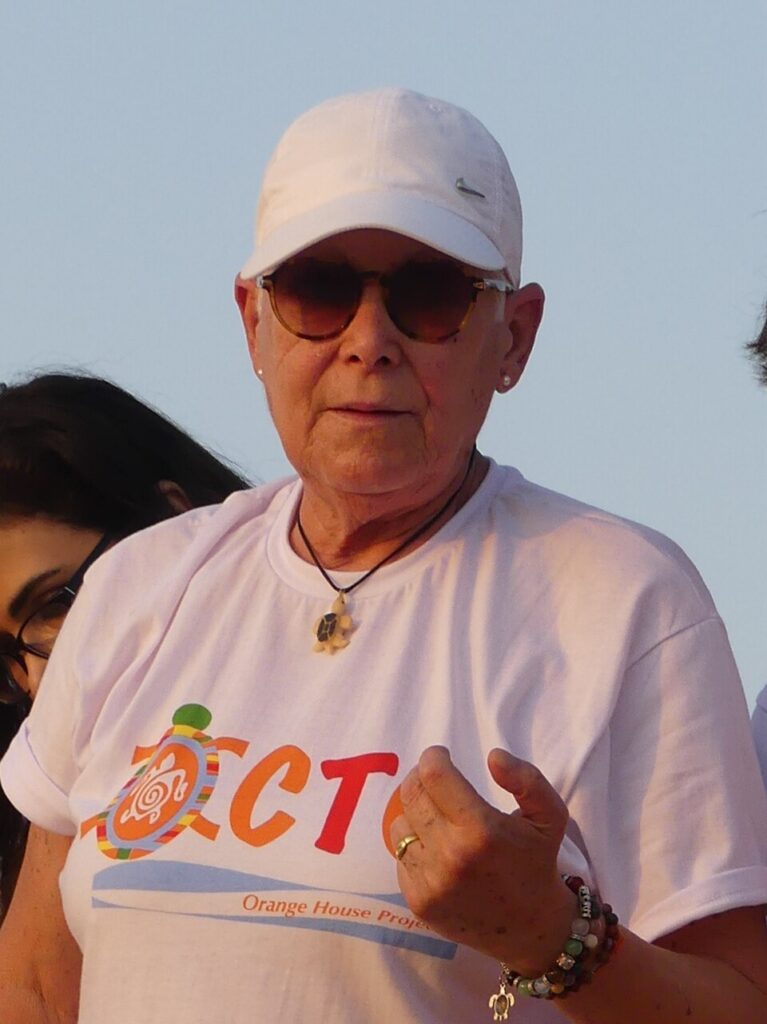
Photo by Wikicommons
By: Rami Balin / Arab America Contributing Writer
Mona Khalil left Lebanon after the beginning of the Lebanese Civil War and lived in Netherlands for almost twenty years of her life. As soon as the Israeli occupation of Southern Lebanon ended in 2000, she came back to Lebanon and lived in the house her grandfather built near the town of Tyre. She painted the house orange to honor Netherlands and the warmth and support the people there gave her when she needed it most. One evening, she was sitting on a beach nearby when she encountered a giant sea turtle who was making a nest right next to her. In the 2011 documentary “The Orange House” Khalil describes this chance meeting as something wonderful and almost magical. That’s where it all started – having found out about the perilous circumstances that the turtles were facing, Khalil saw no other choice for herself but to help. She spent the rest of her life doing just that.
The Sanctuary
With time, she turned the Orange House into a bed and breakfast, making it an ecotourism site and a place where volunteers from all over the world could stay and help clean up the beach, look for turtle nests, monitoring and protecting them as well as assisting the newly hatched baby turtles when time came for them to leave the nest and head out to the sea. Some turtles were brought back to the Orange House for rehabilitation, to be released as soon as possible. Khalil’s home was also inhabited by rescued dogs and cats. Khalil extended the same kindness to people, making the Orange House a safe space for queer people. In a 2013 interview she said that “people come because here it’s a very private place. It’s a place that nobody is going to judge them, so long as they respect the nature.”
The Beach
The challenges in the area of conservation are many, such as trash and plastics in particular, fishing nets and the use of dynamite fishing, wild dogs, lack of attention and awareness about the presence of turtles on the beach and their needs as a species, legal and political hurdles that come with the attempts to recognize any wildlife habitat as valuable and in need of protection. There are, however, factors that are less common in the rest of the world: use of live munition during military training near the shore, remains of shelling and other artifacts of war that were left after Israel’s attacks on South Lebanon. In 2006, during the Israeli invasion, a missile from a warship struck the Orange House and significantly damaged it. Thankfully, nobody was in the building at that time.
“When we were kids, it was a rich sea,” Khalil remembered with a quiet and calm voice, reflecting on the loss of biodiversity. She was gathering data for scientists to be able to assess the changes in turtle populations in the area – a long-term project, stretching over more than twenty-five years. Spending her days on the Mansouri beach, she very often caught attention of people who came to swim in the sea. Everyone stayed to look at the baby turtles’ run from the nest and towards the water, as they were unearthed by Mona and other activists, their hands gently removing the sand as the little black heads peaked out, eager to leave towards their new life. The kids’ excitement was palpable as they got to see and sometimes even touch the turtles, and Khalil appreciated the importance of that encounter, and the realization that the beach is inhabited by more than just humans.
According to Khalil, it took a long time to gain recognition of her efforts and mission, but eventually the tide changed. Her dream was to declare the area a national nature reserve, to be protected on an official level. Despite the challenges, she remained optimistic, saying, “It takes time […] but things happen.” Looking at the impact of her work in the area and in wider Lebanon, she noted: “Maybe my best will be enough.”
Future of Conservation in Southern Lebanon
The scope of this work was, and remains, quite significant, at times intimidatingly so, with the latest Israeli assault on Lebanon exacerbating the existing issues in the region. The ongoing attacks on the area make evident the toll of warfare not only on human life but on the whole ecosystem, of which Mona Khalil was an integral part, along with every turtle she helped and all the creatures that benefited from her persistent focus on the wellbeing of the Mansouri beach. The Orange House, said to be one of the most recognizable symbols of environmental conservation on Lebanon’s southern coast, was destroyed and it is unclear when the conservation efforts in the area may be continued.
Speaking of the nests that have not yet hatched but might do so at any moment, Khalil said: “Even if we are not here, the hatchlings can go out alone.” At the moment, an environmental conservation group Green Southerners (https://greensoutherners.org/) who had been Mona Khalil’s long-term partners, are working on a variety of projects protecting Lebanon’s natural and cultural heritage, undeterred by the ongoing violence and uncertainty. Please consider supporting them and their work that’s become exceptionally difficult and even more crucial at this time.
To follow updates about Mona Khalil’s Orange House Project: https://www.facebook.com/theorangehouseproject/
Documentary “The Orange House” (2011): https://youtu.be/SBHdLlQfjfA
Want more articles like this? Sign up for our e-newsletter!
Check out our blog here!