Subscribe
to receive news by email

Poll
Will the Trump Administration Shift U.S. Policy in Favor of Palestine?
- No (86%)
- Yes (14%)
 Loading ...
Copyright © 2026 Arab America
Go topBetween Misperception and Diplomacy: Can the U.S.– Iran Deal End Regional Instability?
By Aziz Hellal / Arab America Contributing Writer
When news broke on Sunday that the U.S. and Iran had reached a preliminary deal to end their 100-day war. The conflict that began on February 28 left thousands dead across Iran and Lebanon, shut down the critical Strait of Hormuz, and pushed the entire Middle East to the absolute brink.
But a deal does not mean the crisis is over. The upcoming meeting in Geneva this Friday might stop the fighting, but it will not erase decades of mistrust between the United States and Iran.
For years, the bond between Washington and Tehran has trapped the region in a destructive loop of sanctions, proxy wars, and military strikes. While negotiators usually focus on concrete issues like oil blockades, nuclear facilities, and security guarantees, they often miss the real driver of instability: mutual misperception.
In this relationship, what one side sees as defensive is often viewed by the other as a threat. Iran sees its regional alliances as protection, while Washington sees them as a danger to the region. The U.S. sends warships to protect trade routes, while Tehran sees them as a threat near its borders.
This cycle of suspicion is why the crisis keeps returning. Even when neither side wants a full-scale war, both can still move dangerously close to one. As the new framework deal takes shape, the real challenge isn’t just stopping the current military operations—it is figuring out if both sides can finally break the habit of assuming the absolute worst about each other.
Why Washington and Tehran Still Distrust Each Other
The mistrust between the United States and Iran did not start with this recent war. It is the weight of more than four decades of political fights, broken promises, and completely different views of who should run the Middle East.
For most Americans, the relationship damage during the 1979 hostage crisis, when Iranian students took over the U.S. Embassy in Tehran and held diplomats for 444 days. That event came to define Iran in the American mind as an aggressive enemy—an image that still shapes how many Americans view Iran today.
But if you ask people in Iran, they point to a different starting line: the 1953 coup. That was when the CIA helped overthrow Iran’s popular prime minister, Mohammad Mossadegh, to protect Western oil interests. For Iranians, this wasn’t ancient history; it was proof that Washington would always interfere in their country.
The decades that followed only deepened the divide. Economic sanctions, proxy conflicts, military confrontations, and disputes over Iran’s nuclear program reinforced the belief on both sides that the other could not be trusted.
Every event since then—from economic sanctions and proxy battles to the long fight over nuclear centrifuges—just added fuel to the fire.
Because of this heavy baggage, neither side views a new headline on its own merits. They look at every current move through the lens of old wounds. That is why even when diplomats manage to shake hands in Geneva, the ghost of past failures stays in the room, making it almost impossible for either side to fully trust the intentions of the other.
The Role of Misperception in U.S.–Iran Relations
Misperception occurs when countries misunderstand each other’s intentions. The real danger right now isn’t just that Washington and Tehran disagree; it is that they are incapable of viewing any move by the other side in good faith.
Iran often argues that its regional alliances and military capabilities are meant to deter foreign threats and protect its security. Washington, however, frequently interprets those same actions as signs of regional expansion and aggression.
Think about how this plays out during negotiations. If Washington offers to lift a few sanctions, leaders in Tehran don’t see it as a peace offering. They interpret it as a sign that American pressure is working, or that the U.S. is trying to trick them into letting their guard down.
On the flip side, when Iran agrees to slow down its military movements, Washington often dismisses it as a temporary stall tactic rather than a real step toward peace.
Because both sides always assume the absolute worst about each other’s intentions, any compromise feels like a trap. This psychological wall shows why the upcoming framework in Geneva is on such shaky ground.
This helps explain why crises between Washington and Tehran repeatedly return, even during periods of diplomacy and negotiation.
Can the deal Survive Regional Tensions?
The agreement may have ended the war, but it has not ended the region’s deep instability. it. In fact, some of the first challenges appeared within hours of the announcement.
Lebanon has quickly become a major test. Iranian officials claim the ceasefire covers all fronts, explicitly meaning a total halt to military operations in Lebanon. But Israeli Prime Minister Benjamin Netanyahu has made clear that operations against Hezbollah will continue. Even President Trump publicly criticized Israel’s strike on Beirut shortly before the deal was announced.
For the deal to survive, Washington may need to push Israel to avoid another escalation in Lebanon. If fighting there starts again, it could reopen the door to a wider confrontation between Iran and Israel.
There are also serious disagreements over what was actually promised. For example, while President Trump took to social media to celebrate a “permanently toll-free” Strait of Hormuz, officials in Washington and Tehran are already arguing over who will police the water.
Differences have also emerged over how parts of the agreement should be interpreted. Questions surrounding future arrangements in the Strait of Hormuz suggest that Washington and Tehran do not always share the same understanding of what was agreed upon.
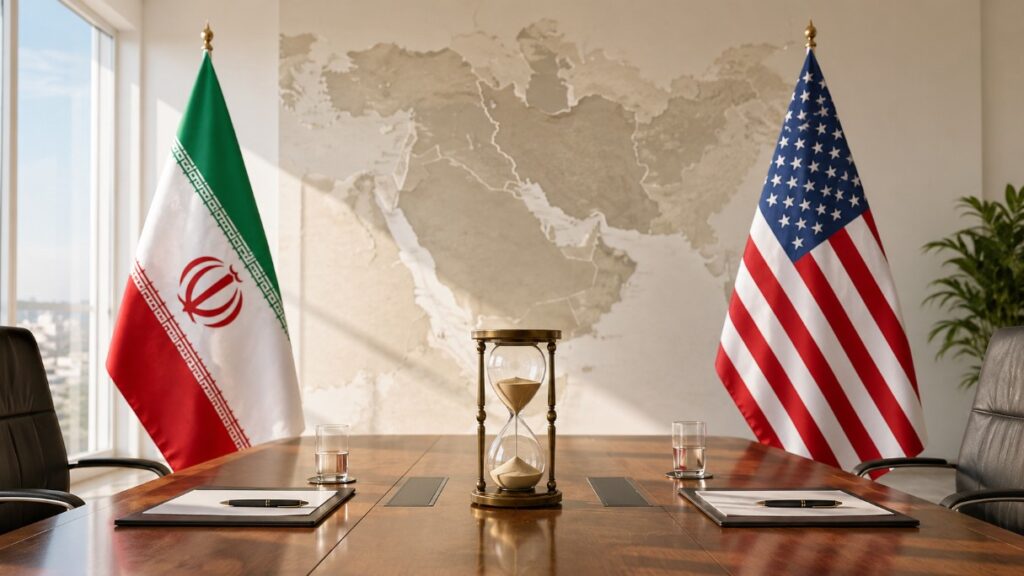
Most importantly, this memorandum of understanding deliberately dodged the hardest questions. The two sides gave themselves a strict 60-day deadline to figure out the messy details: what happens to Iran’s underground enriched uranium stockpile, how deep the U.S. will cut economic sanctions, and how to handle regional proxy groups.
If these technical talks succeed over the next two months, this moment could be the foundation for a much safer Middle East. But if they fail, this celebrated deal will look less like a historic peace treaty and more like a temporary commercial break in a long, devastating war.
Peace or Another Pause?
The agreement has created an opportunity that didn’t seem possible just a few weeks ago. The fighting has stopped, oil prices are dropping, and diplomacy has returned to the center of the conversation. For many people across the Middle East, that alone is a welcome development.
Yet the history of U.S.-Iran relations offers reasons for caution. Previous agreements have collapsed, tensions have returned, and moments of optimism have often been followed by new crises. The true test begins during the 60-day window that follows, where both sides will have to face the brutal task of compromising on technical nuclear limits and heavy economic sanctions.
Right now, the region finds itself between two possibilities. One path leads toward a more stable Middle East, where disputes are managed through negotiation rather than proxy wars. The other leads back to the familiar cycle of escalation that has shaped the region for decades.
Whether the Geneva agreement becomes a real step toward stability or just another pause before the next crisis will depend on whether Washington and Tehran can finally trust the promises they make on paper.
Want more articles like this? Sign up for our e-newsletter!
Check out our blog here!