Subscribe
to receive news by email

Poll
Will the Trump Administration Shift U.S. Policy in Favor of Palestine?
- No (86%)
- Yes (14%)
 Loading ...
Copyright © 2026 Arab America
Go topThe Hidden Cost of AI: How the Arab World Can Build Data Centers Without Water
By Shayla Frank / Arab America Contributing Writer
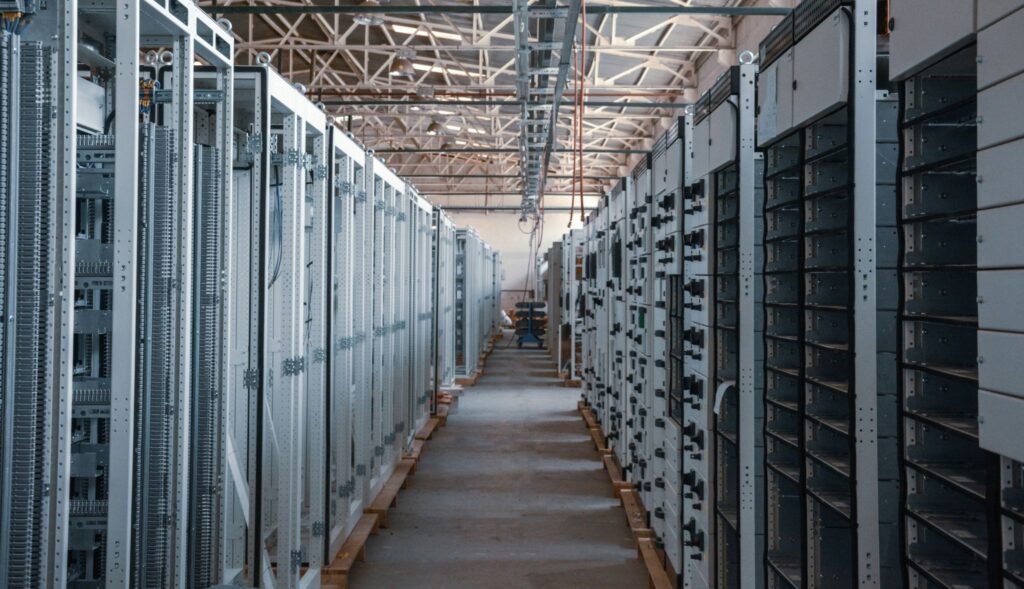
A large data center running evaporative cooling can push several million liters through its systems on a hot day, and most of it never comes back. It leaves as vapor, carrying the heat of the servers with it.
Several countries there draw nearly all of their drinking water from the sea and pump the rest from aquifers that will not refill on any human timeline. The Gulf is building anyway. Billions of dollars are committed to artificial intelligence infrastructure across Saudi Arabia and the United Arab Emirates, on a scale with no regional precedent. The easy conclusion is that the desert is the wrong place for any of this. However, the more interesting possibility, and the one the engineering supports, is that the hardest place on earth to cool a machine is where the world will learn to cool them without water at all.
Why the Sea Will Not Cool a Server
Pulling from the Gulf itself is the obvious move, the way data centers in Scandinavia shed their heat into the Baltic. But, the physics does not travel. Gulf water carries somewhere between 40,000 and 45,000 parts per million of dissolved salt against a world ocean average near 35,000. In August the shallow southern basin holds the warmest surface water measured anywhere on earth, with readings that push past 35 degrees Celsius as a matter of routine.
A heat sink only does its job when it is colder than the machine it is cooling, and warm water has almost nothing left to give, and salty water chews through ordinary steel, which forces operators toward titanium exchangers and a permanent campaign against biofouling.
The Desalination Loop
Desalinated water solves the chemistry and opens a different problem. Reverse osmosis runs on electricity, and that electricity comes from plants that need cooling of their own. The brine left over goes back into the same shallow sea the next intake will draw from, a little saltier each time. This creates a loop unsustainable for only cooling data centers. Treating the sea as an unlimited tap for server cooling asks a system already carrying the drinking water of entire countries to absorb a second customer. That customer grows with every new campus.
The Engineering Answer Is to Stop Using Water
The way out is not to find better water. It is to stop evaporating any of it. A closed loop is filled once, often by tankers during construction. The fluid then circulates for the life of the building, absorbing heat from the servers and dissipating it to the air through radiators. Microsoft began building that design on August 1, 2024, and estimates savings of more than 125 million liters per facility each year. Oracle and others have since followed with variations on that principle.
Most of the gain comes from moving the cooling closer to the heat. Direct-to-chip systems press cold plates against the processors themselves instead of chilling an entire hall. Liquid carries heat around a thousand times better than air, so a small volume sealed inside a circuit does work that would otherwise take a hall full of fans.
None of this is free. Rejecting heat mechanically rather than letting water evaporate takes electricity, and Microsoft’s own infrastructure engineers have conceded a modest rise in power draw as the price of going waterless. That is the trade the Gulf is unusually well placed to make. It has energy, but it doesn’t have water. The desert then offers something back, though less than the romance of cool nights suggests. Riyadh in July averages about 43 degrees by mid afternoon and falls to roughly 29 by dawn. That is still hot, but it is fourteen degrees of relief in air holding ten percent humidity. On a muggy coast those temperatures would do a chiller much less good. So operators here can shift heavy heat rejection into the small hours and bank the cold against the afternoon.
What Arab Engineers Are Building
Stargate UAE broke ground in Abu Dhabi on May 1, 2026 on a campus spanning ten square miles and designed to reach five gigawatts. The first 200 megawatts are due to go live this year. In Saudi Arabia, Humain has secured 211 land parcels and is bringing sites at Riyadh and Dammam online at 100 megawatts each, working toward about six gigawatts by 2034. What makes those numbers survivable is the power plan rather than the water plan. The Abu Dhabi campus is designed to draw on solar, gas, and the Barakah nuclear plant. That is the kind of supply that makes mechanical cooling affordable in the first place.
At King Abdullah University of Science and Technology, a team led by Qiaoqiang Gan built a passive harvester. It pulls two to three liters of water a day from desert air for every square meter of surface. It uses no electricity and has no moving parts. Its architecture came out of an earlier project meant to keep solar panels cool by radiating their heat into the night sky. Cooling and water turn out to be the same problem approached from opposite ends.
The question in the headline has an answer, and it is not a comfortable one. The Gulf will build these machines whether or not the water arithmetic works, and the useful thing is that the shortage forced the engineering. Closed loops, chip-level cooling, and materials that drink from the air were all pushed along by places with nothing to spare.
A warming world with thinning rivers is going to need that work. It was done in the desert first because the desert had no other option.
Want more articles like this? Sign up for our e-newsletter!
Check our blog here!