
Subscribe
to receive news by email

Poll
Will the Trump Administration Shift U.S. Policy in Favor of Palestine?
- No (86%)
- Yes (14%)
 Loading ...
Copyright © 2026 Arab America
Go topSyria Arrests Assad’s Chemical Weapons Engineer
By: Connor J. Buss / Arab America Contributing Writer
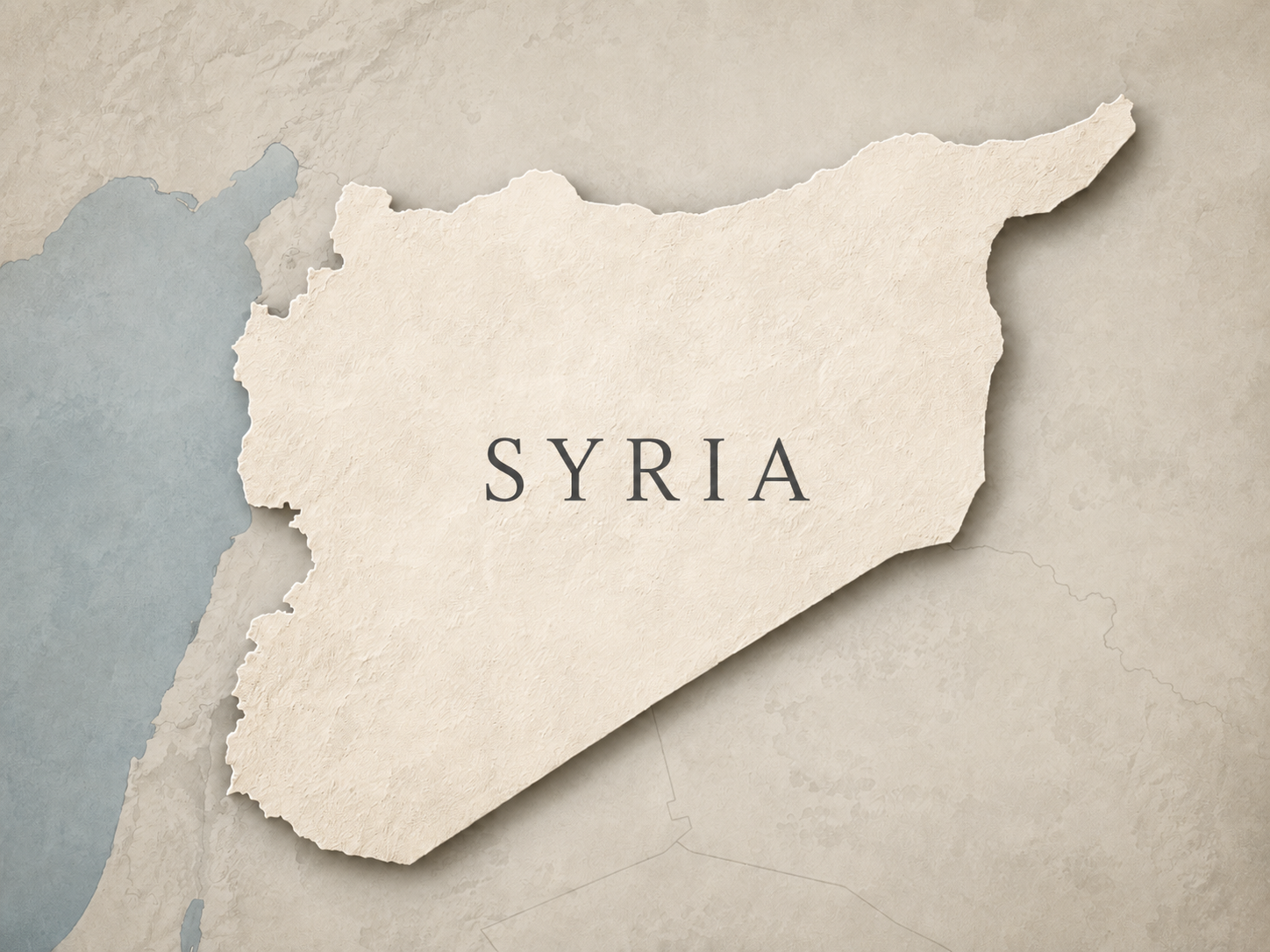
On July 15th, Syrian authorities under the new government led by President al-Sharaa announced they had arrested Ahmed Habib Ali, an officer under Bashar al-Assad’s regime claimed to be a chemical weapons specialist.
The Syrian Interior Ministry stated that Ali “was responsible for sarin gas storage facilities and chemical manufacturing within Unit 417”, a chemical weapons research site near Damascus. They added that he was “one of the officers who supervised the manufacture of about 20 bombs loaded with sarin gas, each weighing 250kg [550lb], which were used in attacks targeting Syrian cities and towns in 2013 and 2017.”
OPCW
This arrest comes just a week after Syria was reinstated to the Organization for the Prohibition of Chemical Weapons (OPCW). OPCW is a group aiming to eliminate the use of chemical weapons worldwide. In 2021, Syria had its OPCW voting rights stripped away after OPCW found evidence of Assad’s use of chemical weapons. In 2013, Syria agreed to hand over its 1,000-tonne chemical weapons arsenal after a joint Russia-U.S. proposal following airstrike threats. This proposal was made after a chemical weapon attack on a suburb in Damascus killed over 1,400 people, including 426 children.
However, Assad did not adhere to the agreement. The regime would later conduct full-scale gas and chlorine attacks on towns in 2014 and 2017. In addition to being a violation of OPCW membership, the attacks are also an internationally recognized war crime.
Ali was also responsible for the misleading of international inspectors of the chemical weapons arsenal. The full arsenal was not fully declared, and the complete scope and scale of the weapons was not disclosed.
In addition to use of chemical weapons being used to fight the civil war, they were also used on civilians. The weapons were used to suppress protests opposing Assad’s government. Additionally, protestors were detained and kept in inhumane conditions, with former detainees describing physical, psychological, and sexual abuse. Reports describe detainees being forcefully conscripted to fight for Assad’s forces.
The Bigger Picture
Ali’s arrest is one of many, as the provisional government led by president al-Sharaa has arrested dozens of Assad-era officers under suspicion of various crimes. The crackdown is traced back to the violent suppression of popular protests in 2011. The violence used then is where charges these officials are facing come from.
The Syrian government opened its first public trial of Assad regime officials in April. The only defendant arrested and facing charges in person was Atef Najib. Najib was a Syrian army brigadier general who was head of the Political Security Branch in southern Syria’s Daraa province under Assad and who is also a cousin of the former president. He is responsible for the torturing and killing of teenage protestors in 2011 which was one of the catalysts for the civil war.
The trial marked a major step forward for the country’s international reputation. Spokesperson for the Syrian Ministry of Justice baraa Abdulrahman said that Najib’s trial “is of great importance for the independence of the judiciary, for transparency and accountability.” President al-Sharaa faced criticism for delays in promised justice transitions. However, the trials show that the government is responding with more aggressive prosecutions.
Public Reaction
However, the aggression is being welcomed. Crowds celebrated outside the courthouse during Najib’s trial. Syrians in the Daraa province feel as though they are getting justice for the wrongs committed against them personally.
Mohammad Abdul Rahman, a Daraa resident whose son died in Saydnaya prison after being arrested at the outset of the uprising, said that residents were demanding “the execution of everyone whose hands are stained with the blood of hundreds of thousands of Syrians, not just Atef Najib.”
“There isn’t a single household in Daraa that hasn’t paid a price. Some lost one or more sons to the bullets of the former regime’s army and security services or in its prisons, while those who did not lose loved ones now live amid destruction,” he said. “The people want all of them executed.”
Want more articles like this? Sign up for our e-newsletter!
Check out our blog here!