Subscribe
to receive news by email
Poll
Will the Trump Administration Shift U.S. Policy in Favor of Palestine?
- No (86%)
- Yes (14%)
 Loading ...
Copyright © 2026 Arab America
Go topPathbreakers of Arab America—Fady Joudah
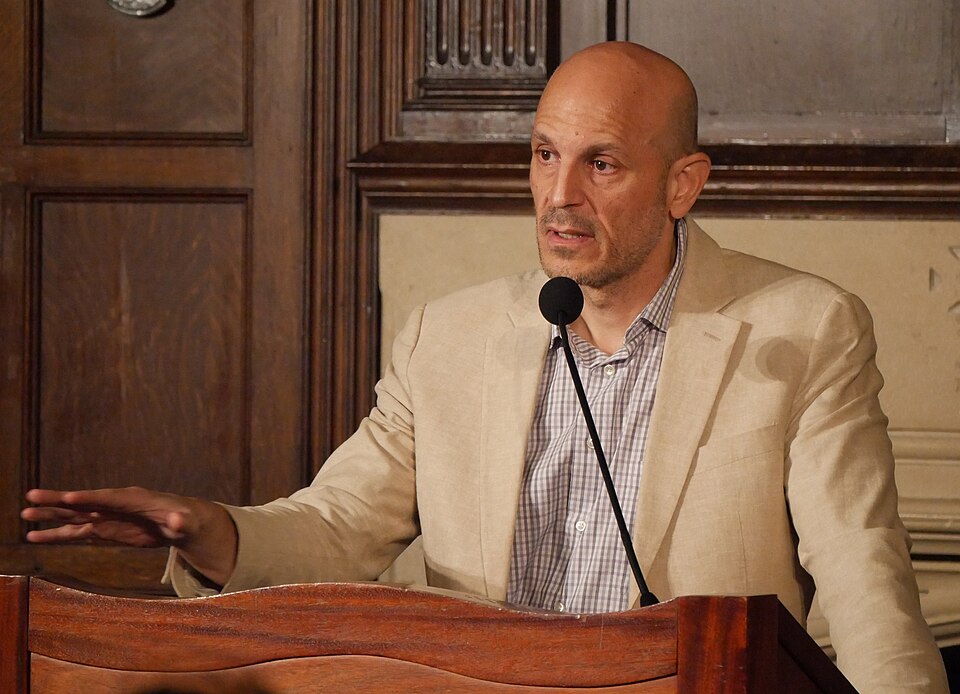
By: John Mason / Arab America Contributing Writer
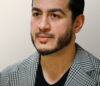
This is the 126th article in Arab America’s series on American pathbreakers of Arab descent. The series features figures from entertainment, business, sports, science, the arts, academia, journalism, and politics. Our 126th pathbreaker is Fady Joudah, a Palestinian American poet and an emergency-room physician. As a poet, Joudah has said he writes for the future because “the present is demolished.” Born to Palestinian refugee parents, he is acutely aware of his people’s plight, recently reporting that Israeli airstrikes have killed more than one hundred of his family members in Gaza.
Poet, Emergency Room physician, Palestinian American Fady Joudah “turns suffering into song”
Fady Joudah was born in 1971 in Austin, Texas to Palestinian refugee parents, and grew up mostly in Libya and Saudi Arabia. His father was 14 in 1948 when he fled Palestine following the creation of the state of Israel. Joudah’s mother, whose family came from the same village, was born in 1949 in a refugee camp on the Gaza Strip. Fady is the second of five children.
Joudah’s father eventually emigrated to the United States to finish a doctorate in history, returning to Gaza to marry Joudah’s mother. The family then moved to Austin, where the elder Joudah taught at the University of Texas for a year before accepting teaching positions first in Libya, then in Saudi Arabia, where Joudah attended junior high and high school. By this time, Fady was fluent in English, though he grew up speaking Arabic. He returned to the U.S. for college, attended the University of Georgia and the Medical College of Georgia, and completed medical training at the University of Texas Health Science Center in Houston. Fady is married and his wife, Hana, is also a physician and they have two children.
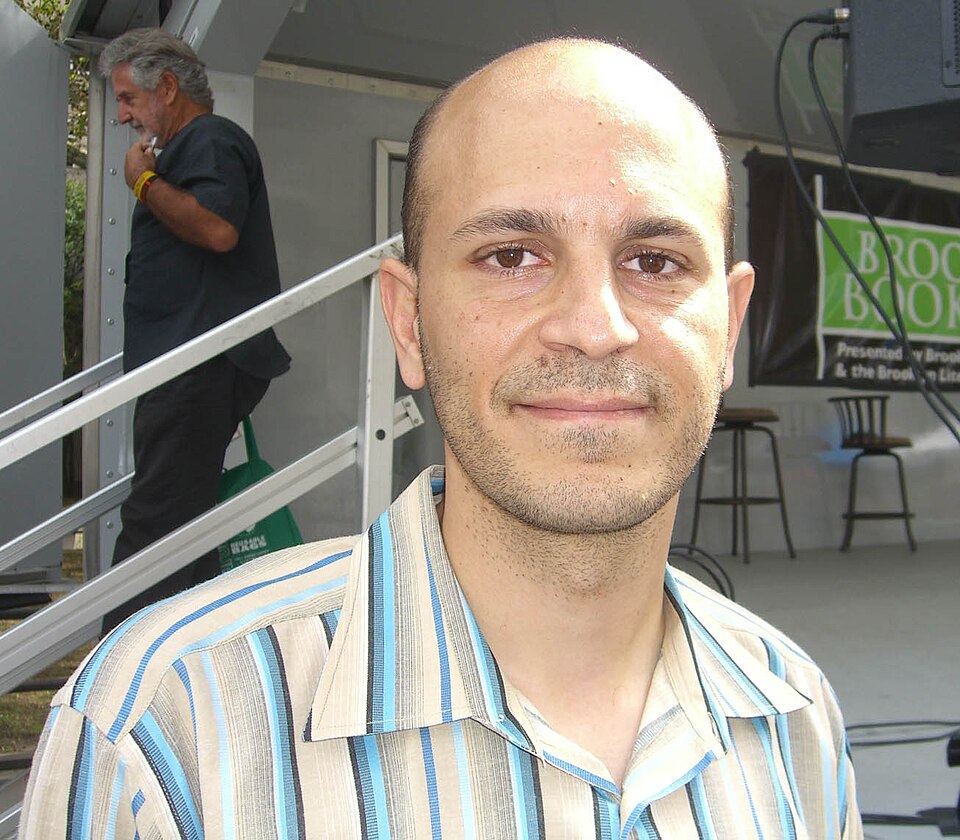
After finishing his medical degree, Fady joined the Michael E. DeBakey Veterans Administration Medical Center in 2000 and has been there ever since. A point of interest is that DeBakey, a Lebanese American, is famous for innovative heart surgery. At the VA, Fady practices internal medicine, mainly as an emergency room physician and has also volunteered for ‘Doctors Without Borders,’ which provides medical services to the very poor in developing countries. He has served in months-long stints in African refugee camps.
While developing a skill in writing during middle school, Fady was also attracted to medicine. He notes that it was his father who introduced him early to classic Arabic poetry, even “reciting lines, talking about technique, linking those beloved poems with his own life as a boy.” But it was also his father who offered him some shrewd and critical career advice, telling him, “Son, you can always be a writer or a poet after you become a doctor, but if you become a poet, you can’t become a man of science.” Fady is reminded that this advice was one of the wisest things his father ever told him.
One journalist writing about Joudah’s balancing of emergency medicine with his penchant for poetry was reminded of “…that crack about poetry that, unless you work for Hallmark, you can’t make a living at it. Which is why poets have day jobs, mostly teaching in colleges and universities.” And that, while “the classroom can certainly be a site of pain, …poet Fady Joudah’s day job involves contact with suffering of a more elemental sort.” This is a good segue to describing Fady’s commitment to telling the story of his people, the Palestinians, their joys and pains, and the turmoil they have endured over decades.
Joudah has borne witness to the tragedy of his people – how the war in Gaza changed him
As a poet, Joudah has excelled at writing both his own poetry and in translating the poetry of famous Palestinian poets, such as Mahmoud Darwish and Ghassan Zaqtan. His earliest literary work was a collection of poems, ‘The Earth in the Attic,’ which won the 2007 Yale Series of Younger Poets series. His translations won the 2013 International Griffin Poetry Prize, and in 2024 he was awarded the Poets & Writers $100,000 Jackson Poetry Prize for his collective work. This Prize celebrated Fady’s significant and evolving body of work, “distinguished by his courage to speak in the face of the unspeakable, in poems of lyric concision and intensity.” As Joudah himself describes his work, “I write for the future, because my present is demolished.”
In 2025 he captured the Lenore Marshall Poetry Prize for his collective work, which was cited as bearing “witness to genocide and expansive humanity.” In his published poems about the ongoing Gaza war, Joudah has poignantly depicted the costs of that war, including his own loss of more than 100 members of his own family. In writing about the fate of the Palestinian people, he reckons considerably with what is depicted as “colonial violence.”
Regarding his latest collection of poetry, Joudah remarked, “In a manner of speaking, these poems came immediately to me because they had existed in me, on the Palestinian carousel, for years: the dehumanization, the complicity, the silence, the disdain, and the process of attritional extermination. But also, beauty, music, and desire had been living in me just as fully. The survivance. Palestinians are much more than a repository of wounds; portraying us as such can’t lead to much more than pity.”
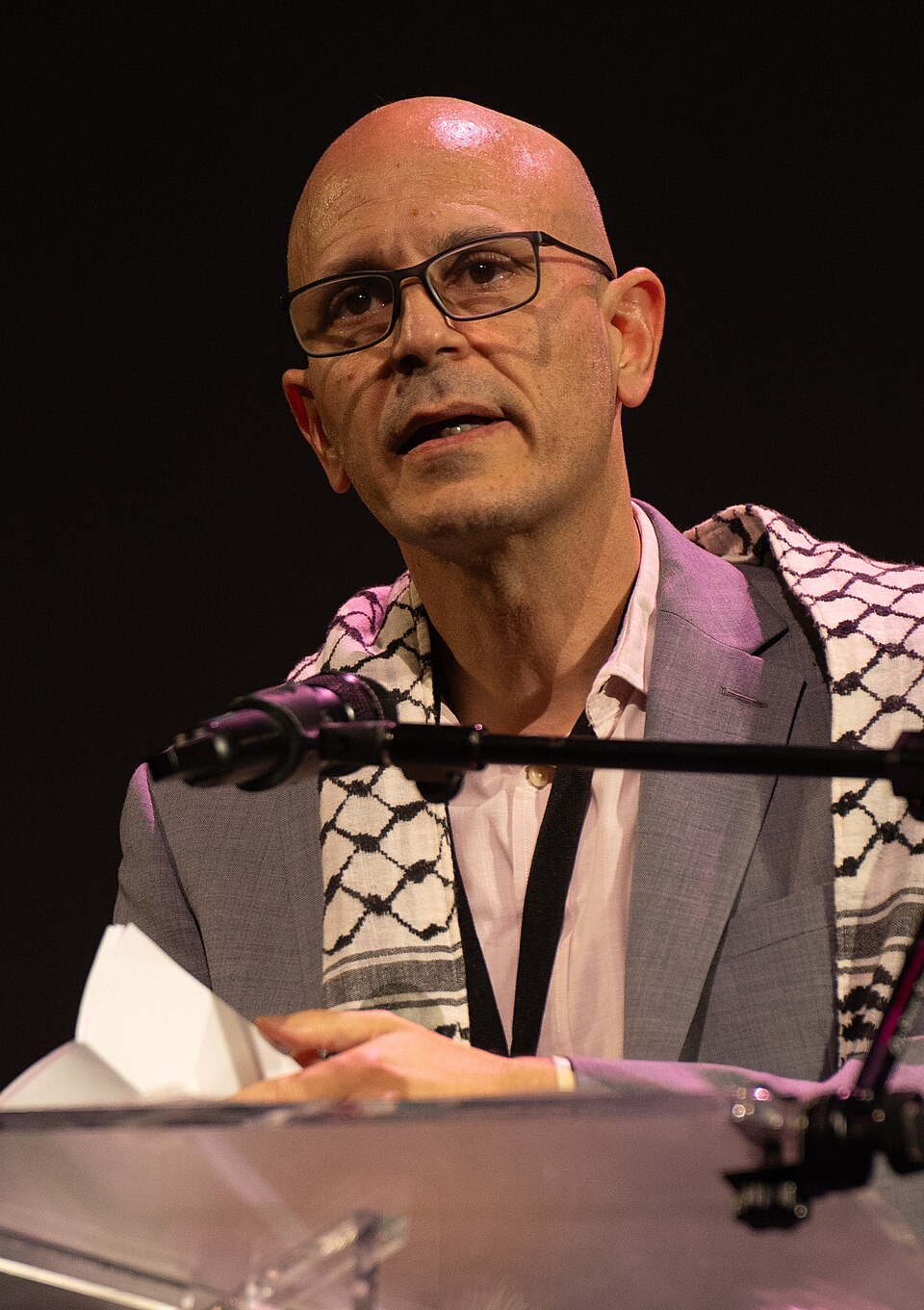
A sample of Joudah’s poetic reaction to what some describe as “Israel’s enactment of a genocidal war on Gaza” is:
You who remove me from my house
have also evicted my parents
and their parents from theirs.
How is the view from my window?
How does my salt taste?
Shall I condemn myself a little
for you to forgive yourself
in my body?
Another sample, a heartbreaking poem, ‘Halimah’s mother did not seem aware Halimah was dying,’ is set in an African refugee camp, and begins:
You should have seen Halimah fight her airlessness
Twisting around for a comfortable spot in the world.
She would gather all of the air she could
In an olympic snatch and curl
Then turn toward her mother’s breast to suckle,
But nothing changed.
In talking about what he’s after in poems like this, Joudah said, “I wanted the reader to feel complicit and not some protected, objective observer.” Complicity in this sense is in either not knowing or if, in knowing, what to do about it?
Asked about how he balances his ER work with his poetry, after a long day patching up vets or ministering to refugees, Joudah expounded, “It puts me in a happy state.” He sees his poetry as his way of distilling experience into verse. “Even though my poems don’t seem to be happy, I think I like to sing.”
Joudah projects his future as a poet-emergency room physician, with no plan to quit his day job. “I like being a doctor,” he says flatly. “And he mostly likes being a VA doctor. Most of the patients in the VA have very tough — and I want to say very American — lives in that they’re the ones who constitute a large part of our society, but they’re not the ones we see on TV necessarily.”
May Fady Joudah continue to “serve” us, both as a skilled ER and refugee camp doctor and as a compassionate poet, one who can help us bear witness to the tragedy of the Palestinian people yet help us turn their suffering into song.
Sources:
“Fady Joudah,” Wikipedia Series on Arab Americans, 2026
“Palestinian-American doctor turns suffering into song,” Houston Chronicle, 4/13/2008
“Fady Joudah–The poet on how the war in Gaza changed his work,” Aria Aber, The Yale Review, 2/28/2024
“Palestinian American poet Fady Joudah receives $100,000 prize,” AP, 4/18/2024
“Fady Joudah,” Poetrymagazine, June 2026
John Mason, Ph.D., focuses on Arab culture, society, and history and is the author of LEFT-HANDED IN AN ISLAMIC WORLD: An Anthropologist’s Journey into the Middle East, New Academia Publishing, 2017 and of his new novel, WHISPERS FROM THE DESERT: Zaki, a Little Genie’s Tales of Good and Evil (2025), under his pen name, Yahia Al-Banna. He has taught at the University of Libya in Benghazi, Rensselaer Polytechnic Institute in New York, and the American University in Cairo. John served with the United Nations in Tripoli, Libya, and consulted extensively on socioeconomic and political development for USAID and the World Bank in 65 countries.
The views and opinions expressed in this article are those of the author and do not necessarily reflect the position of Arab America. The reproduction of this article is permissible with proper credit to Arab America and the author.
Want more articles like this? Sign up for our e-newsletter!
Check out our blog here!