
Subscribe
to receive news by email

Poll
Will the Trump Administration Shift U.S. Policy in Favor of Palestine?
- No (86%)
- Yes (14%)
 Loading ...
Copyright © 2026 Arab America
Go topPathbreakers of Arab America—James Jabara
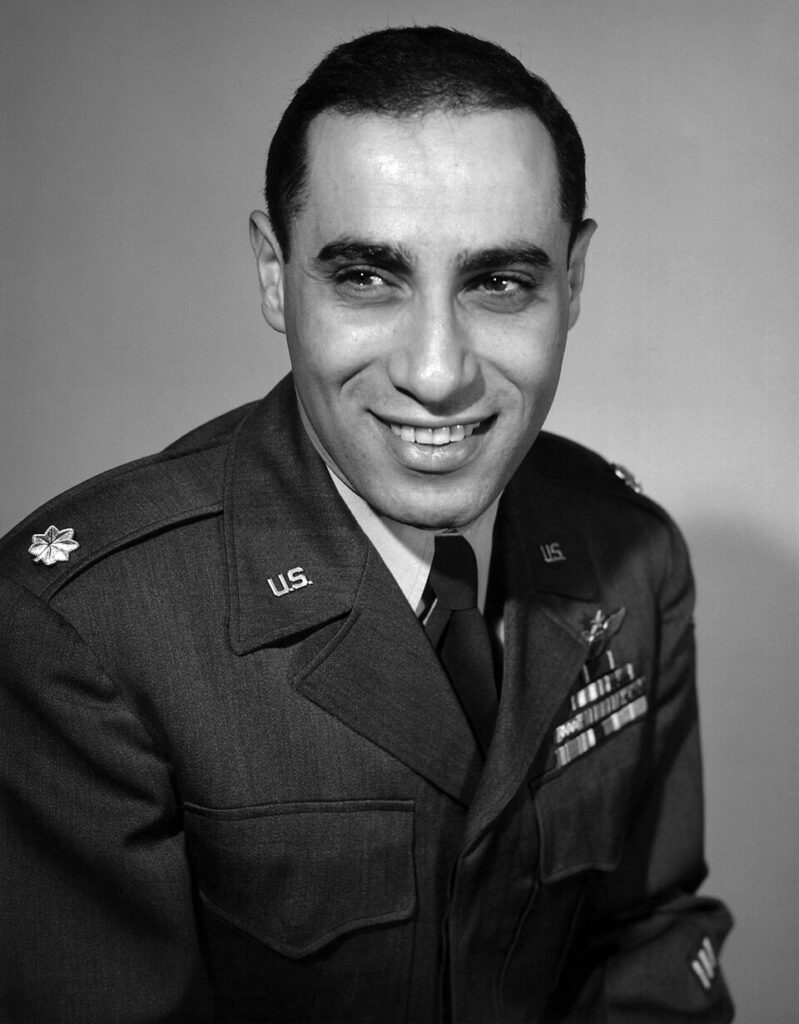
By: John Mason / Arab America Contributing Writer
This is our 124th in Arab America’s series on American pathbreakers of Arab descent. The series features personalities from various fields, including entertainment, business, sports, science, the arts, academia, journalism, and politics. Our 124th pathbreaker, James Jabara, Lebanese American fighter pilot and first American jet ace, broke barriers in U.S. military aviation. His success in the jet age marked a turning point in aerial combat, especially in the shift from propeller-driven fighters to high-speed jets. A veteran of World War II, Korea, and Vietnam, Jabara attributed his heroism to “early discipline learned in his Lebanese grocer father’s store and through the Boy Scouts of America.”
With celebrations of D-Day and America’s 250th birthday underway, Lebanese American James Jabara shines as the first American jet fighter ace, who marked a turning point in U.S. military aviation and aerial combat
A first-generation American of Lebanese descent, James Jabara was born on October 10, 1923, in Muskogee, Oklahoma, to parents from Marjayoun, Lebanon. This town is located just north of the modern-day border with Israel. The family relocated to Wichita, Kansas, when he was nine years old, and opened a grocery store. There, he grew up, working in his family’s grocery store, attending high school, and earning the rank of Eagle Scout. At only five feet five inches tall and wearing glasses, James may not have been everyone’s idea of someone who became “your typical fighter pilot.”
In describing his love of military aerial combat, James recalled, “I used to read articles about [Eddie] Rickenbacker and all these novels you read about air combat, and I guess from the sixth grade it was my ambition to be a fighter pilot.” As a high school student, James’ eyesight was described as “so weak he had to wear glasses.” Not letting that get in his way, “young Jabara wanted more than anything to be a pilot.” It was noted that, to improve his eyesight, he followed a homegrown remedy and ate 20 carrots a day. It must have worked, since, as legend goes, we remember Colonel James Jabara today as the world’s first jet combat pilot.
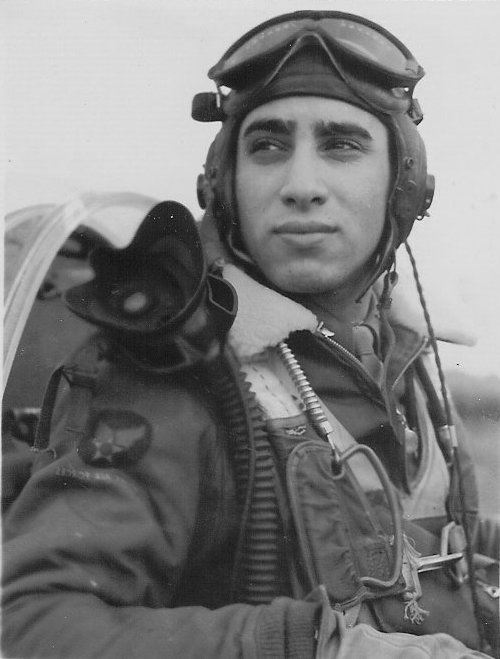
When World War II broke out, having just graduated from high school, Jabara wasted no time and enlisted in the Army in 1942 at Fort Riley, Kansas, near his hometown. Intent on being a pilot, and despite his imperfect vision, he successfully earned both wings in 1943 and selection as a fighter pilot—”usually the toughest assignment to get.” He was then commissioned as a second lieutenant in the U.S. Army Air Forces at Moore Field, Texas.
Jabara flew the P-51 Mustang in two European tours during World War II, “surviving mid-air collisions and downing enemy Luftwaffe fighter planes. He flew 108 combat missions, earning the Distinguished Flying Cross and Air Medal. All this, before he was 20.
Dedicating his career to the defense of his country, Jabara quickly advanced through the ranks of the Air Force. After WWII, he trained on the F-80 Shooting Star and then the F-86 Sabre, the USAF’s first operational jet fighter. Then, in the Korean War, he flew with the 334th Fighter-Interceptor Squadron, 4th Fighter-Interceptor Wing, in so-called ‘MiG Alley.’ On 20 May 1951, he shot down his fifth and sixth MiG-15s in a single day, becoming the first American jet ace, American Fighter Aces+1. By the end of the war, he had 15 confirmed MiG-15 kills, making him a ‘triple ace’ and the second highest-scoring U.S. ace of Korea.
One story about then-Captain Jabara, reported in a San Antonio newspaper, describes an incident in 1951, 50 years earlier, illustrating his temerity as a fighter pilot. We read of a young Air Force pilot flying a hobbled fighter, which “made history in the frigid skies over North Korea, becoming the world’s first jet ace.” Although outnumbered by Migs two to one, and with mechanical problems with his own plane, Jabara pressed home the attack with a head-on pass at a group of three MiGs. Then, his wingman spotted three more enemy fighters closing in from behind.
“Ignoring the new attackers for the moment, Jabara sent a long burst of fire from his F-86’s six machine guns into the nearest North Korean fighter, which caught fire. Jabara followed the stricken MiG downward until the pilot ejected. Jabara had become the first jet ace, although he barely had time to think about it.” In the absence of his wingman, a flanking plane who provides crucial cover for continued attacking,” Jabara nevertheless coaxed his Sabre back up to the still-raging battle at 25,000 feet.” Losing one’s wingman usually meant a pilot was to immediately withdraw from combat and head for home. Not so for Jabara. He scored another hit on a MIG and “Luckily, two American pilots heard Jabara’s calls for help over the radio and were able to drive the MiGs off after a two-minute circling dogfight.”
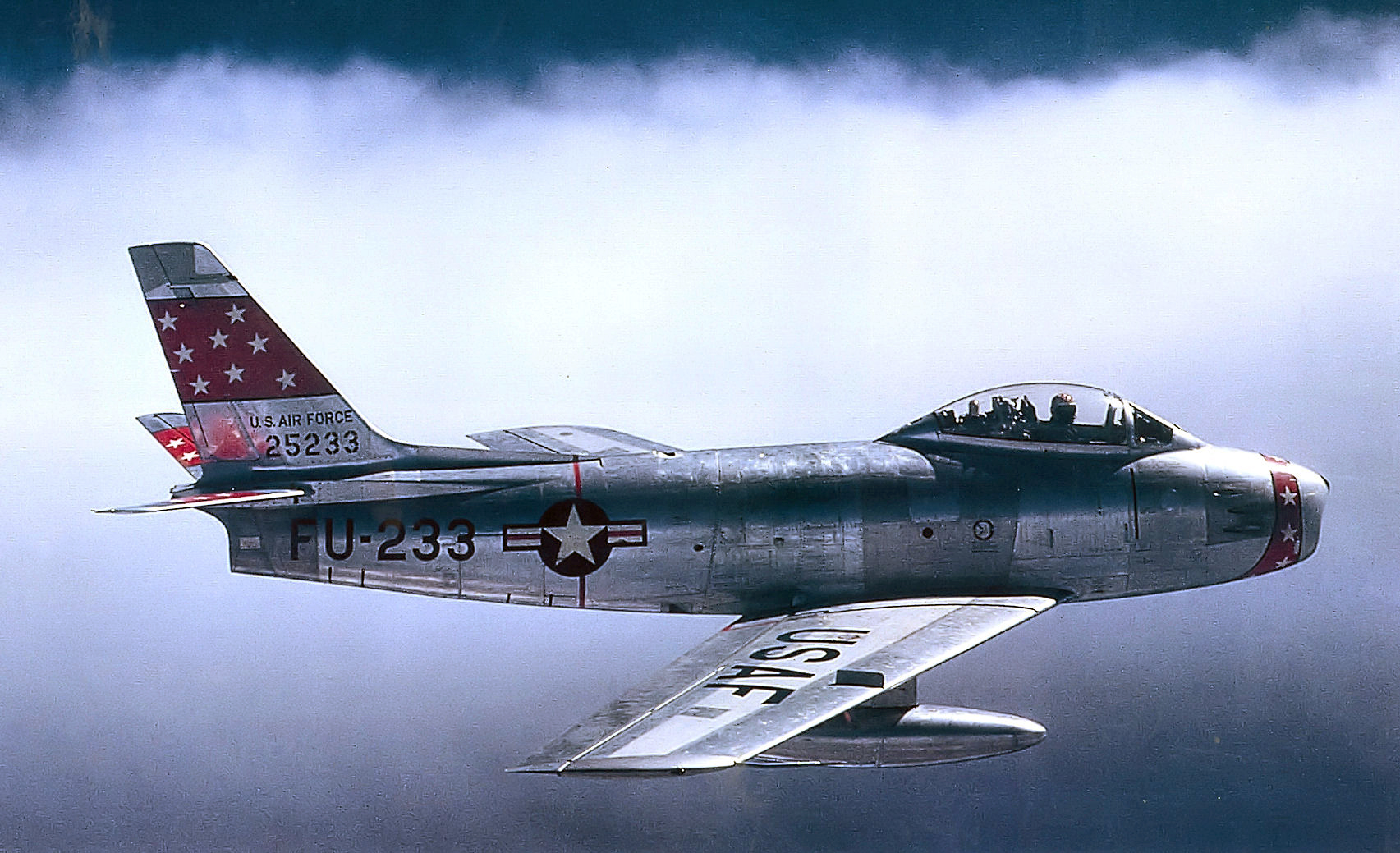
With the rank of Captain, Jabara was hailed by his higher-ups for his valor. One Colonel Meyer said as much to Lt. Gen. Earle E. Partridge, commander of the Fifth Air Force: So the General replied, “Stick him out in front and see what you can do…So we started….Anything that was a milk run, he didn’t go; anything that was up the Yalu (this river forms the border between China and North Korea), he did go….It didn’t take very long for him to get the other three (MIGs), for on April 10, Jabara downed another MiG-15 over MiG Alley. Two days later, on April 12, he claimed a third. Then, on April 22, Jabara shot down his fourth MiG-15.”
Combat success for Jabara was all about “air discipline, aggressiveness and aerial gunnery” and his sense that air combat is ‘just business ’-it’s “what we’re trained for—just like you might be trained for any business.”
As we noted earlier, Jabara attributed his heroism to early discipline learned in his Lebanese grocer father’s store and through the Boy Scouts of America. He was not, he once told Parade magazine, a “killer by instinct.” He believed that air combat was “a business that he was trained for, and he used his three “A’s” to describe it — air discipline, aggressiveness, and aerial gunnery — with both his students and himself.” These attributes of success, as stated by Jabara, are all practical-minded and down-to-earth, but they also reflect this Lebanese American’s deep modesty and strong loyalty to his country.
Jabara’s valor and airmanship have been recognized profusely. First, his rank of Colonel at age 42, the youngest Colonel in the service at the time, alone was a mark of respect and achievement as a combat airman. Then there are the critical wartime battles he served in, namely WWII, the Korean War, and the Vietnam War. These are followed by the prestigious military units he served, including the 31st Tactical Fighter Wing and the 337th Fighter-Interceptor Squadron. Finally, and not least, are the medals he received, including the Distinguished Service Cross, the Silver Star (2), the Distinguished Flying Cross (7), the Air Medal (24), and the British Distinguished Flying Cross.
A later honor, conveyed by the U.S. Air Force Academy, in conjunction with the Jabara family and the Association of Graduates, established the Colonel James Jabara Award for Airmanship on January 5, 1967. With 15 kills, Colonel Jabara was the second leading Air Force ace of the Korean War, and he was the First American Jet Ace. Each year, the U.S. Air Force Academy and the Association of Graduates present the Colonel James Jabara Award to an Academy graduate or graduates whose airmanship contributions are of great significance and set them apart from their contemporaries.
Yet another honor, which in this case was against his wishes, Jabara received a stateside leave for a publicity tour. As the press noted, “The Jabara family grocery store in Wichita was thronged with people for days, and both he and his father John appeared on local and national radio and television. He was even sent on a goodwill tour with his father through the Middle East and gave a speech in his father’s Lebanese hometown, Marjayoun. One press source reported that his visit to Lebanon “was a powerful moment of connection between his Lebanese roots and American service–a celebration of shared pride and cross-cultural achievement.”
Film newsreels included footage of his aircraft, and other accolades included his own song (“That Jabara Bird”) and a ritual reward of his Distinguished Service Cross at a Boston baseball game. Also, an airport just northeast of Wichita, Kansas, was named ‘the Colonel James Jabara Airport’ in his honor.
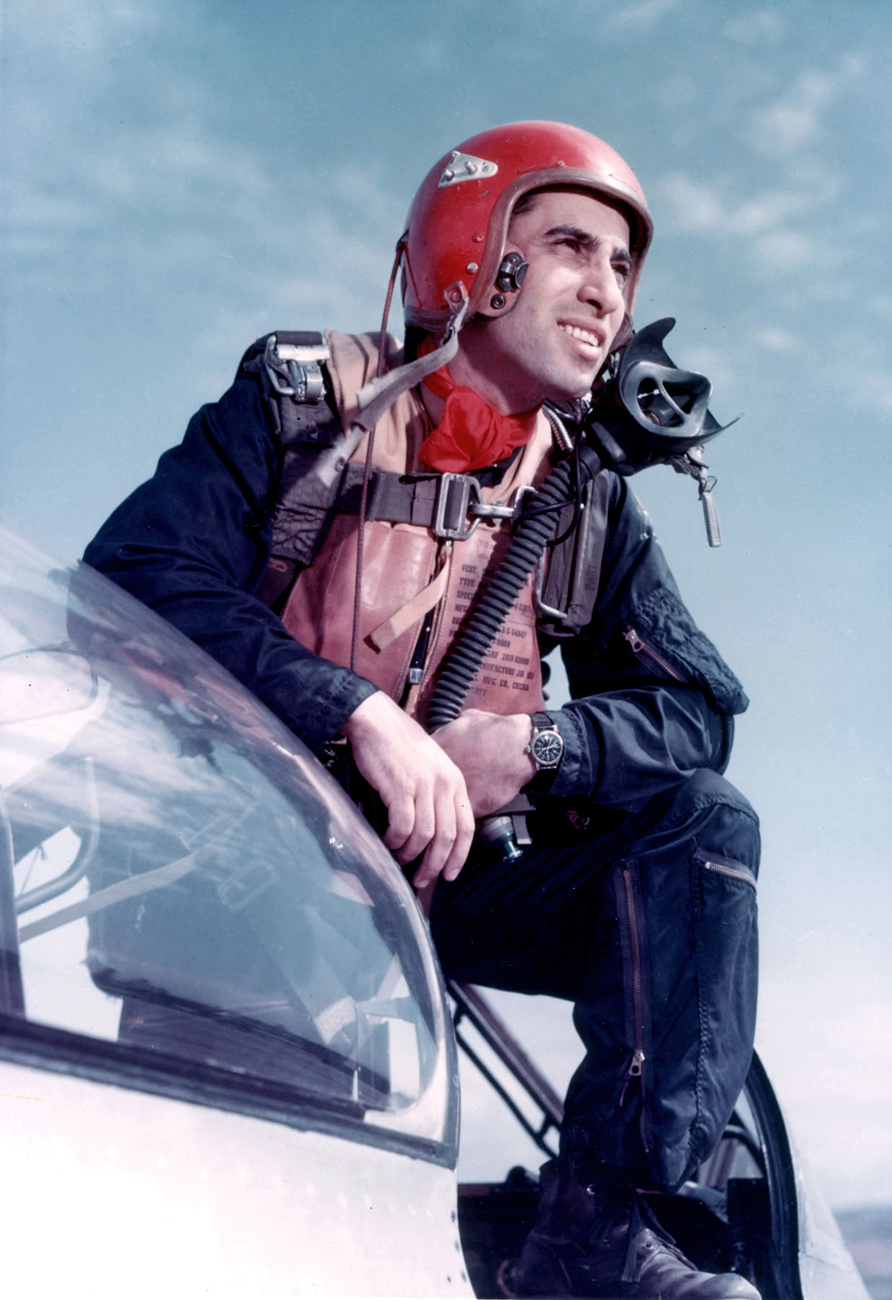
A note of great sadness surrounds Jabara’s death. After all the close scrapes he had as an aerial combat warrior, his death is filled with irony and angst. While on leave from Vietnam and preparing to return there for another combat tour, he was killed in a car accident in Delray Beach, Florida, in 1966. His daughter, Carol Anne, who was 16 years old, was driving to their new home in South Carolina, with her father as a passenger in the back seat. She lost control of the car, and it rolled over several times. Jabara sustained head injuries and was pronounced dead on arrival at a Delray hospital, and Carol Anne died two days later.
A memorial service was held for them at Homestead Air Force Base with a ‘missing man formation fly-by.’ Jabara and his daughter were buried together in a single grave at Arlington National Cemetery.
A quoted source summarizes Jabara’s life perfectly—”His life proves an essential truth for young people navigating identity today:
You do not have to choose between your roots and your future. You can honor both and lead because of them.” All Americans, perhaps especially Arab Americans, will come to honor James Jabara, the first U.S. ‘jet ace.’
Sources:
“James Jabara,” Wikipedia Series on Arab Americans, 2026
“Col. James Jabara, fifty years ago, May 20, 1951, a young Air Force pilot flying a hobbled fighter made history in the frigid skies over North Korea, becoming the world’s first jet ace,” Military.com, (no date)
“For First Jet-Vs.-Jet Ace, Combat Success Was All About Discipline, “Military.com
“History in Blue: Jabara was first U.S. jet ace”. Navy Times, 10/18/2006.
“How Captain James Jabara Became the First American Ace of the Korean War,” Historynet, 11/14/2006
“Air Force pilot becomes first jet ace half century ago,” Capital Flyer, 5/20/2001
““James Jabara,” Military Times-Hall of Valor, 4/10-12/1951
John Mason, Ph.D., focuses on Arab culture, society, and history and is the author of LEFT-HANDED IN AN ISLAMIC WORLD: An Anthropologist’s Journey into the Middle East, New Academia Publishing, 2017 and of his new novel, WHISPERS FROM THE DESERT: Zaki, a Little Genie’s Tales of Good and Evil (2025), under his pen name, Yahia Al-Banna. He has taught at the University of Libya in Benghazi, Rensselaer Polytechnic Institute in New York, and the American University in Cairo. John served with the United Nations in Tripoli, Libya, and consulted extensively on socioeconomic and political development for USAID and the World Bank in 65 countries.
The views and opinions expressed in this article are those of the author and do not necessarily reflect the position of Arab America. The reproduction of this article is permissible with proper credit to Arab America and the author.
Want more articles like this? Sign up for our e-newsletter!
Check out our blog here!