Subscribe
to receive news by email

Poll
Will the Trump Administration Shift U.S. Policy in Favor of Palestine?
- No (86%)
- Yes (14%)
 Loading ...
Copyright © 2026 Arab America
Go topPathbreakers of Arab America—Suad Joseph
By: John Mason / Arab America Contributing Writer
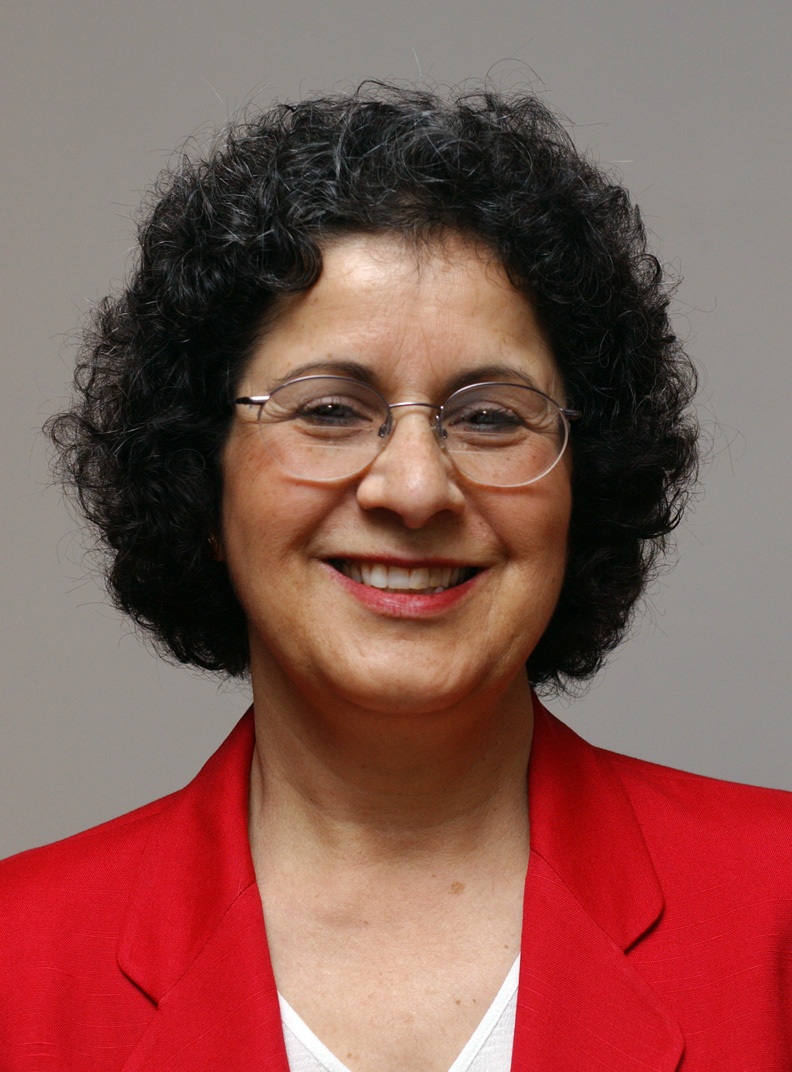
This is the 129th article in Arab America’s series on American pathbreakers of Arab descent. The series features figures from entertainment, business, sports, science, the arts, academia, journalism, and politics. Our 129th pathbreaker is Suad Joseph, a Lebanese American scholar who has focused on Arab society and culture and, more specifically, on religion and politics, family and the state, gender and citizenship, and children’s rights. She is also well known for her organizational skills in bringing scholars together to focus on research and teaching interests that advance academic and public understanding of the complexities of being Arab in an often-disordered world.
Academic extraordinaire, Suad Joseph has advanced the social and cultural understanding of Arabs in general, and Arab women and the family in specific
Joseph was born on September 6, 1943, in Lebanon, the youngest of seven children. Their parents, unskilled laborers, put schooling first for Joseph, their four brothers, and two sisters. Early on, the family moved to the town of Cortland in upstate New York. There, her father, Samuel, worked in the Wickwire factory while her mother, Rose, worked in the Crescent Corset Company. While both parents in this family of seven children valued education in the Lebanese tradition, they could not afford to send any of them to college.
Joseph grew up in Cortland, New York, and after completing public schooling, she enrolled at the State University of New York at Cortland. Upon graduation, she went on to complete graduate school, studying anthropology at the University of Pittsburgh and then at Columbia University, where she received a PhD. in anthropology in 1975. While Suad herself excelled at scholarship, all six of her siblings went on to achieve advanced degrees.
Suad attributes her own educational advancement as well as that of her siblings to different Cortland schoolteachers, “who took an interest in the Joseph offspring, giving them extra assignments and attention outside of class.” She continued, saying, “We were in a small town…We were children of hard-working parents and stood out…Our teachers taught us what America was about and what it meant to engage in this historical experiment of democracy…They believed in it. We believed in them.” How different things were back then!
Joseph has focused heavily on organization-building in the academic community—mainly aimed at advancing the scholarship and public understanding of Arab life and culture, both in their home countries and in the U.S. Suad founded or co-founded so many organizations or groupings, there are almost too many to list; nevertheless, a few of them are the Middle East Section of the American Anthropological Association; the Association for Middle East Women’s Studies; co-founder of the internationally recognized Journal of Middle East Women’s Studies; the Arab Families Research Group; and a six-university consortium. She co-founded the Arab American Studies Association and the Association for Middle East Anthropology. She was the president of the Middle East Studies Association of North America, the main professional association for scholars of the Middle East.
At her home university, the University of California—Davis, Suad co-founded the Women and Gender Studies Program and founded the Middle East/South Asia Studies Program. The honors she received are also too numerous to list in their entirety. One, however, was the UC Davis Prize for Undergraduate Teaching and Research. She was awarded the Graduate Mentor Award by the Consortium for Women and Research. Her public service has also been recognized: she was awarded the Diversity Leadership Award and the Distinguished Scholarly Public Service Award by UC Davis.
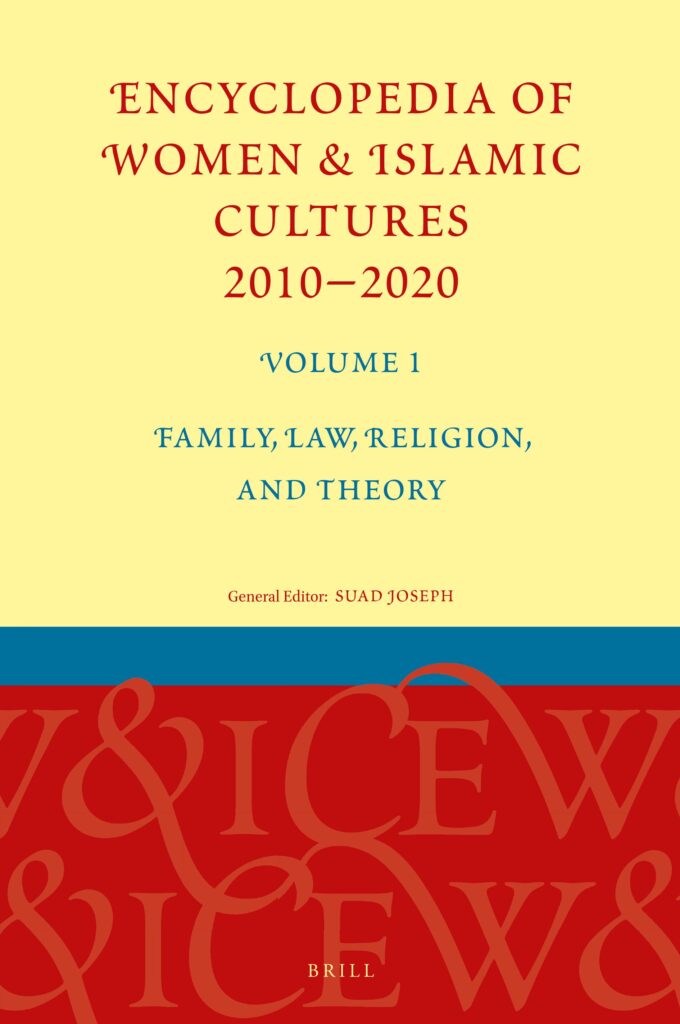
Joseph is General Editor of the highly esteemed ‘Encyclopedia of Women and Islamic Cultures,’ the first encyclopedia of its kind, which ‘Choice,’ the magazine for librarians, ranked as “essential” for libraries. She has edited or co-edited eight books and published over 100 journal articles. For the past decade and a half, she has offered training in proposal writing and research design to young scholars in the Middle East, Europe, and the United States.
Suad’s own research interests include following a cohort of children in a Lebanese village, observing, as they grow, “how they learn their notions of rights, responsibilities, nationality, citizenship; how these notions come to be gendered; and how the notions are transferred from family arenas into political/public arenas.” The second is a project on transnational Lebanese families, a study of families who migrated to the U.S. and Canada. And third is a media project that critically assesses the representation of Arab and Muslim Americans in major print news outlets such as the New York Times and the Wall Street Journal.
She is Distinguished Research Professor Emerita of Anthropology and Women’s Studies at the University of California, Davis, where she has been a faculty member since 1976.
For Joseph, academia is “the primary institution of truth and hope in America”—essential for cross-cultural understanding
In advancing her interests in cross-cultural understanding, Joseph bestowed her generosity upon UC Davis by establishing the Suad Joseph Graduate Student Research Award in Lebanon and Palestine Studies. The award will support graduate students conducting research on Lebanon, Palestine, and/or their diasporas. In announcing the award, Suad noted, “I have, for some time, believed that we are in the midst of a major historical transformative moment — which can manifest itself over years…Such moments stand out for the intensification of contradictions — politically, economically, socially, culturally.”
Joseph continued, “Palestine and Lebanon are in the eye of the storm…Given the killings of scholars, journalists, doctors, and the like, and the destruction or obstruction of universities, libraries, and research centers in those countries, it is imperative that we train young scholars at UC Davis to document, record, analyze and help us understand this historical moment now and in the future.”
Another interest of Joseph’s is in the educational opportunities in her native country, for which she established an endowment at the American University of Beirut (AUB) for Palestinian women graduate students conducting social sciences and humanities research on Palestine. At AUB, she also created undergraduate scholarships for female children of Lebanese, Palestinian, or Syrian mothers. Suad also founded an endowment to support undergraduate research at the State University of New York at Cortland. And with her siblings, she co-founded an endowed scholarship to support students at Cortland Jr./Sr. High school students who are going to college.
Apropos of the present uncertain sociopolitical climate we’re living through, Joseph is emphatic in her support for education. She averred, “In a time when academia is under threat from forces who do not value scientific knowledge production, it is more important than ever to stand for evidence-making, to stand for factuality, to stand for research, to stand for the truth.” She added, “The best work of the academy is to produce students, produce citizens, produce souls and intellects who take us forward into worlds we could not have known.”
One of Suad’s concerns over the years has been Israel’s place in the context of the Arab world. More specifically, it has been the case of Israeli attacks on civilian populations in Palestine, particularly during the 2014-2016 period. That was when U.S. anthropologists participated in a boycott of Israeli academic institutions, which Suad initially hesitated to join because of her personal relationships with Israeli social scientists. But that changed during a trip to Israel/Palestine, when she discovered that many of her Israeli academic friends stood for the boycott as well.
What concerned Suad the most was revealed as she crossed the barriers from Israel into Ramallah, Palestine. There, she noted a “world-change…The effects of occupation were everywhere. Destruction, development held hostage, mobility crippled, lives upended and denied.” She found that Palestinian university students persevered, however, doing all they could to get across the barriers that blocked them from attending classes: “They could not come and go as they wished, even in their own country; visas to other countries frequently denied; constant constraints on opportunities for jobs/awards/grants; lives, careers, families destroyed.”
Not on her watch will Suad Joseph accept the wanton destruction and death of Palestinian families, including innumerable innocent women and children. Nor will she relent in her academic trek to advance the understanding of her people.
Sources:
“Suad Joseph,” Wikipedia Series on Arab Americans, 2026
“UC Davis Announces Suad Joseph Graduate Student Research Award in Lebanon and Palestine Studies,” lettersandsciencemag, UC Davis, 2/6/2026
“Anthropologists for the Boycott of Israeli Academic Institutions, 2014 – 2016 Campaign, Suad Joseph: Why I Now Support the Academic Boycott,” anthroboycott, 5/24/2016
John Mason, Ph.D., focuses on Arab culture, society, and history and is the author of LEFT-HANDED IN AN ISLAMIC WORLD: An Anthropologist’s Journey into the Middle East, New Academia Publishing, 2017, and of his new novel, WHISPERS FROM THE DESERT: Zaki, a Little Genie’s Tales of Good and Evil (2025), under his pen name, Yahia Al-Banna. He has taught at the University of Libya in Benghazi, Rensselaer Polytechnic Institute in New York, and the American University in Cairo. John served with the United Nations in Tripoli, Libya, and consulted extensively on socioeconomic and political development for USAID and the World Bank in 65 countries.
The views and opinions expressed in this article are those of the author and do not necessarily reflect the position of Arab America. The reproduction of this article is permissible with proper credit to Arab America and the author.
Want more articles like this? Sign up for our e-newsletter!
Check out our blog here!