
Subscribe
to receive news by email

Poll
Will the Trump Administration Shift U.S. Policy in Favor of Palestine?
- No (86%)
- Yes (14%)
 Loading ...
Copyright © 2026 Arab America
Go topAfter Morocco's Exit, What Did the Arab World Achieve at the 2026 World Cup?
By Aziz Hellal / Arab America Contributing Writer
When the final whistle blew in Boston and France walked away with a 2-0 quarterfinal victory over Morocco, the Arab journey at the 2026 FIFA World Cup officially came to an end.
For a second consecutive tournament, the Atlas Lions carried the hopes of millions across the Arab world, taking down the Netherlands on penalties and defeating Canada 3–0 before falling to one of the tournament’s favorites. Its elimination closed the curtain on the Arab campaign, but not on the momentum Arab football has built over the past two World Cups.
But measuring the entire region’s success solely by Morocco’s exit overlooks a much bigger story. With a record eight Arabic-speaking nations taking the pitch in North America, the 2026 World Cup wasn’t just about one team’s deep run.
It was the tournament where Arab football stopped looking for validation and started demanding respect, proving that the historic breakthrough in Qatar four years ago was a blueprint, not a fluke.
Morocco’s Run Ended, But Its Rise Continues
Morocco’s tournament ended against a disciplined French side that capitalized on its chances and limited the Atlas Lions’ attacking opportunities. The 2–0 defeat was disappointing, but it did little to diminish what Morocco had accomplished over the previous three weeks.
After eliminating the Netherlands in a dramatic penalty shootout and comfortably defeating Canada, Morocco reached the World Cup quarterfinals for the second consecutive tournament.
Few national teams outside football’s traditional powers have managed that level of consistency on the biggest stage. Rather than another Cinderella story, Morocco has become one of the world’s most respected national teams.
Egypt Also Rewrote Its History
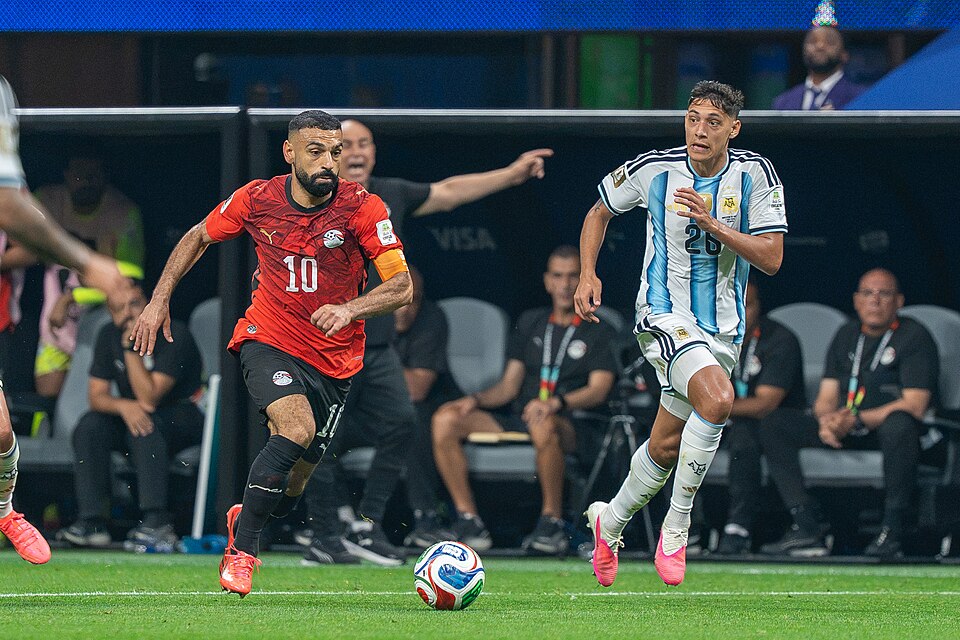
While Morocco went the farthest, Egypt produced a breakthrough of its own. For 92 years, the Pharaohs had carried a strange World Cup curse, failing to win a single match since their debut in 1934.
They finally shattered that history in Vancouver, coming from behind to defeat New Zealand 3–1 through goals from Mostafa Ziko, Mohamed Salah, and Trezeguet.
Egypt did more than break the curse. It advanced from Group G alongside Belgium, defeated Australia on penalties in the Round of 32, and pushed defending champion Argentina to the limit in a dramatic 3–2 Round of 16 defeat.
Together, Egypt and Morocco showed that the Arab world’s strongest teams are no longer satisfied simply to qualify—they now expect to compete deep into the knockout rounds.
More Than Results: A New Chapter for Arab Football
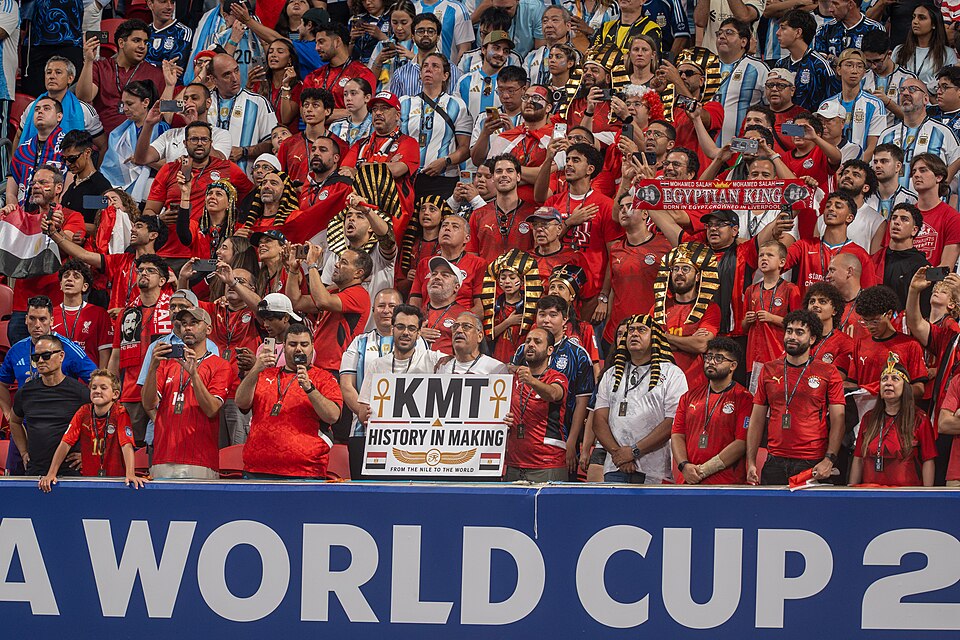
The Arab story of the 2026 World Cup was not written only on the field. It was also visible in the stands, where supporters brought flags, drums, chants, and a sense of shared identity to stadiums across North America.
In Dallas, Egyptian fans turned the match against Australia into a celebration that felt closer to Cairo than Texas. Moroccan supporters created a similar atmosphere in Monterrey and Houston as the Atlas Lions made another deep run.
Whether it was Algeria fighting through a difficult group, Jordan making its World Cup return, or Iraq competing on the global stage again, every Arab team gave supporters across North America another reason to celebrate.
Even after other Arab teams were eliminated, their fans continued to show up, often supporting Morocco and Egypt as representatives of a wider region.
That sense of unity mattered, especially for Arab Americans watching teams connected to their families, languages, and cultures compete on the world’s biggest stage.
The tournament offered something larger than national results: a rare moment when Arab identity was visible, confident, and celebrated in public.
Looking Ahead to Morocco 2030
The 2026 World Cup may have marked the end of the Arab campaign in North America, but it also pointed toward what comes next. In 2030, Morocco will co-host the tournament alongside Spain and Portugal, bringing the World Cup back to Arab soil for the second time in eight years.
Morocco’s recent success has not happened by accident. Investment in youth development, training facilities, and a stronger football structure has helped the national team compete consistently against the world’s best.
Hosting in 2030 will give the country another opportunity to build on that progress, both on and off the field.
The experience gained in 2026 should raise expectations across the region. Egypt showed it could win and advance in the knockout stage, while Morocco proved its 2022 run was no one-time surprise.
By the time the World Cup returns in 2030, expectations will be higher than ever. Morocco will be welcoming the world, Egypt will be looking to build on its historic breakthrough, and Arab football will have another opportunity to show that its rise is no longer a story of potential—but of sustained progress.
Want more articles like this? Sign up for our e-newsletter!
Check out our blog here!