Subscribe
to receive news by email

Poll
Will the Trump Administration Shift U.S. Policy in Favor of Palestine?
- No (86%)
- Yes (14%)
 Loading ...
Copyright © 2026 Arab America
Go topWhy the Arab World Has the Most to Lose from Renewed U.S.–Iran Tensions
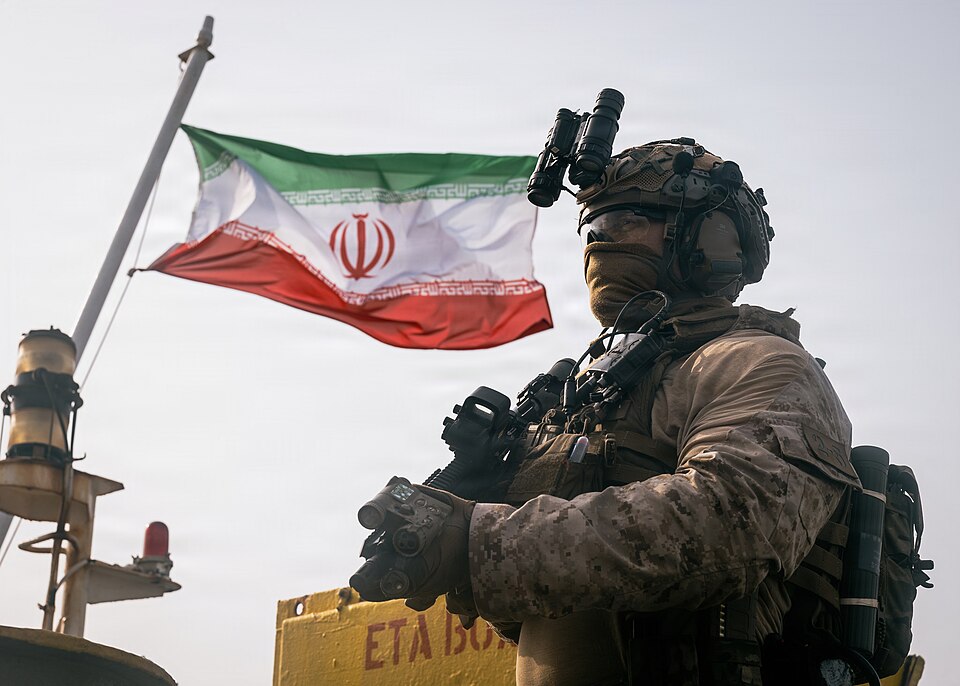
By Aziz Hellal / Arab America Contributing Writer
Just weeks after a ceasefire appeared to ease tensions between the United States and Iran, the confrontation has once again returned to the forefront of the Middle East.
Yet for much of the Arab world, the conflict has never been just about Washington and Tehran. From the Gulf to the Levant, Arab states once again find themselves caught between competing powers while bearing many of the political, economic, and security consequences.
Today, many Arab governments share a common priority: stability. They are investing in economic diversification, expanding regional cooperation, and seeking to reduce long-standing tensions.
Every escalation raises the risk of wider instability across a region that has spent years trying to recover from war, rebuild economies, and attract investment.
Why Does This Conflict Matter So Much to the Arab World?
For most outside observers, this looks like a familiar battle between two longtime enemies. But for the people living in the Arab world, it isn’t a far-off geopolitical game—it’s an immediate threat to daily life and economic progress.
Geography tells part of the story. Several Arab nations host major U.S. military bases, while Iran maintains deep influence through armed proxies in Iraq, Lebanon, and Yemen. When strikes are exchanged between Washington and Tehran, Arab countries often find themselves caught in the crossfire.
Any renewed escalation between Washington and Tehran increases the risk that neighboring Arab states could be drawn into the crisis, whether directly or indirectly.
The Economic Costs Go Beyond Oil
When tensions rise in the Middle East, oil prices are usually the first thing people notice. But for the Arab world, the economic impact goes much further.
Even the possibility of a wider conflict can make investors more cautious, increase shipping costs, and disrupt trade through critical waterways such as the Strait of Hormuz and the Red Sea.
Qatar also demonstrated how quickly regional prosperity can be disrupted by conflict. During the fighting, Iranian missile strikes damaged parts of Qatar’s Ras Laffan Industrial City, temporarily reducing the country’s LNG export capacity by an estimated 17% and threatening billions of dollars in annual energy revenue.
At the same time, drone attacks forced Saudi Arabia to temporarily shut down parts of the Ras Tanura oil complex, highlighting how critical Gulf energy infrastructure remains vulnerable during periods of escalation. Together, these attacks underscored that even limited military confrontations can carry significant economic consequences for the entire region.
The consequences would not stop at the Gulf. Egypt, for example, depends heavily on the Suez Canal, one of the world’s most important trade routes. Any prolonged disruption to regional shipping could place additional pressure on canal revenues and an economy already facing significant financial challenges.
If regional economies slow or businesses postpone investments because of growing instability, the impact could be felt not only in Gulf countries but also in households across Egypt, Jordan, Lebanon, and other parts of the Arab world. Millions of Arab expatriates work across the Gulf, sending money home to support their families.
Regional Development Depends on Stability
Across the Arab world, governments have expressed concern over the return of military escalation, warning that another cycle of fighting could have consequences far beyond the battlefield. Instead, many have called for restraint, diplomacy, and a renewed effort to prevent the crisis from spreading across the region.
Their concerns are not only about security. For many Arab states, another conflict threatens years of economic planning and regional cooperation. Over the past decade, countries like Saudi Arabia, the UAE, and Qatar have poured billions into shifting their economies away from oil. They have increasingly focused on economic development, foreign investment, and regional cooperation.
Another period of military confrontation threatens to distract from those priorities and create new security concerns at a time when many Arab states are focused on long-term stability rather than conflict.
Projects like Saudi Arabia’s Vision 2030 depend on attracting international tourists, tech companies, and foreign investors. Investors are unlikely to commit billions of dollars to a region where military escalation could return at any moment.
Prolonged uncertainty could slow investment, increase insurance costs for businesses, and affect tourism, aviation, and international trade. Countries that are not directly involved in the conflict could still face significant economic consequences simply because of their location.
The Future of the Region Depends on Avoiding Another Conflict
No one can predict how long renewed U.S.–Iran tensions will continue or whether they will lead to another major regional crisis. What is already clear, however, is that the Arab world has far more at stake than simply watching another geopolitical rivalry unfold.
Every new round of escalation carries the risk of disrupting economic progress, increasing security challenges, and delaying the development goals many countries have spent years pursuing.
That explains why regional foreign policy has shifted so noticeably over the last few years. Despite maintaining strong strategic and security partnerships with the United States, Gulf countries have shown little interest in further escalation with Iran. Instead, many Arab governments have worked to reduce tensions, as seen in the Saudi-Iran rapprochement and renewed diplomatic engagement across the region.
The Arab world’s priority right now is simple: self-preservation, economic growth, and regional stability. Whether the region gets that quiet will depend on whether local leaders can keep a cool head—and whether Washington realizes just how much everyone else stands to lose.
Leaders across the Arab world understand that success today is measured not by military victories, but by economic growth, regional cooperation, and long-term stability. Another conflict would put all three at risk.
Want more articles like this? Sign up for our e-newsletter!
Check out our blog here!