
Subscribe
to receive news by email

Poll
Will the Trump Administration Shift U.S. Policy in Favor of Palestine?
- No (86%)
- Yes (14%)
 Loading ...
Copyright © 2026 Arab America
Go topSham El-Nessim: Egypt’s 5,000-Year-Old Spring Tradition, Still Alive Today
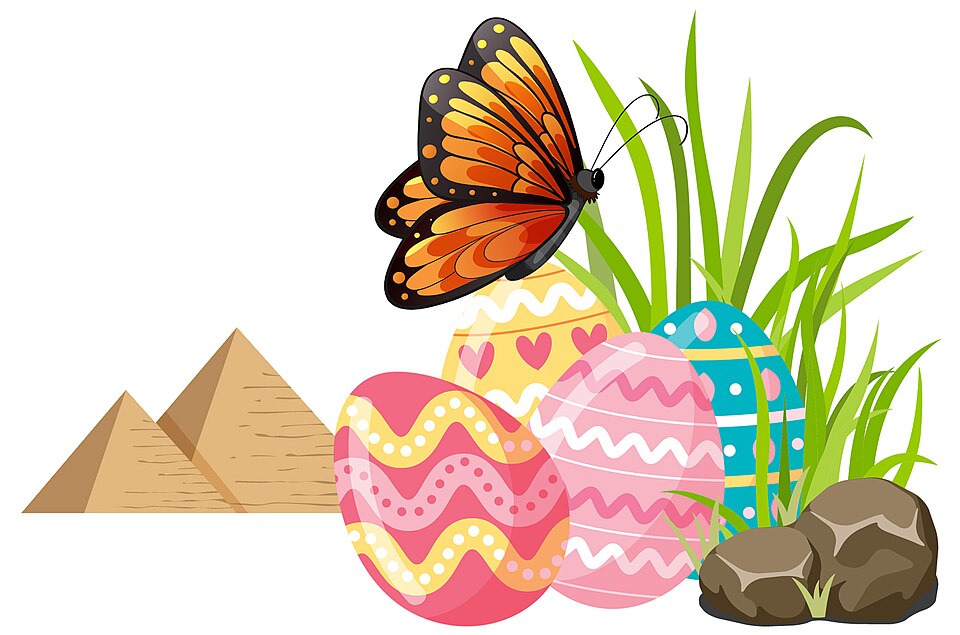
Photo by / HitomiAkane, CC BY-SA 4.0, via Wikimedia Commons
By Aziz Hellal / Arab America Contributing Writer
History has a flavor, and in Egypt, it tastes like Sham El-Nessim. While empires have come and gone, this celebration of spring has remained for thousands of years. Unlike many holidays shaped by religious or political milestones, Sham El-Nessim belongs to the land itself and the people who have called it home since the dawn of civilization.
It is a day when the modern energy of Cairo and the quiet beauty of the Delta echo scenes once painted on the limestone walls of ancient tombs, proving that some bonds are simply too strong for time to break.
From colored eggs to gatherings by the Nile, many of today’s traditions reflect customs that have survived across generations. Sham El-Nessim is not just a holiday—it is a living connection between Egypt’s ancient past and its modern identity.
It started with the Pharaohs—and never really stopped
Sham El-Nessim has a rich history dating back to ancient Egypt, making it one of the world’s oldest traditions. It was known as “Shamou” or “Shamo,” a word believed to mean ‘the renewal of life’ and ‘the arrival of spring’. For the ancients, this wasn’t just a festival—it was a tribute to nature’s rebirth after the retreat of the Nile’s life-giving floods.
Many historians believe the timing was carefully chosen to align with the agricultural cycle. The floodwaters would recede to reveal fertile soil, and this natural rhythm of the Nile shaped the Egyptians’ understanding of survival and hope. It was a moment where the Earth literally came back to life.
What makes Sham El-Nessim unique is not just its ancient origin, but its incredible continuity. While empires rose and fell, this simple celebration of spring remained. Today, even though the context has changed, the core idea remains the same: welcoming life, nature, and renewal—just as the ancient Egyptians did thousands of years ago.
Traditions and Symbols That Survived Thousands of Years
One of the most interesting aspects of Sham El-Nessim is that many of its traditions have survived for thousands of years. While the way people celebrate may have changed over time, many of the core symbols remain almost the same, connecting modern Egyptians to their ancient past.
For the ancient Egyptians, this was more than just a seasonal change. Spring symbolized creation, rebirth, and the balance of nature. People would gather outdoors, often near the Nile, to celebrate the beauty of nature and the return of greenery. These gatherings included food, family, and simple rituals that reflected their deep connection to the natural world.
One of the most recognizable traditions is coloring eggs. This practice dates back to early Mesopotamian times, when eggs were seen as symbols of life and creation. Decorating them in bright colors was a way to celebrate the arrival of spring and the renewal of nature. Today, children and families still enjoy this simple tradition, often without realizing its deep historical roots.
Food also plays a central role in the celebration. Feseekh, a type of fermented fish, is one of the most famous dishes associated with Sham El-Nessim. Its connection to the Nile and fishing traditions reflects how closely ancient Egyptians lived with their environment. Alongside feseekh, green onions, and lettuce are commonly eaten during the holiday. In ancient beliefs, onions were thought to have protective qualities, while fresh greens symbolized growth and new life.
Spending time outdoors is another lasting part of the celebration. Families gather in parks, gardens, or along the Nile to enjoy the fresh air and spring weather, continuing a tradition that dates back thousands of years.
These customs may seem simple, but they show that old traditions can remain alive in everyday life. Sham El-Nessim is a powerful example of how Egypt’s past continues to shape its present.
The one day every Egyptian celebrates together
Sham El-Nessim is a unique celebration for all Egyptians, regardless of religion. Its origins date back to ancient Egypt and have remained culturally significant through various historical periods, including the Christian and Islamic eras.
Over time, Sham El-Nessim became closely linked to the Coptic calendar— often falling on the day after Coptic Easter—yet it has never been a religious event. Muslims and Christians alike celebrate the day in the same way, gathering with family, sharing traditional foods, and enjoying the outdoors rather than engaging in any religious rituals.
In a country shaped by many layers of history, Sham El-Nessim stands as a reminder of a common cultural heritage that goes beyond religious differences. It is one of the few traditions that has remained truly national, bringing people together through simple and familiar practices.
This tradition still matters in a changing world
Sham El-Nessim represents continuity in a fast-changing world. While many cultural practices fade, this ancient Egyptian celebration remains relevant, focusing on family, nature, and shared experiences.
Sham El-Nessim is an example of how culture can survive even when everything else changes. Egypt has gone through major political, social, and economic shifts, yet this tradition continues almost unchanged. This makes it more than just a holiday; it becomes a symbol of identity, memory, and connection.
During Arab American Heritage Month, the celebration offers a meaningful example of the depth of Egyptian culture. From its ancient roots to its place in modern life, Sham El-Nessim continues to carry the same message of renewal, togetherness, and connection. It is a reminder that some traditions do not disappear with time. Instead, they continue to bring people together and keep the past alive in the present.
Want more articles like this? Sign up for our e-newsletter!
Check our blog here!