Advertisement Close

Food

Honey Islands on the Nile

The Nile is home to a great diversity of villages and communities along the whole river, one of which being a cluster of islands that specialize in beekeeping and producing honey. Beekeeping, also known as apiculture, has been traced back to 3500 BC and continues today on the agricultural islands on the Nile River.

Saving Cultural History with UNESCO

he United Nations Educational, Scientific and Cultural Organization (UNESCO) is tasked with finding and preserving the unique but at-risk traditions of various cultures and documenting them for future generations. This year, they selected nine Arab traditions to feature.

Feteer Meshaltet with Almonds and Pistachios

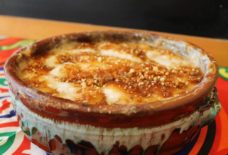
It is said that feteer meshaltet, then called feteer maltoot, was served to the ancient gods. This flaky Egyptian pastry, which brings to mind the crisp shell and buttery layers of a croissant, is rumored to even be the French staple’s Arab ancestor. It can be served plain with honey, savory with cheese, or sweet with nuts.

The Versatility of Falafel

By: Carrie Stewart / Arab America Contributing Writer Falafel is a very famous Middle Eastern cuisine. It is a deep-fried ball or patty made from chickpeas, broad beans, or both. It is normally an appetizer but can also be served on salads, in a pita, as a side, and much more. People normally eat it … Continued

Nomads and Camels: Geographic Influences on the Bedouin Diet

By: Jordan AbuAljazer / Arab America Contributing Writer Known in Arabic as Badawi, the Bedouin people are a nomadic group in the Middle East and North Africa region known for their long and extensive history throughout the region. Bedouins reside most predominantly in Egypt, Palestine, Iraq, Syria, Jordan, and several regions of the Arabian Peninsula. … Continued

Khan al Khalili- the Center of Old Islamic Cairo

By: Caroline Umphlet / Arab America Contributing Writer Khan al-Khalili is the most famous market in Egypt, and even one of the oldest open-air markets in the entire Arab World. Located in the heart of old Islamic Cairo, it stretches about half a square mile and is easily walkable from end to end. The market … Continued

The Surprising Algerian History of the Clementine

By: Claire Boyle / Arab America Contributing Writer Introduction: The Clementine is beloved by many for its easy-to-peel and often seedless nature, sweet taste,  and the beautiful orange color of the fruit. During the fall and winter months, clementines can be easily found in grocery stores, kids’ lunchboxes, and on countertop spreads full of other … Continued

Healing Herbs of the Arab World

By: Mariam Alyakoob / Arab America Contributing Writer There are many indigenous herbs within Southwest Asia and North Africa that have been used in many of the cuisines of that region, but did you know that many of them are used medicinally as well? Herbs such as sage, black seed, and mint are a few … Continued

Vegetarian Arab Cuisine–9 Vegetarian Dishes

Have you worried about having vegetarian or vegan options at a restaurant with family or friends? Arab food actually has an impressive array of options for a vegetarian diet. Despite many popular arab foods including meat, there are traditional meals that are perfectly hearty and healthy without it. You will still be stuffed to the brim after grabbing seconds and thirds at any Arab household or restaurant.

Egyptian Fesikh – “The Deadly Fish”

Living up to its daunting nickname, Fesikh (فِسيخ) is an ancient and traditional Egyptian dish that is actually deadly. The dish is usually prepared for the celebration called Sham el-Nassim or Eid al-Rabiya. The fish can then be served with lemon, green peppers, maybe a salad, bread, or other preferred sides. The fish is thoroughly cleaned and left in the dark in salt and other seasonings for 10-15 days, some recipes call for up to 21 days or even a whole year! It is safe, if done correctly, to eat it raw because the salt prevents rotting and essentially “cooks” the meat. Some countries do fry, roast, or grill it after the salt, but it is more traditionally Egyptian to eat it raw. It is highly advised to not prepare this meal if you are not familiar with it, given the risks.


Egyptian Bamiya Recipe – Okra Stew

By: Caroline Umphlet / Arab America Contributing Writer Bamiya (البامية) stew is a favorite among Egyptians and across the Arab world. It can be enjoyed throughout the year as a comforting and hearty meal. There are numerous variations, of course. Using lamb or venison meat requires a longer cooking time to soften the meat. To … Continued

164 Results (Page 5 of 14)