Subscribe
to receive news by email

Poll
Will the Trump Administration Shift U.S. Policy in Favor of Palestine?
- No (86%)
- Yes (14%)
 Loading ...
Copyright © 2026 Arab America
Go topThe Egyptian Free Officers Movement
By Liam Nagle / Arab America Contributing Writer
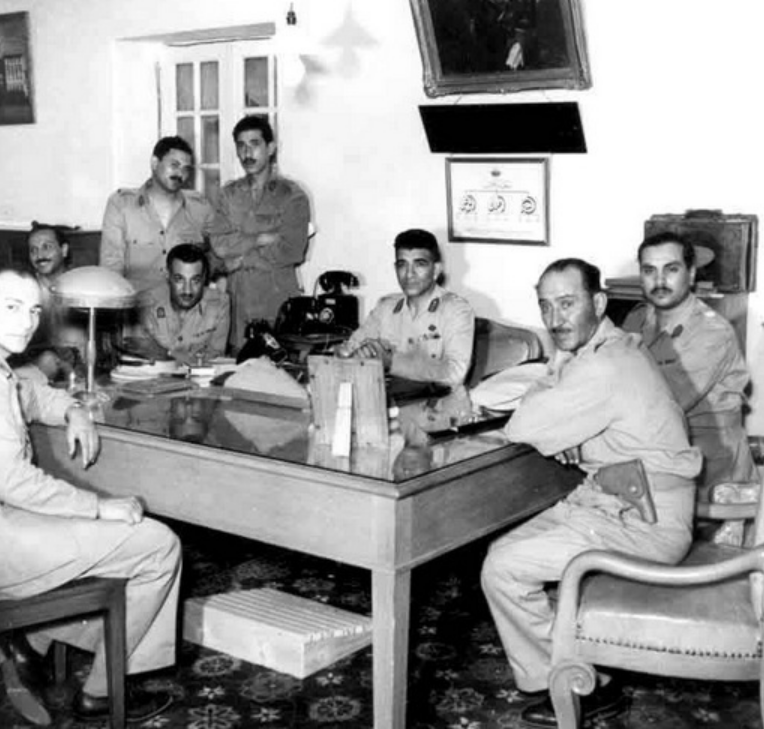
The Free Officers Movement of Egypt was a revolutionary movement that was predicated on Egyptian nationalism and independence from the United Kingdom. Although Egypt had nominal independence from Britain at this point, Britain still had control over various Egyptian institutions and territories. Additionally, the Egyptian state was under a parliamentary monarchy, carrying with it an entrenched aristocratic elite with plenty of allegations of corruption. Deploring this, the Free Officers Movement was formed to grant Egypt full independence from Britain, overthrow the Egyptian monarchy, and end the aristocratic system – something that the Free Officers would finally attempt in 1952.
The Kingdom of Egypt
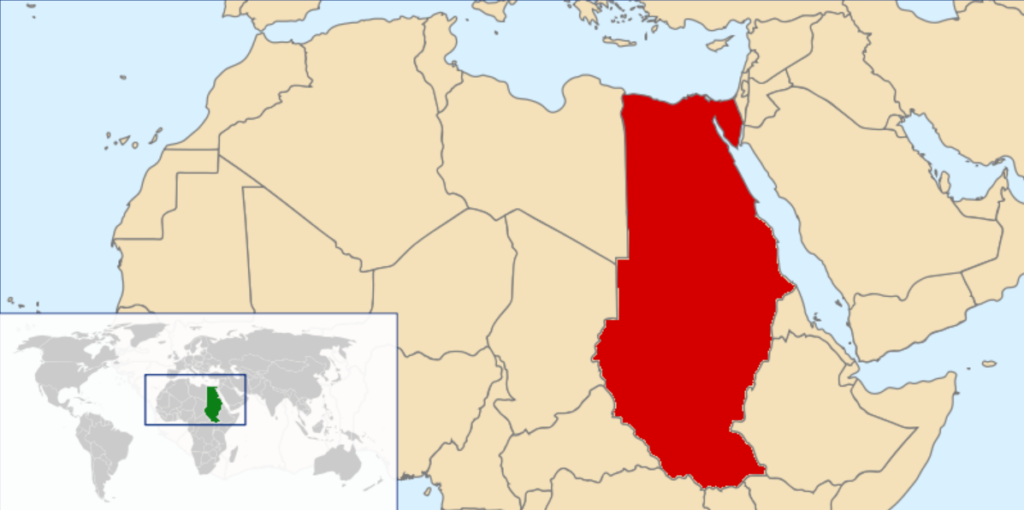
Egypt, as well as Sudan, had been fully controlled by the Ottoman Empire up until 1882, when the United Kingdom invaded and took control over the territory. The British opted to allow for limited Ottoman influence in the region up until World War One, where Britain deposed the Ottoman position and took full control over both regions under a single government. Following the end of World War One, the Egyptians had hoped for its own delegation at the Paris Peace Conference in order to demand for Egyptian independence from Britain. When these moves were rejected, the 1919 Egyptian Revolution had begun. With several members of the pro-independence, anti-British Wafd Party having been arrested by colonial authorities, much of the Egyptian populace rose up in protests and revolts. Britain was forced to release their political prisoners, reform Egypt’s governmental structure, and recognizing Egypt’s “independence” as the new Kingdom of Egypt. However, this would not be a full independence – Britain still controlled a variety of Egyptian institutions and territories, including the police, the armed forces, railways and communications, as well as the Suez Canal zone and Sudan.
The Kingdom of Egypt had a variety of problems. Although the kingdom (and the king himself) continually engaged in a power struggle with the British, seeking greater autonomy and independence, the British would often win in such engagements. Additionally, Egypt contained a landed aristocratic elite that many leaders of the Wafd Party originated from. They disdained British occupation, but they rejected attempts at land reform or any other economic reorganization. Combined with Egyptian corruption in politics, support for the Wafd Party faded over time, eventually becoming seen by many as politically bankrupt in spite of their continued resistance to the British. Because of this, the Egyptian people became increasingly disillusioned with Egyptian politics, believing no real progress was being made.
The Free Officers
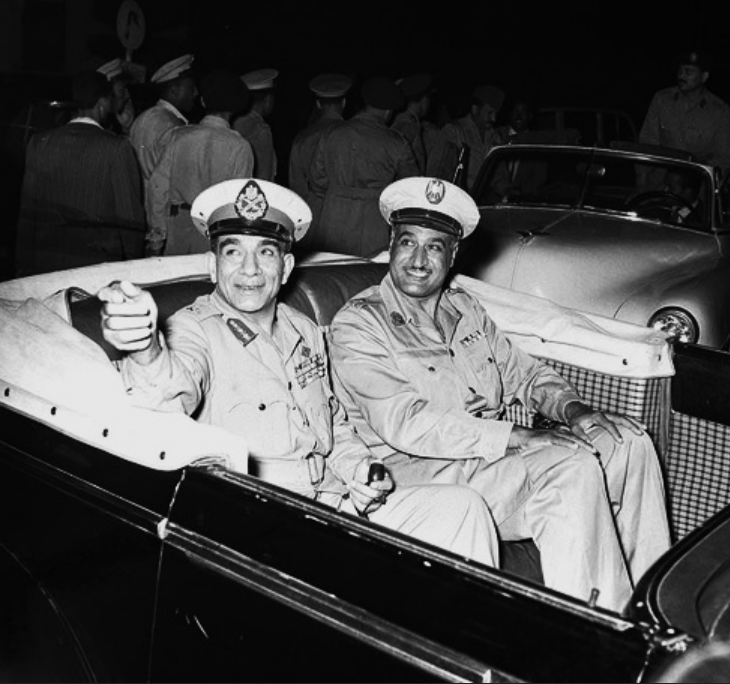
The final straw for many came with the 1948 Arab-Israeli War. Many military officers believed that the government was to blame for Egypt’s failure in the war, stating that many of their soldiers had been underequipped for the battle. Seeing governmental corruption and passivity towards British imperialism, these military officers founded the Free Officers Movement – believing that new rule was required in Egypt. Several of the future leaders of Egypt – particularly Gamal Abdel Nasser and Anwar El-Sadat, – would be veterans of the war, and were therefore quick to join the organization. Nasser himself would take a leadership role in the organization, having gained some notoriety during the Arab-Israeli War, and would now come to lead the organization.
Over the next few years, the Free Officers Movement would continue to gain traction. Although it was a clandestine organization, it still found supporters from the country’s middle class, government officials, and young workers. Additionally, the Free Officers procured an alliance with both the Muslim Brotherhood, as well as the Egyptian Communist Party. In spite of this, the Wafd Party remained a popular organization. Having won the 1950s Egyptian elections through demands similar to the Free Officers, Nasser and the rest of the organization were pressured to act quickly. Because of this, the Free Officers believed that a military coup would be necessary to force the Egyptian king to abdicate. However, the Free Officers still believed in a democracy; Nasser himself didn’t believe that he would make for a good ruler, and so enlisted the support from the popular general Mohamed Naguib, who would at least be the symbolic leader of the coup. With the British and Egyptian authorities beginning to clamp down on the Wafd Party and other pro-independence organizations, the Free Officers remained one of the only largely unaffected groups. Given this, the Free Officers felt it was time to act – leading to the revolution of 1952.
The coup went off without a hitch. The military had succeeded in taking over the government buildings, radio stations, police stations, and army bases. Naguib Mohamed would be placed as the first president of Egypt, with the king abdicating his role in an honorary ceremony. The Free Officers themselves would be placed as the “guardians of the people’s interests”, governing as the new Revolutionary Command Council of Egypt. The coup was successful – the Kingdom of Egypt was no more, replaced by the new Republic of Egypt. The Free Officers Movement – as well as the 1952 revolution as a whole – would inspire several other coups in other countries in the Middle East and North Africa. Secular, anti-imperialist, and typically military-orchestrated coups would be organized in countries such as Iraq and Syria. However, difficulties in these countries would arise once again – Nasser himself would assume leadership in Egypt, creating a one-party state around the Arab Socialist Union, and future wars would be had between Egypt and Israel. Nevertheless, the success of the Free Officers Movement and the 1952 Egyptian Revolution remains a major aspect of world history.
Check out our Blog here!