
Subscribe
to receive news by email

Poll
Will the Trump Administration Shift U.S. Policy in Favor of Palestine?
- No (86%)
- Yes (14%)
 Loading ...
Copyright © 2026 Arab America
Go topMahraganat: Egypt’s Unsilenceable Street Music
By: Connor J. Buss / Arab America Contributing Writer
Coming from some of Egypt’s most impoverished areas is the unique musical genre known as mahraganat. It is one of the most popular genres in the country, characterized by its electronic hip-hop sound and vulgar lyrics. However, Egyptian officials and music leaders have been quick to silence it.
Mahraganat as a genre was born in the early 2000s, with some underground records first coming out in 2004. The genre is made on computers by Egyptians in impoverished areas using pirated musical software. It is characterized by computer-generated sounds, similar to EDM and hip-hop beats. Completing the beats is the loud, “in-your-face” lyrics that gain criticism for being vulgar.
History
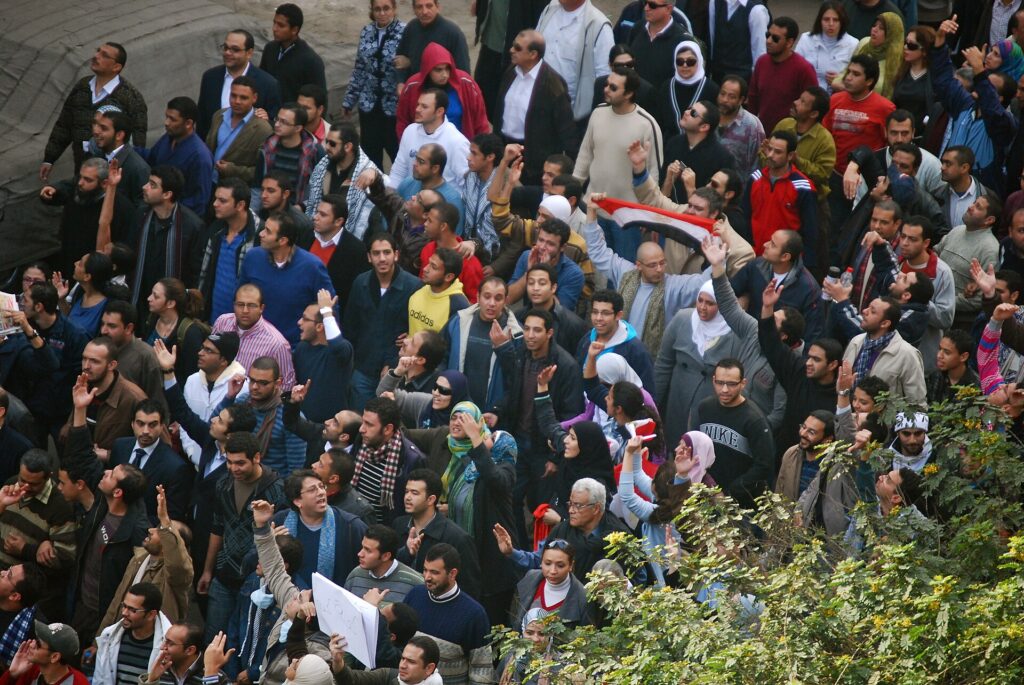
While the genre was born in the early 2000s, it was not until the 2011 Egyptian Revolution that the genre became popular. The revolution’s participants were primarily youth, an audience that mahraganat was the most popular with.
As a result, the genre became associated with the revolution. Mahraganat became an expression of the revolution, becoming a major piece of Egypt’s class conflict. The youth claimed that it was the only genre in Egypt that was honest about social inequalities in the country. During the revolution, Egyptian artist DJ Figo became the first artist to take mahraganat mainstream. Revolutionaries listened to the hit during protests and found inspiration in its lyrics. Since then, mahraganat has become a centerpiece of Egypt’s youth culture.
Mahraganat is a street music from and for Egypt’s poorest corners. The genre has become the sound of young, working-class Egyptians who want a way to express their identity.
One of mahraganat’s godfathers, Al-Sadat Mohamed Ahmed, speaks about how it evolved from just a street music to becoming a mainstream genre played at festivals and even weddings.
“It’s pure energy. We give ourselves to people – body and soul. We dance, we sing, we’re entranced on stage. It is engaging. For those who listen to us, it’s a way to vent the frustrations of everyday life, to forget for a few hours their problems.” Sadat said.
Sadat and his friends started playing mahraganat six years ago, in Salam City, their neighbourhood. “We were the first guys who started to sing, record, mix and upload wedding songs that later became known as mahraganat.” He said. The first song was called El Salam Festival. Here, everybody knows us.”
Opposition
“Never call it mahraganat again,” came an edict from Egypt’s musicians’ union.
“Anyone who writes the word mahraganat on his videos will have his name immediately crossed out,” union head Mustafa Kamel said.
Despite the genre topping Egypt’s music charts, conservatives, executives, and older generations of Egyptians do not approve of mahraganat. Mahraganat was outright banned from public radio stations, and Egypt’s musicians union has begun a campaign to “preserve public taste.” Part of this campaign splits mahraganat musicians into two categories the union considers acceptable.
Approved musicians are labeled “popular singers” and must perform with a minimum of 12 syndicated musicians. Rappers can perform with at least six: “at least a pianist, a bassist, two guitarists, a drummer and a percussionist”, Kamel said at a press conference.
Mahraganat singers who are not approved, on the other hand, are called “vocal performers” instead. They will need to renew their license every three months, receive approval from the cultural ministry’s censorship, and take an oath to not “use any word or image that violates Egyptian morality.”
Previously, the union issued a ban on live mahraganat performances, though its enforcement was spotty.
Response
In a video, popular Egyptian rapper Moscow asked if artists are “really going to wait for someone to tell us how to talk about ourselves and our own lives?”
Mahraganat singers and rappers who have built their careers performing without formal music education or access to institutions have claimed that the requirement for a full band is “absurd.”
Cultural critic Joseph Fahim praised mahraganat’s “sense of abandon”.
He claimed that the genre speaks out about topics that “neither the government nor the syndicate is willing to admit exists,”
The battle against the genre is “rooted in class, professional jealousy, and the regime’s insatiable desire for controlling public taste and enforcing its bourgeois mores.” Fahim concluded.
Want more articles like this? Sign up for our e-newsletter!
Check out our blog here!