Subscribe
to receive news by email
Poll
Will the Trump Administration Shift U.S. Policy in Favor of Palestine?
- No (86%)
- Yes (14%)
 Loading ...
Copyright © 2026 Arab America
Go topClothing of Resistance: How North African Women Battled Colonialism
By Nourelhoda Alashlem / Arab America Contributing Writer
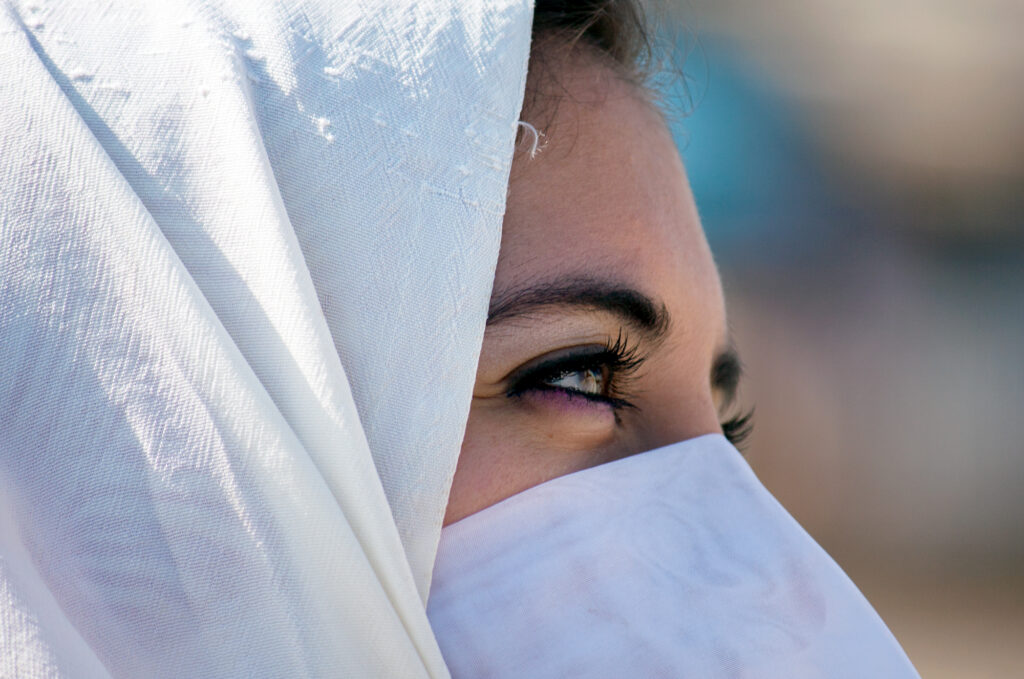
In the streets of Northern Africa, women once moved through the city wrapped in white cloth, their faces partially hidden, their identities unreadable. Similar scenes existed across the region, where garments like the Haik, Farashiya, and Safseri shaped how women protested in different forms in public. At first glance, they look like simple Islamic expressions of modesty. But under colonial rule, they carried a different function.
One Garment, Many Names
The Haik, Sefsari, and Farashiya all have the same base: a single piece of cloth wrapped around the body. The names and details vary by country, but the structure and purpose are still very similar. These clothes show a common history in the area, not just separate customs.
The Haik in Algeria
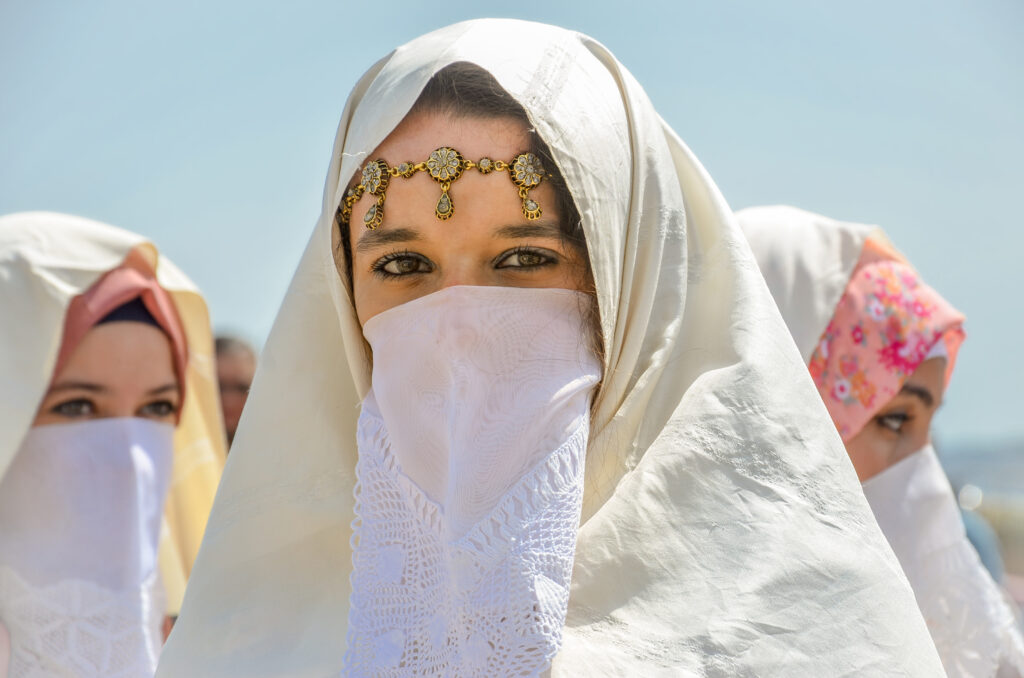
The Haik is most closely associated with Algeria, especially the Casbah of Algiers. It is a large white cloth wrapped around the body, often paired with the aadjar, which is a detachable white veil that covers the lower face, leaving only the eyes visible.
Under French colonial rule, the Haik became extremely significant. The Haik made it harder to identify and control women. During the Algerian War of Independence, it became a strategic tactic. Women used it to pass through checkpoints, avoid recognition, and carry specific messages.
The Farashiya in Libya
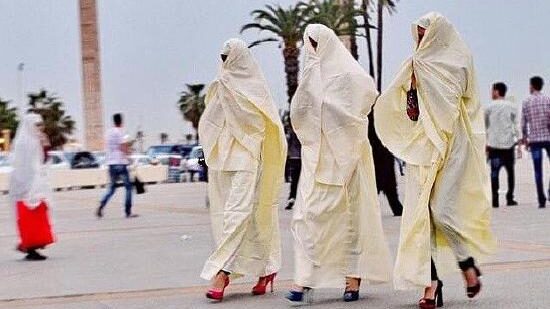
In Libya, the Farashiya was the standard garment for women leaving the home. It is a single piece of silk fabric, wrapped around the entire body.
One of its most distinct features is what Libyans call “tabmeek” (التبمبيك), which comes from a term meaning “to fully cover or wrap.” In this style, the woman covers her entire face with the Farashiya, leaving only one eye visible through a very small opening. A woman dressed this way is described as “metbambka,” and in some regions like Benghazi, “metghamsha.Both terms describe a woman who conceals almost her entire face.While the Farashiya existed long before colonial rule, during the period of Italian occupation, it took on a more significant, resistant meaning. Covering the face and body in this way allowed women to avoid attention, move through public spaces without easy identification, and maintain a sense of privacy under foreign control.
Although people no longer wear the garment widely in daily public life, they still commonly display it during Libyan national celebrations and weddings, especially among older generations.
The Sefsari in Tunisia
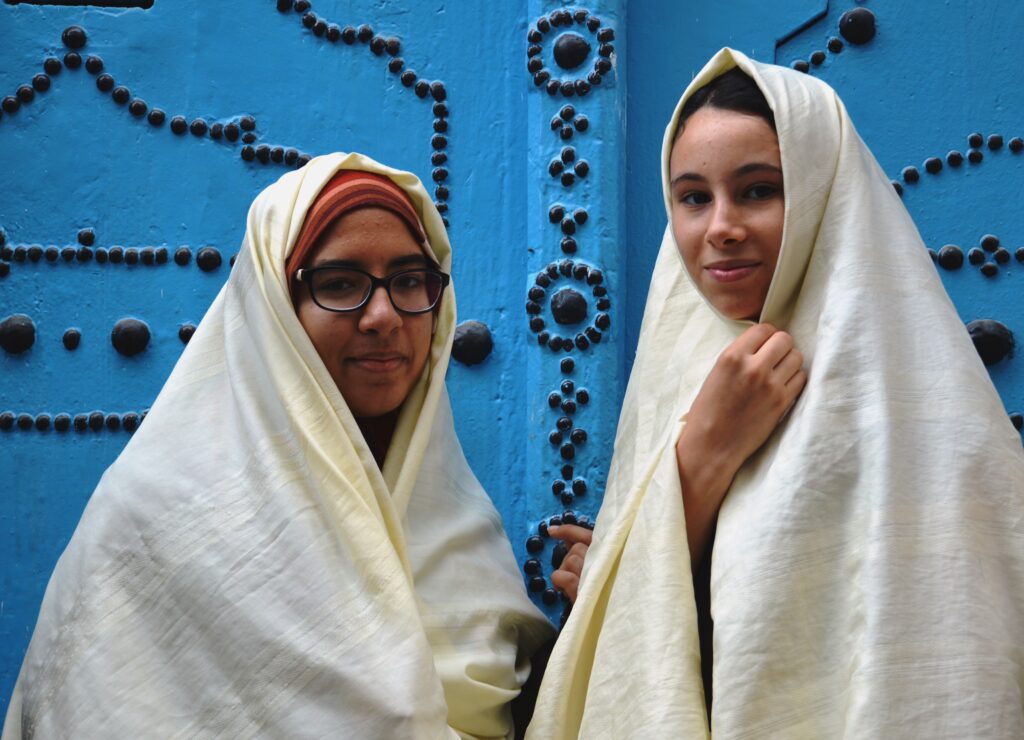
In Tunisia, the Sefsari follows a similar form to the Haik and Farashiya but usually leaves the face uncovered.
It was once common in public life, especially in cities like Tunis. Today, many people have abandoned it, though it still appears in traditional settings or among older generations.
What Was Lost, What Remains
The Haik, Farashiya, and Sefsari were never just garments. Under colonial rule, these garments enabled women to navigate controlled spaces discreetly, safeguarding their identities and occasionally defying surveillance.
Today, their presence has faded. The Haik is a rare sight in Algeria. In Tunisia, the Sefsari has largely disappeared. In Libya, the Farashiya is no longer widely worn, though it still appears during national events and among older generations.
This shift shows globalization and outside influence, where imported styles like the “abaya” have replaced garments rooted in the region. But what is being lost is not just tradition. It is a form of expression that once carried resistance.
Today, efforts to revive these garments continue. In Algiers, artist Souad Douibi has organized public walks where women wear the Haik together. Participants, many of them younger women like Ghazia-Mimi Bahloul, wear it not out of “obligation” but because of its connection to their mothers and grandmothers and its place in Algeria’s history of resistance.
Watch more:
In Libya, artists like Najla Shawket Fitouri have used visual art to preserve traditional dress, often depicting women in Farashiya as symbols of a fading but still present identity. Others, like Turkia Laith Bensaoud, use traditional images in their work to connect with Libyan culture and everyday life.
These garments symbolize both memory and possibility. Allowing them to disappear completely risks forgetting the women who relied on them to navigate and resist colonial control. Reviving them does not mean returning to the past, but rather honoring what they stood for.
Want more articles like this? Sign up for our e-newsletter!
Check out our blog here!