
Subscribe
to receive news by email
Poll
Will the Trump Administration Shift U.S. Policy in Favor of Palestine?
- No (86%)
- Yes (14%)
 Loading ...
Copyright © 2026 Arab America
Go topPathbreakers of Arab America—Moustafa Bayoumi
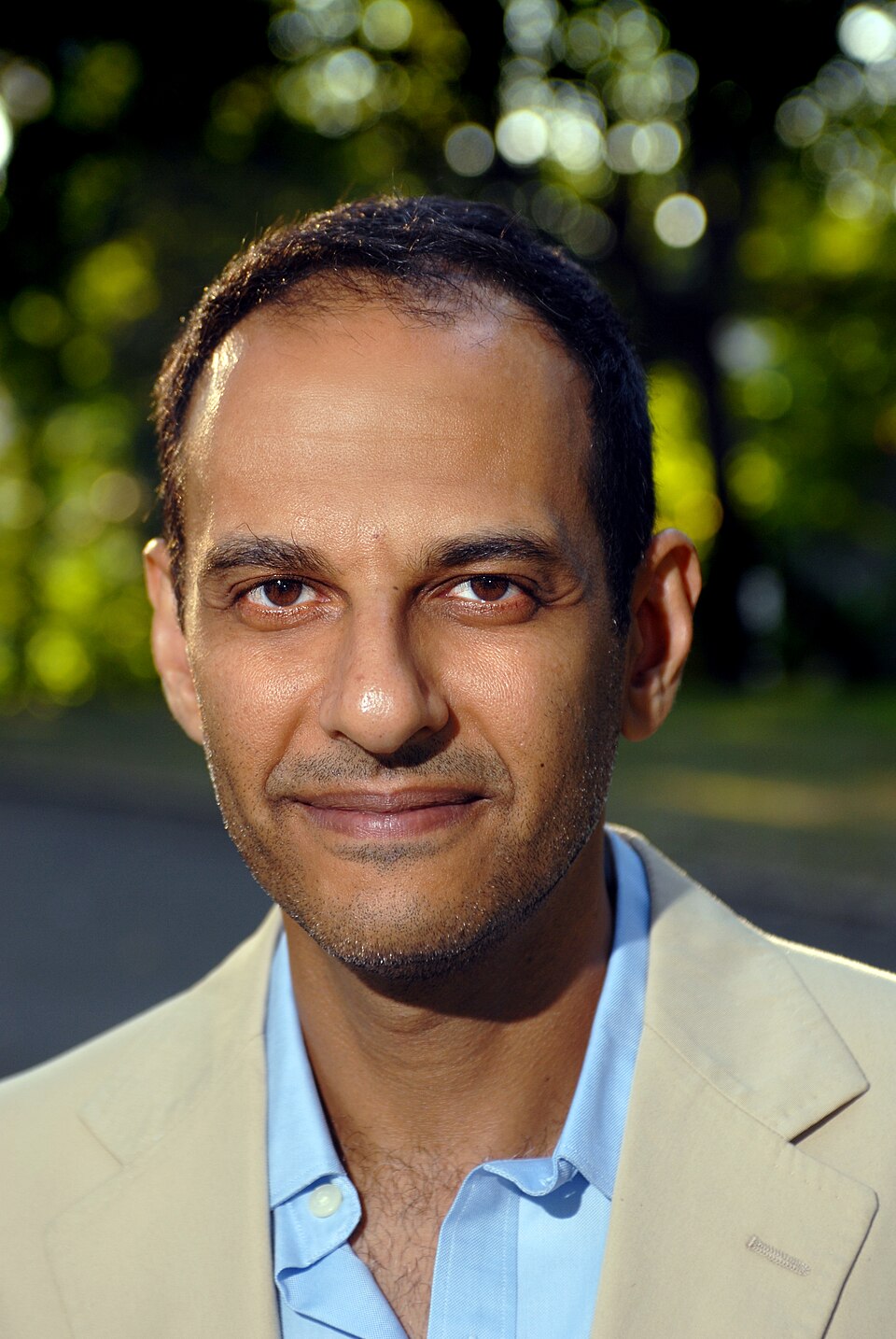
By: John Mason / Arab America Contributing Writer
This is our one-hundred and twentieth in Arab America’s series on American pathbreakers of Arab descent. The series features personalities from various fields, including entertainment, business, sports, science, the arts, academia, journalism, and politics. Our 120th pathbreaker is Egyptian American, Moustafa Bayoumi, author of the critically acclaimed ‘How Does It Feel To Be a Problem?: Being Young and Arab in America,’ which traces the experiences of seven young Arab Americans navigating life in a post–9/11 environment. An advocate for Arabs and Muslims, including Palestinians, he is a Professor of English at Brooklyn College, City University of New York, and a columnist.
Through his teaching, writings and public engagements, Egyptian American Moustafa Bayoumi addresses civil liberties and human rights issues affecting Arab and Muslim Americans
Bayoumi was born in Zurich, Switzerland to Egyptian parents in 1966 and raised in Kingston, Ontario, Canada. He describes his parents’ roots in Egypt as “quite humble.” They were academics who immigrated to Canada with their family when Bayoumi was a toddler and raised Moustafa within an Egyptian academic family environment, where his parents taught at the local college.
His upbringing in Canada, following early years in Europe, “shaped his multicultural background before Bayoumi later pursued studies in the United States.” (There is little information available on his BA or MA degrees.) Bayoumi completed his PhD. in English and Comparative Literature at Columbia University and is a professor of English at Brooklyn College, City University of New York. His courses focus on post-colonial literature and theory.
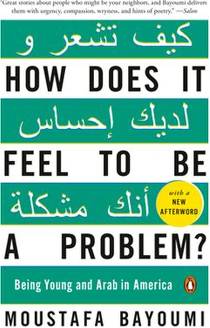
One of Bayoumi’s major works, ‘How Does It Feel to Be a Problem?: Being Young and Arab in America,’ traces the experiences of seven young Arab Americans navigating life in a post–September 11 environment, “where complicated public perceptions of the attacks gave birth to new brands of stereotypes, fueling widespread discrimination.” It is the story of how young Arab and Muslim Americans are forging lives for themselves “in a country that often mistakes them for the enemy.”
In this work, Bayoumi follows the seven young adults in Brooklyn—individuals of diverse Arab and Muslim backgrounds, including Rasha (Syrian American), Sami, Lina, Akram, Yasmin, Omar, and Rami—whose stories illustrate encounters with government surveillance, arbitrary detentions, and familial disruptions. In an example, he recounts Rasha’s family’s three-month incarceration after a February 2002 FBI raid, highlighting how post-9/11 policies targeted communities based on national origin rather than evidence of wrongdoing. The book was awarded a 2008 American Book Award and the 2009 Arab American Book Award for Non-Fiction.
In another of his books, ‘This Muslim American Life: Dispatches from the War on Terror’ (2015), Bayoumi reveals what the War on Terror looks like from the vantage point of Muslim Americans, highlighting the profound effect surveillance has had on how they live their lives. The essays expose “how contemporary politics, movies, novels, media experts and more have together produced a culture of fear and suspicion that not only willfully forgets the Muslim American past but also threatens all of our civil liberties in the present.” Bayoumi uses these dispatches “to highlight resilience amid systemic challenges, such as FBI monitoring and public demonization post-9/11.” The volume was named a Best Book of 2015 by The Progressive magazine and the 2016 Arab American Book Award for Nonfiction.
Bayoumi has received two excellence in teaching awards for his contributions to undergraduate and graduate instruction at CUNY. Beyond Brooklyn College, he has held visiting and fellowship positions, including as a Visiting Professor in the American Culture Program within the Department of English at Sogang University in Seoul, South Korea. In 2022, he began an Obama Fellowship from the Obama Institute for Transnational American Studies at Johannes Gutenberg University Mainz, Germany.
An accomplished journalist, Bayoumi is also a columnist for The Guardian, and his writing has appeared in The New York Times Magazine, New York Magazine, The National, CNN.com, The London Review of Books, The Nation, among many others.
A strong advocate for Palestinian rights to their land, Bayoumi is not afraid to take on his critics
Bayoumi has expressed strong criticism of Israel’s military actions in Gaza and the West Bank, framing them as “disproportionate responses that constitute ethnic cleansing, genocide, and violations of international norms.” In a July 2025 Guardian article, he argued that “Israel’s campaign in Gaza carries the terrifying possibility of such a radical shifting of the line of acceptability that it makes genocide a lawful weapon of war.” He cited Israeli officials’ calls for “conquering, cleansing and remaining in Gaza” as evidence of intent to target civilians, including non-combatants in Hamas’s administration.
In the same article, Bayoumi detailed specific impacts, “such as the destruction of up to 98% of Gaza’s farmland, wastewater systems leading to drought, and daily shootings of Palestinians seeking food aid, attributing these to Israel’s self-defense claims while highlighting Western complicity through funding and inaction.” However, he is not afraid to criticize Hamas, consistently opposing their tactics, stating in an October 2023 Guardian piece, “One can be opposed to Hamas, as I am, and to the indiscriminate bombing and ethnic cleansing of Gaza, as I am.”
Bayoumi especially condemned Israeli Defense Minister Yoav Gallant’s siege declaration and dehumanizing rhetoric labeling Palestinians “human animals” as “the language of genocide,” arguing it perpetuates “a cycle of violence amid power asymmetry between colonizer and colonized.” Bayoumi has linked Israel’s Gaza operations to broader erosions of the post-1945 international order, warning that unchecked actions like hospital bombings and starvation tactics undermine global rules on armed conflict and free speech.
Fearless in his criticism of Israel, Bayoumi has also criticized U.S. policy and domestic politics. Particularly since the post-9/11 ‘War on Terror,’ he has criticized U.S. foreign policy in the Middle East as “perpetuating a cycle of violence without resolution, arguing that fifteen years after the attacks, policies like travel restrictions on Muslims reflected a failure to learn constructive lessons from the event.” In his aforementioned 2015 book ‘This Muslim American Life: Dispatches from the War on Terror,’ he described the policy as “inducing collective stupidity among Americans, enabling unchecked expansions of executive power through fearmongering rather than addressing root causes of extremism.”
Critics of Bayoumi, particularly from conservative and pro-Israel perspectives, have accused him of “exhibiting ideological bias in his writings and public stances, particularly anti-American and anti-Israel orientations that prioritize narratives of victimhood among Muslims while downplaying internal issues within Islamic communities.” They have also accused him of advancing “a one-sided portrayal of the U.S. as inherently Islamophobic and white supremacist, cherry-picking examples of surveillance, biased policing, and societal hostility toward Muslims while omitting countervailing evidence of American pluralism and Muslim integration successes…”
In conclusion, Moustafa Bayoumi’s deep engagement with Arab and Muslim communities is rooted in both personal identity and a long-standing commitment to amplifying their voices in public discourse. In short, Bayoumi’s passion for Arabs and Muslims is “a lifelong mission to tell their stories authentically, challenge stereotypes, and ensure their voices are central in shaping a more inclusive and just society.”
Sources:
- “Mustafa Bayoumi,” Wikipedia Series on Arab Americans, 2026
- “Our scholars, Moustafa Bayoumi,” Institute for Social Policy and Understanding, (no date)
- “About Moustafa Bayoumi,” Moustafa Bayoumi.com, 2016
- “Moustafa Bayoumi,” Grokipedia, vO.2, (last edited) 2026
John Mason, Ph.D., focuses on Arab culture, society, and history and is the author of LEFT-HANDED IN AN ISLAMIC WORLD: An Anthropologist’s Journey into the Middle East, New Academia Publishing, 2017 and of his new novel, WHISPERS FROM THE DESERT: Zaki, a Little Genie’s Tales of Good and Evil (2025), under his pen name, Yahia Al-Banna. He has taught at the University of Libya in Benghazi, Rensselaer Polytechnic Institute in New York, and the American University in Cairo. John served with the United Nations in Tripoli, Libya, and consulted extensively on socioeconomic and political development for USAID and the World Bank in 65 countries.
The views and opinions expressed in this article are those of the author and do not necessarily reflect the position of Arab America. The reproduction of this article is permissible with proper credit to Arab America and the author.
Want more articles like this? Sign up for our e-newsletter!
Check out our blog here!