

Subscribe
to receive news by email

Poll
Will the Trump Administration Shift U.S. Policy in Favor of Palestine?
- No (86%)
- Yes (14%)
 Loading ...
Copyright © 2026 Arab America
Go topWhen Nothing is Sacred: The Pattern of Desecration in South Lebanon
By Aziz Hellal / Arab America Contributing Writer
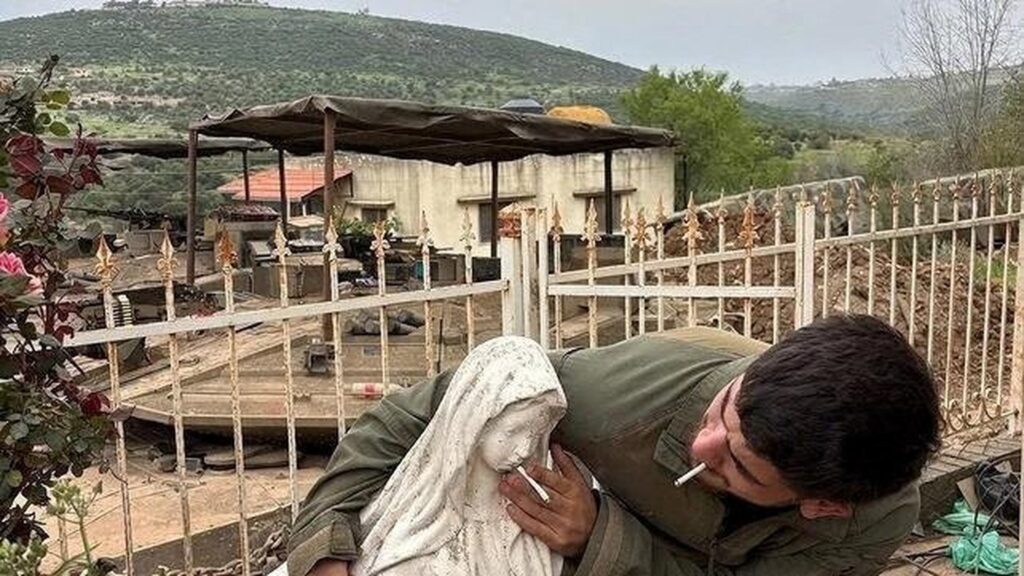
In the hills of South Lebanon, images of an Israeli soldier placing a cigarette in the mouth of a Virgin Mary statue sparked outrage far beyond Lebanon. For many, the incident was not just offensive; it raised a deeper question about what prolonged war and limited accountability can do to military behavior.
After years of watching Gaza’s oldest churches and mosques fall with zero international accountability. Now, the message to soldiers on the ground is clear: nothing is off-limits. What happened in Debel is a direct result of the silence that began in Gaza. It proves that when war crimes are ignored in one place, they inevitably become the standard in the next.
By failing to prosecute these crimes in Gaza, the world effectively cleared the way for the same patterns of destruction to reach the heart of Lebanon’s Christian community.
Not an Isolated Incident
The desecration of the Virgin Mary statue in the Lebanese village of Debel was shocking. However, it didn’t happen in a vacuum. Just weeks earlier, another soldier was photographed in the same village. He was striking a statue of Jesus with an axe. This happened in a predominantly Christian town in southern Lebanon.
Both incidents gained widespread attention, eliciting condemnation from religious leaders and foreign governments. These episodes are part of a larger pattern that has raised concerns about the treatment of religious symbols and civilian sites during war.
What makes the Debel incident so significant isn’t just the act. It’s the fact that the soldier felt comfortable posing for the camera. He wasn’t trying to hide. This suggests more than just a quick lapse in judgment. Instead, it points to an environment where mocking a sacred figure is seen as acceptable.
The Israeli military has announced an investigation, but the larger issue remains. These episodes happened back-to-back. This raises deeper questions about the military culture that allows such behavior to appear in the first place.
From Gaza to South Lebanon
The Debel incident fits into a wider pattern. Throughout the war in Gaza, churches, mosques, and hospitals have repeatedly come under attack.
Christian sites in Gaza are part of this trend as well. Saint Porphyrius is one of the oldest churches in the world. It sustained heavy damage during the conflict. The Holy Family Catholic Church—Gaza’s only Catholic parish—was also hit. These incidents drew rare public concern from Christian leaders. Pope Francis spoke out before his passing, and the Vatican continues to voice serious concerns under Pope Leo.
But this isn’t just about the buildings; it is about a shift in behavior that isn’t confined to one territory. We’ve seen soldiers in Jenin take over mosque loudspeakers to recite Talmudic prayers, while in Gaza, footage has emerged of troops burning copies of the Quran and spray-painting symbols inside sacred spaces.
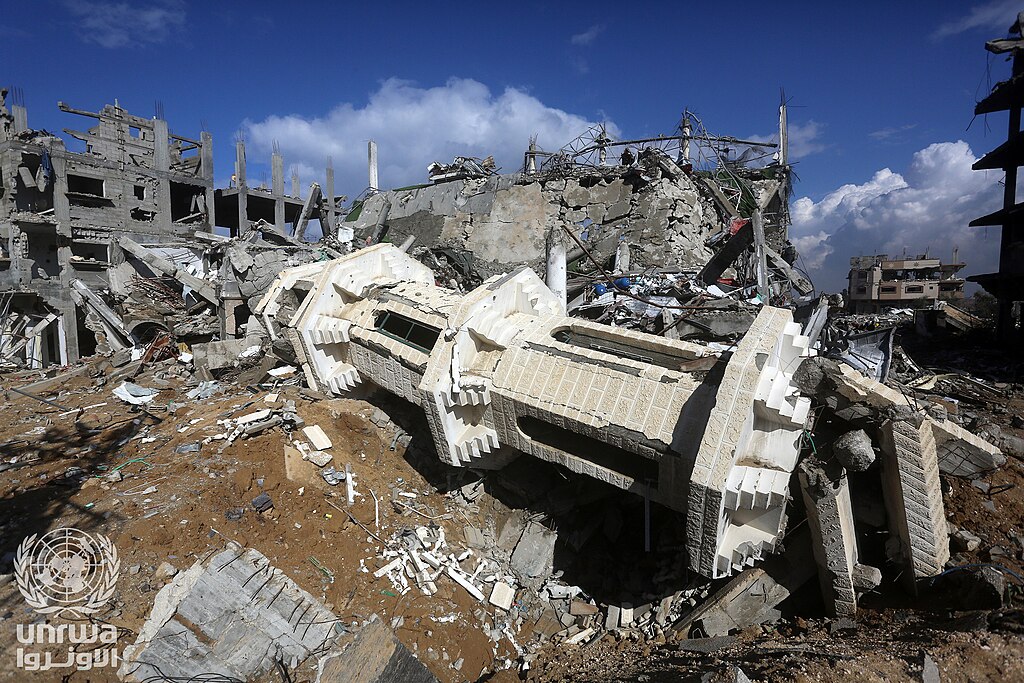
This pattern hasn’t been limited to religious sites. It has extended to hospitals, universities, and refugee camps, reinforcing the sense that almost no space is truly protected anymore. In this context, the incident in Debel looks less like an isolated act of disrespect and more like a symptom of a much wider erosion of limits.
Taken together, these incidents are becoming harder to dismiss as isolated acts. Across Gaza, the West Bank, and South Lebanon, they suggest a military culture in which sacred spaces and religious symbols are no longer treated as off-limits.
How Impunity Shapes Military Culture
Military organizations are about more than just a rulebook. What really matters is what happens when someone breaks those rules. When a military enforces real consequences for misconduct, it sets a clear standard. But when accountability is hit-or-miss, it sends a dangerous message: that some actions are okay in the heat of war.
This is how a culture of impunity starts. In this kind of environment, the line between a real military operation and an ethical violation blurs. The real concern isn’t just that a few soldiers are acting out. The real issue is that when punishment never comes, it changes how everyone on the ground views what is allowed.
The footage from Debel captured this perfectly. The soldier didn’t look like he was trying to hide. He looked comfortable posing for a photo with a cigarette in the statue’s mouth. This suggests he didn’t expect any serious trouble. To many observers, that confidence is more telling than the act itself.
The Israeli military did eventually step in. They sentenced the soldier who put a cigarette in the statue’s mouth to 21 days in military prison. The soldier who filmed it got 14 days. This came just weeks after the military gave two other soldiers 30 days for damaging a statue of Jesus in southern Lebanon.
On paper, these sentences show that the military officially condemns the behavior. Yet the larger question remains: why do these acts keep happening across so many different fronts? We see sacred symbols mocked openly from Gaza to the West Bank and now South Lebanon. It is becoming harder to dismiss these as “bad apples.” Instead, a much broader culture is taking root. In this culture, the cost of trashing a holy site is simply too low to stop others from doing it.
Some Things Must Remain Sacred
Ultimately, the damage in Debel isn’t just about a statue or one soldier’s mistake. It warns us about what happens when the moral boundaries of war slowly disappear. If holy sites—like the ancient mosques in Gaza or the village churches in South Lebanon—are no longer off-limits, we lose one of the last restraints on total conflict.
Accountability shouldn’t just be about a few weeks in a military cell; it must be about restoring the idea that even in war, some things remain sacred. Without that, the path toward any future peace or coexistence in the region becomes almost impossible to find.
Want more articles like this? Sign up for our e-newsletter!
Check out our blog here!