
Subscribe
to receive news by email

Poll
Will the Trump Administration Shift U.S. Policy in Favor of Palestine?
- No (86%)
- Yes (14%)
 Loading ...
Copyright © 2026 Arab America
Go topColumbus Day, From Turtle Island to Palestine
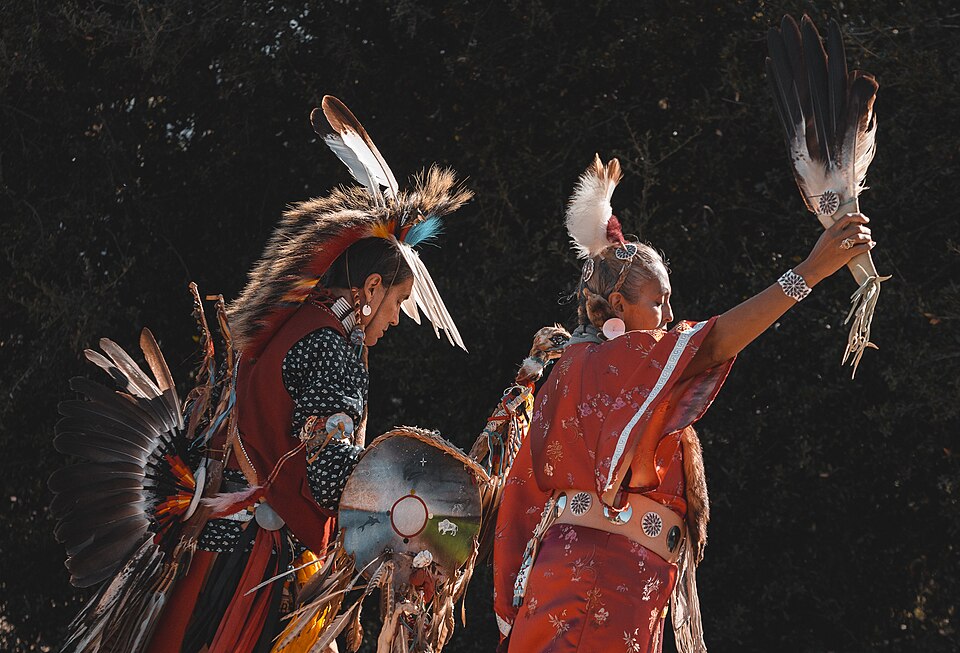
Photo by National Park Service via Wikimedia Commons
By: Rami Balin / Arab America Contributing Writer
In the United States, October 12 is marked as Columbus Day, celebrating the arrival of Christopher Columbus to North America on October 12, 1492. Today, the figure of Columbus is imbued with meanings that have become an essential part of the mythology connecting European explorers’ arrival to the Americas and subsequent colonization and settlement of the continents. For a growing number of people, this is one of the national holidays that eliminate Indigenous peoples, their histories and cultures in North America, normalizing violence against them. From the US to Palestine, the decolonial discourse is crafted by movements who demand abolition of settler-colonial narratives and substituting these mythologies for histories of “exploration,” conquest and their consequences, centering Indigenous peoples, their cultures and identities.
Columbus and the Journey West
Christopher Columbus was an Italian explorer appointed by queen Isabella I de Castille and Ferdinand II to make an exploration journey west, expand the trade routes and influence of Spain that was only starting to become an empire, gaining its power. The expedition happened as Columbus was convinced that he could find another way to India through the west, interested in expanding the spice trade. Instead, having gotten lost on the way, he and his crew ended up on the opposite side of the globe. Columbus was so convinced that even upon arriving to the land, which was decisively not India but Turtle Island, the name used by Indigenous peoples to refer to North America, he refused to be disillusioned or discouraged. In fact, he remained steadfastly sure that he was right and indeed landed in India until his dying day, despite ample evidence that he was wrong.
Columbus’ arrival to Turtle Island in a lot of ways marked the beginning of the conquest and colonization of the continent by European powers that were seeking to establish dominance over the land and the Indigenous peoples who were already inhabiting it. Columbus called these Indigenous peoples “Indians,” a term that many people regrettably still use today.
“Discovery” and “Exploration”
Widely, Columbus is credited with the “discovery” of America. In fact, he didn’t discover anything, if only for himself, since Indigenous societies have been present on this land since time immemorial. This “discovery,” as most other “discoveries,” happened when a white European man stepped on the land he’d never been on and claimed her as his, as did the explorers who followed Columbus, renaming the land and her people, viewing her vast expanse of as theirs for the taking, rendering Indigenous people invisible and erasing them by force. The collective myth starts with Columbus’ “discovery,” subsequent arrival of other Europeans to the mostly empty uninhabited “land of the free,” interacting with scarce benevolent and hospitable Indigenous people who then magically “left” or disappeared while the white Europeans established a country called the United States that still holds “the promise” to this day. The rhetoric closely resembles the “promised land” narratives all too familiar to anyone conscious of the Zionist perception of Palestine. It is followed by the mythical figures of all-wise founding fathers, most of whom were actually slave owners.
The “explorers” who came after Columbus – Spanish, French and British, – assumed their superiority over the Indigenous populations based on the European, originally English, cultural standards such as Christianity and civilization. The latter was an understanding inherited from the habitual comparison to and imposition of English worldview, such as the of property and societal norms, onto other peoples, starting with the Irish, then expanding onto those colonized by England, later British Empire and the rest of the colonial powers of Europe. These values, projected onto populations that didn’t have the same relationship to the land, the same religion, social structure and way of life in general, became the basis for manufacturing of the modern understanding of race and other biases structurally embedded in western societies. This understanding, guided by the colonial desire to subjugate and to eliminate anyone considered the Other, is the very reason Indigenous peoples of the Turtle Island were massacred regardless of how they interacted with settlers upon contact, eventually including those who agreed to convert to Christianity – at the end, it didn’t make any difference. Some were enslaved and forced to work for the settlers.
Colonialism Beyond Turtle Island
In this sense, the case of the Turtle Island is not unique at all. Unfortunately, this approach is not limited to the continent now known as North America and specifically to the United States but is common to most, if not all colonized places. Colonialism is the structure that still permeates the society in the United States and upholds the violence that it couldn’t have been created and built without, from the aforementioned massacres and forced transfer of the Indigenous people, to the enslavement of Black people and people of color who built this country in more ways than one, to exploitation and inhumane treatment of immigrants, and so much more.
In historic Palestine, the Zionist occupation has been carrying out massacres of Palestinians, forcibly displaces them, appropriates their culture, wreaks havoc on their land, uses their labor to build settlements while depriving them of basic necessities such as food and water. Zionists justify the occupation of historic Palestine by referring to it as “a land without a people for a people without a land.” That land was never empty and never theirs to take but they did it anyway, subsequently erasing the history of Palestinians in the hope that if they do it long enough people will forget that it ever existed. Thankfully, there are many Palestinians who are determined not to let this happen, and their voices carry the stories that cannot be silenced despite the occupation’s best efforts. The stories of the Indigenous peoples of the Turtle Island have been living through the people who tell them. Recently, both have been getting louder and louder.
Indigenous People’s Day
While Columbus didn’t create the United States as we know it today and didn’t commit any atrocities himself, he is an integral part of the mythic legacy that even today justifies or erases the violence that the United States is built on, the myth that is widely celebrated across the US. By refusing Columbus Day and the narratives that come with it, it is possible to displace the lineage of violence, not allowing it to continue, at least discursively. Indigenous peoples all over the world don’t deserve to have to tolerate national holidays that celebrate their absence. If October 12 is a holiday, it needs to be the Indigenous People’s Day, marked by remembrance and honoring of Indigenous perseverance while acknowledging what and who caused them to endure all the hardships in the first place. On October 12, let us not forget the Indigenous people of Palestine and many other places across West Asia and North Africa, their histories and their struggles, past and present.