
Subscribe
to receive news by email

Poll
Will the Trump Administration Shift U.S. Policy in Favor of Palestine?
- No (86%)
- Yes (14%)
 Loading ...
Copyright © 2026 Arab America
Go topAlgeria's 64th Independence Day
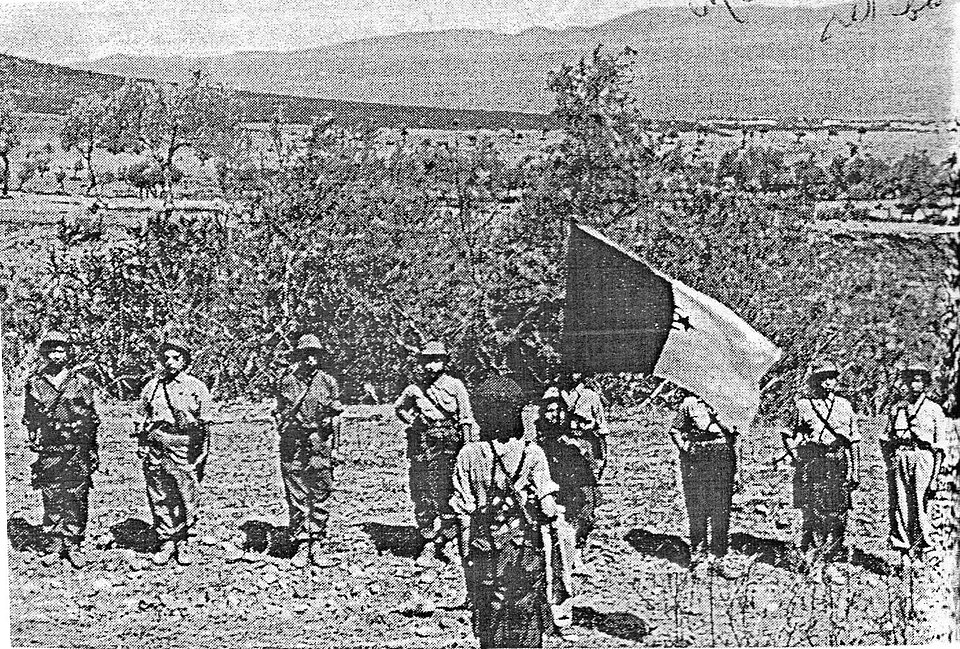
Photo Credit: Wikicommons (Algerian Women in the Algerian War of Independence)
By: Nadia Boughanmi / Arab America Contributing Writer
July 5th, 2026: 64 years since Algeria has gained independence from French colonialism. After 8 years of struggling through war, in 1962, Algeria was able to claim independence from an oppressive colonial force. The French had occupied Algeria for decades, erasing elements of their cultural identity. From languages spoken to cultural customs, the French government treated Algeria as an extension of France, rather than a colony with its own identity.
The French footprint was extremely heavy on the country, even until this day. French is commonly spoken within the Arabic dialect of the country and is the third most spoken language. People who lived through the occupation and the war for independence carry the pain and resistance everyday, in order to keep their memory and culture alive.
French Occupation
France had begun its occupation with the redistribution of land. They had put the native Algerians at a disadvantage and displaced them from their homes and plots of land. The land was given to European settlers, who were much wealthier than natives. This put in place systematic oppression of the Algerians and segregation of “whites” from “Africans.” It didn’t just stop with displacement and erasure of culture. They had begun erasing the core elements of Algeria, its people. By 1875, it was estimated that the French forces killed thousands of Algerians.
Artifacts were stolen, Algerians were forced to give up their languages of Darija and Tamazight for French and families were lost. The French had sucked Algerian lands dry of the resources that were available in the region and used it to build up wealth in the “colony.” Native Algerians were subject to daily racism, women were brutalized and raped, and men were labors for little to no wages. The French occupation forever left a print on Algerian society.
Road to Freedom
1954: Algerians decided that the occupation couldn’t continue. They began their resistance movement. They knew they wanted freedom and the ability to practice their culture and religious beliefs with no discrimination. Women played a key role in the resistance movement, fighting alongside men, which for the time period was “revolutionary.” The war was not easy, taking on a heavy amount of arms and a large death toll.
1.5 million people, the amount of Algerians that lost their lives in their fight for freedom. The French forces used counts of systematic torture and guerrilla warfare against the Algerians, which amounted for the massive death toll. Algerian resistance was not easy, as they didn’t have the amount of technology and resources that the French did. The French also controlled major cities like Algiers and large land plots, but Algerian forces did not back down.
In 1961, the resistance movement began to move to Algerians that lived in France. People protested on the streets for the freedom of their home country. This ultimately led to a massacre of people by the French police, with the bodies of victims thrown into the Seine River.
After mass amounts of international pressure and exhaustion from the situation, the French government and forces backed down. This ultimately led to Algeria’s success and freedom from colonialism. Even though Algerian’s were now “free” the legacy and torture of the French lived on. People lost their lives, their families, and their homes.
Post War Era
The post war era in Algeria is considered to be from July 5th, 1962 till present day. The stamp of French colonialism is still very prevalent within the country. Colorism and discrimination between ethnic groups and French language integration into Darija and Tamazight are present daily within Algeria.
People who fought and lived through the resistance are still alive and are members of society with stories to tell. Those very stories still hunt generations because of the massive death toll. 1.5 million people lost their lives and millions more lost family members, partners and friends. Recovering from a tragedy like this takes decades to even centuries, so the traumatic legacy of the French has continued to live on.
In 2024, the Algerian Olympic Team threw roses into the Seine River in Paris to honor the people killed in the massacre. The roses paid tribute to those whose bodies were thrown into that same river by police forces in the 1961 Paris Massacre.
The amount of tragedy faced in order to gain independence from their colonial rule is why Algerian Independence Day remains extremely prevalent. It shaped diplomatic ties, cultural ways and linguistic patterns in the region.
Want more articles like this? Sign up for our e-newsletter!
Check our blog here!