

Subscribe
to receive news by email

Poll
Will the Trump Administration Shift U.S. Policy in Favor of Palestine?
- No (86%)
- Yes (14%)
 Loading ...
Copyright © 2026 Arab America
Go top“Finishing the Job” in Iran Would Leave the Middle East in Worse Shape
By: Ghassan Rubeiz / Arab America Contributing Writer
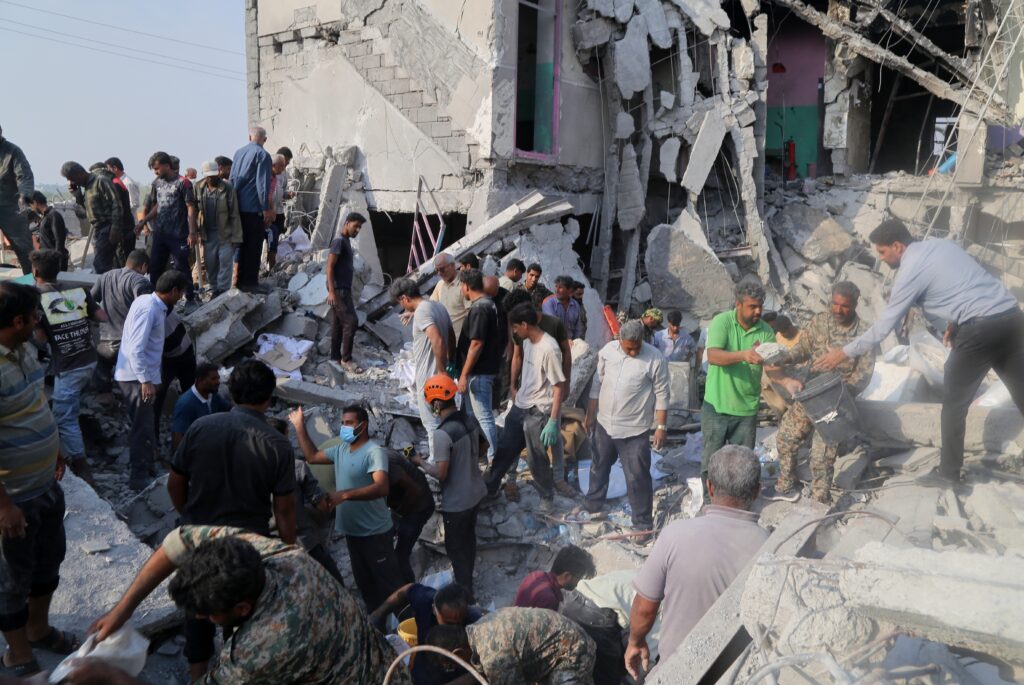
Washington and Tel Aviv seem to be talking themselves into a third cycle of war with Iran. On October 18, endorsing Benjamin Netanyahu ahead of Israel’s election, President Trump wrote that unless Iran’s leaders “change their ways, rapidly, we will soon finish the job.” Three days later, Netanyahu told graduating Israeli officers there is “only one way to eliminate this threat once and for all: to topple the regime in Iran.”
Netanyahu’s Iran plan does not stand alone. Israel is fighting on several fronts simultaneously. It keeps bombing Hezbollah in Lebanon. It is intervening aggressively in Syria’s conflict between Damascus and the Druze. It is launching military operations in the West Bank, now targeting Hebron . And it is openly offering to help defend the Arab Gulf states against Iran and its Houthi allies in Yemen.
Whatever the outcome of Israel’s October 27 election, and whatever follows America’s midterms next week, the case for another round deserves scrutiny. Its advocates promise that a decisive blow will stop Tehran from reaching nuclear-weapons capability, curb Iran’s regional reach and open the way to a stable Middle East. The record says otherwise.
This year events already tested the theory. The war launched on February 28 killed many of Iran’s senior leaders. Yet the regime did not fall. Ali Khamenei, Supreme Leader for 37 years, is gone; his son Mojtaba rules in his place. At the funeral, Iranians looked defiant, not defeated. Force decapitated a regime. It did not change it.
Iran is a powerful and disruptive actor, but it is not the source of all the region’s problems. Degrade its military, weaken its government, and the conflicts that have plagued the Middle East for decades will remain. The Palestinian question is unresolved. Lebanon is paralyzed and bankrupt. Iraq is poorly governed. Yemen is divided. Military victories shift the balance of power. They do not settle the grievances that drive instability.
Nor is Iran any longer the main obstacle to Arab-Israeli reconciliation. The highly vindictive devastation of Gaza, the illegal spread of settlements and settler violence in the West Bank have transformed world impression and Arab public opinion. No Arab government can sell normalization with Israel to its people while those wounds stay open. Netanyahu’s animosity toward Palestinians underlies his electoral campaign.
Washington still frames the region in binary terms: Israel, a democracy deserving protection; Iran, a dictatorship and the source of regional instability. Fewer people, inside or outside the region, accept that picture. Israel is the region’s only nuclear-armed state. It still occupies land seized decades ago, some of which it has annexed or intends to annex. It responds to nearly every security challenge with force. None of this excuses Iran’s conduct. But a strategy that treats only one side’s behavior as the problem misses the point. The question is no longer whether Iran needs reform. It is whether Iran and Israel both do.
If regime change in Iran is the goal, bombing is the wrong instrument. Iraq and Libya proved that destroying a political order is easy and building a viable one is not. Durable change in Iran must come from Iranians, on their own terms and timetable.
Iranians have risked their lives, again and again, for freedom and accountability. War serves their rulers. External attack lets the regime brand dissent as treason and gives hardliners the pretext to crush it. They will try again. Those who want a freer Iran should stop bombing it and start supporting its people: humanitarian relief, open communications, educational and cultural exchange.
The deeper danger is not regime survival but state collapse. Iran is large and diverse, home to Persians, Azeris, Kurds, Arabs, Baluch and other ethnicities. A shattered central government could unleash separatism and civil conflict. The region has watched states break in Iraq, Libya, Syria and Yemen. A fragmented Iran, with more than 90 million people astride the Gulf, would dwarf them all in displacement, economic shock and insecurity.
An alternative is on the table. Tehran is reviewing American comments on its plan to reopen the Strait of Hormuz, and Qatar says that US-Iran contacts continue. That channel deserves more focus and energy than the war plans.
Can another war weaken Iran? Probably. Can it stabilize the Middle East? Not so. Force can deter, punish and destroy. It cannot manufacture legitimacy, reconciliation or peace. A war meant to solve the Iran problem may create a far more dangerous one. The Middle East does not need another shattered state. It needs reform, accountability and diplomacy from all its major actors, Iran and Israel included.
Ghassan Rubeiz is the former Middle East Secretary of the World Council of Churches. Earlier, he taught psychology and social work in his country of birth, Lebanon, and later in the United States, where he currently lives. He has contributed to political commentary for the past twenty years and delivered occasional public talks on peace, justice, and interfaith subjects. You can reach him at rubeizg@gmail.com
The views and opinions expressed in this article are those of the author and do not necessarily reflect the position of Arab America. The reproduction of this article is permissible with proper credit to Arab America and the author.
Want more articles like this? Sign up for our e-newsletter!
Check our blog here!