
Subscribe
to receive news by email

Poll
Will the Trump Administration Shift U.S. Policy in Favor of Palestine?
- No (86%)
- Yes (14%)
 Loading ...
Copyright © 2026 Arab America
Go topOne of Humanity’s Most Pressing Conflicts: The Sudanese Civil War
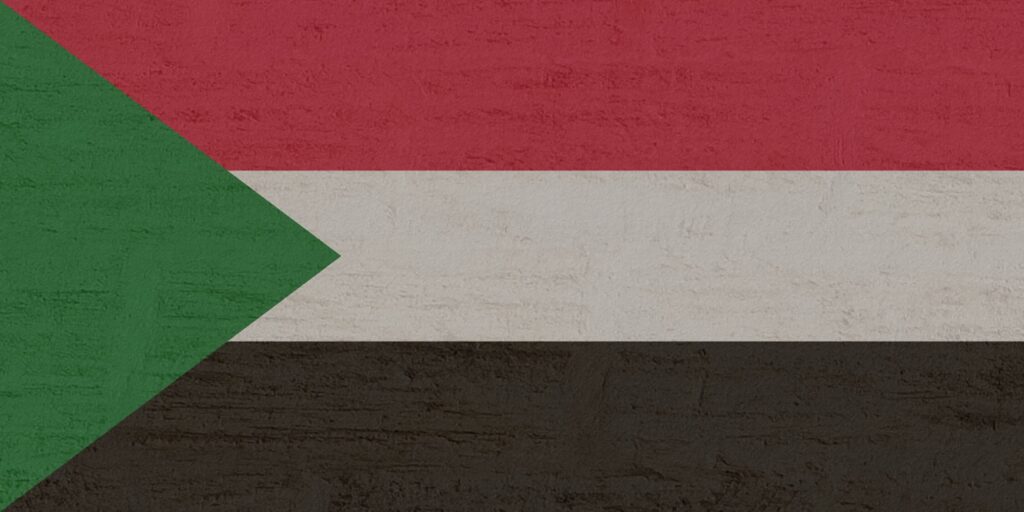
By Jahnvi Chopra / Arab America Contributing Writer
Recent History
Sudan’s civil war began after years of political instability and illiberalism. In 2019, long-time dictator Omar al-Bashir was removed from power. His reign was followed by a military-civilian government that was then formed to guide the country toward civilian rule. That transition quickly began to fall apart, as two generals who had once worked together eventually became rivals. On April 15, 2023, fighting broke out in Khartoum between the Sudanese Armed Forces (SAF) and the Rapid Support Forces (RSF). The SAF is led by Abdel Fattah al-Burhan, and the RSF is commanded by Mohamed Hamdan Dagalo, better known as Hemedti.1
The immediate dispute was over the future of the RSF. As part of the transition plan, the paramilitary group was supposed to be integrated into Sudan’s regular army, but the two sides could not agree on how or when that would happen. The RSF had also become far too powerful to easily absorb. It grew out of the Janjaweed militias, which were accused of widespread atrocities in Darfur in the early 2000s, and transformed into a powerful threat to the SAF.2 By the time the war began, the RSF had its own military structure and significant financial resources, including revenue from gold mining.
Impacts and Implications
The fighting has since created one of the world’s largest humanitarian crises, with more than 10 million people displaced. Famine has been one of the leading consequences of the conflict, and has daunted numerous international aid efforts. Relief groups estimate that the humanitarian response for 2026 remains only about 40% funded, but with leading donor countries and organizations drastically cutting their funding for aid, the situation remains dire.3
The conflict has also drawn in regional powers, with tensions rising as multiple neighboring nations become more affected as time goes on. Egypt has backed the SAF, partly because of concerns over border security and the Nile. The United Arab Emirates has repeatedly been accused of providing weapons and other support to the RSF. UN experts and humanitarian groups have raised allegations of UAE involvement, while Abu Dhabi has denied them. Saudi Arabia and the United States have also been involved in diplomatic efforts. Along with Egypt and the UAE, they make up the so-called Quad, which has pushed for an end to the fighting. Previous negotiations, including talks in Jeddah, have produced ceasefire agreements that have repeatedly broken down4, as violent conflict are only on an upward trend.5
After more than three years of war, Sudan is increasingly divided along territorial lines, with the SAF controlling much of the north, east and center of the country, including Khartoum. It retook the capital in 2025 after the RSF had controlled large parts of it for much of the war. The RSF still controls most of Darfur as well as parts of Kordofan. It has also established a rival administration based in Nyala, the capital of South Darfur.6 Both sides claim political legitimacy, but neither represents a return to civilian government.
The situation in Darfur has been particularly difficult, with October last year marking a point of no return between both groups. The RSF captured El-Fasher, the last major city in Darfur that was still held by forces aligned with the army. Not only had the city had been under siege for months, but through a UN fact-finding mission, it was concluded that the conditions there met the legal threshold for genocide.7
Diplomatic efforts have made little progress. In December 2025, Sudan’s transitional prime minister, Kamil Idris, proposed an internationally monitored ceasefire that would have required the RSF to withdraw from areas under its control.8 The response was fragmented, to say the least. The RSF rejected the proposal, the African Union welcomed it, and the UN acknowledged it.
What Does the Future Hold?
For now, there is little sign of a political settlement, as neither side has been able to defeat or surrender to one another. Both also continue to receive external support, which fuels the conflict and division within. Money remains another major factor. Gold has provided an important source of revenue for the RSF, while the SAF continues to draw on state institutions and support from regional allies. As long as both sides can maintain access to weapons, money, and outside assistance, the incentives to compromise remain limited.
The result is a war that has become increasingly difficult to resolve. Sudan is divided between rival military authorities, while millions of civilians remain displaced and dependent on humanitarian aid. Without a significant change in the balance of power or outside pressure on the two sides, the conflict is likely to remain entrenched.
- Council on Foreign Relations ↩︎
- TRT World Research Center ↩︎
- Operation Broken Silence ↩︎
- Al Jazeera ↩︎
- Defcon Level ↩︎
- World Atlas ↩︎
- The New Humanitarian ↩︎
- Security Council Report ↩︎
Want more articles like this? Sign up for our e-newsletter!
Check out our blog here!