Subscribe
to receive news by email

Poll
Will the Trump Administration Shift U.S. Policy in Favor of Palestine?
- No (86%)
- Yes (14%)
 Loading ...
Copyright © 2026 Arab America
Go topPathbreakers of Arab America—Huda Akil
By: John Mason / Arab America Contributing Writer
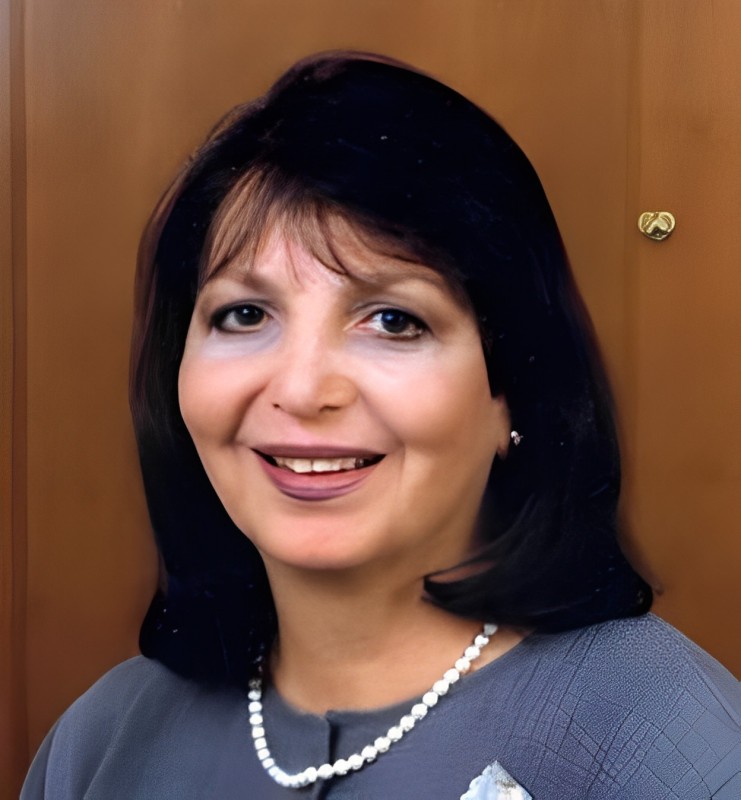
This is the 135th article in Arab America’s series on American pathbreakers of Arab descent. The series features figures from entertainment, business, sports, science, the arts, academia, journalism, and politics. Our 135th pathbreaker is Huda Akil, a Syrian American neuroscientist whose research, principally at the University of Michigan, has contributed significantly to the understanding of the neurobiology of emotions, including pain, anxiety, depression, and substance abuse. Huda describes herself as “a neuroscientist who studies the brain biology of emotions,” about which she is impassioned and for which she is highly decorated.
Dr. Akil changed how we understand pain and opened new possibilities for treatments that work with the brain’s own pain blocking system
Huda Akil was born on May 19, 1945, in Damascus, Syria to Fakher and Widad Al-Imam. She was inspired to pursue a life of science, according to Wikipedia, “after reading a book on Marie Curie, the great physicist and Nobel Prize winner, that was given to her by one of the French nuns at the library.” Huda refers to this instance as a “turning point in her life, where she realized that a woman who grew up far away from the centers of knowledge, Great Britain, France, and the United States, could become a great scientist, like Curie.”
Huda pursued her undergraduate degree at the American University of Beirut (AUB) in Lebanon. She entered university as a sophomore, on a scholarship from the Rockefeller Foundation “that required her to earn straight As, especially difficult, since she was not fluent in English.” She fulfilled the requirement and graduated in 1967 ‘summa cum laude’ with a Bachelor of Arts in Psychology. Huda initially took an interest in the psychology of language, originally sparked by her father, who was a psychologist.
Akil continued at the American University of Beirut with a teaching apprenticeship for a year before traveling to the United States in 1968 to pursue further education at the University of Iowa. There, she took a course on the basics of neuroscience and pharmacology “and was intrigued, which led her to complete a rotation in the electrophysiology lab where she did research on learning.” From Iowa, Akil was accepted at the University of California Los Angeles to pursue her doctoral degree.
At UCLA, Huda worked with John Liebeskind on pain research, which focused on “the neural circuitry of phantom pain, and the idea that phantom pain was not a purely physical phenomenon but had a psychological role as well.” Her Ph.D. dissertation addressed how electrical stimulation of certain neurological sites (experimenting with rats) “eradicated responsiveness to painful stimuli…”
According to Akil’s website, ‘the Gruber Foundation–Huda Akil’s Simple Explanation of Pain Reducing Nerve Stimulation,’ the brain has its own built in “pain off” switch. In the simplest terms, “Huda Akil found that the brain can actively ‘turn down’ pain by activating its own natural pain killers (endorphins) when certain nerves or brain areas are stimulated. This discovery changed how we understand pain and opened new possibilities for treatments that work with the brain’s own pain blocking system.”
Akil’s research covers many areas but is collectively rooted in understanding emotions. As Huda put it herself, her work “has always been about trying to understand the circuits of emotions. I have always been interested in how the process of responding to the world changes the brain and how, in turn, the brain changes an animal’s environment and perceptions of the world. I love all of it.”
Just to give a sense of Dr. Akil’s productivity in the publishing lane alone, according to the University of Michigan, she has authored and co-authored more than 500 papers published in scientific journals, and she is recognized as one of the most highly cited researchers by a certain citation index.
A decorated scientist, Dr. Akil is the recipient of numerous awards throughout her career and has devoted her career to mentoring generations of neuroscientists
Following her discoveries at Stanford about the brain and its own built in “pain off” switch, Dr. Akil continued research in “the area of opioid peptides and their receptors at the University of Michigan Mental Health Research Institute where she was employed as a basic scientist.” By then, Huda married Stanley Watson, a biological psychiatrist, whom she joined at Michigan, combining their research efforts. They co-direct the University of Michigan Medical School’s Molecular and Behavioral Neuroscience Institute and each has played an integral role in the other’s career.
The couple has two children, Brendon (also a neuroscientist at the University of Michigan) and Kathleen. Akil describes her approach to parenting her children as going at it “full throttle,” keeping her career on track and raising her children simultaneously.
She has until recently held the position of Distinguished University Professor and Quarton Professor of Neurosciences, Department of Psychiatry at Michigan. Akil and Watson conduct their research collaboratively through research groups they each head. Akil is also one of seven leading scientists that comprise the Hope for Depression Research Task Force, which developed a research plan “to accelerate cutting-edge scientific research pertaining to depression and its related mood and emotional disorders.”
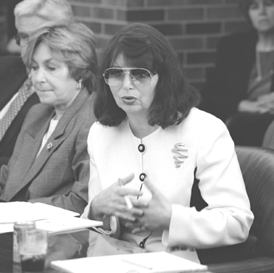
Throughout her career, Akil has been honored with numerous awards and membership to various societies, most notably serving as a past President of the Society for Neuroscience, the largest neuroscience organization in the world. She is a member of the U.S. National Academy of Sciences, U.S. National Academy of Medicine, and the American Academy of Arts and Sciences. A decorated scientist, in 1993, she received the National Institute on Drug Abuse Pacesetter Award.
The following year Akil was the co-recipient, with Stanley Watson, of the Robert J. and Claire Pasarow Foundation Medical Research Award for Neuropsychiatry. In 1998, Akil was honored with the Sachar Award from Columbia University and the Bristol Myers Squibb Unrestricted Research Funds Award. She accepted the John P. McGovern Award in Behavioral Sciences from the American Academy of Arts and Sciences in 2006 and in 2007 was the recipient of the Society for Neuroscience Mika Salpeter Lifetime Achievement Award and the Patricia Goldman-Rakic Prize for Cognitive Neuroscience.
Presently, Akil is Gardner C Quarton Legacy Professor of Neurosciences in the Molecular and Behavioral Neurosciences Institute. The position title might suggest that she has slowed down at age 81. From what we know now, that is not the case.
A capstone in Dr. Akil’s professional life was the award to her of the Vanderbilt Prize in Biomedical Science just this past year. Established by Vanderbilt University Medical College in 2006, the Prize recognizes scientists of national reputation who have a stellar record of research accomplishments and are known for mentoring others in science. In addition to her work on the nature of anxiety, depression, pain and addiction, Akil was honored over her career for her devotion “to mentoring generations of neuroscientists.”
The master of ceremony of the Vanderbilt event noted in making the award to Akil, “I am especially happy that this award recognizes not only scientific contributions but mentoring. In response, Akil noted, “I am immensely grateful for having had the chance to work with remarkable, talented, dedicated young scientists who have taught me more than I have taught them…”
On a final note, while we found very little detailed information on Huda’s Arab background, including her religion (her name is associated with the Quran, but there is no mention the writer could find on her religion), there was one exception. That was about her take on “women’s issues. In a piece titled, “The road from damascas: an interview with huda akil,” Huda noted that “The relationship between men and women in the Middle East is dramatically different from the relationships of men and women in America.”
Veering from her usual nonjudgmental, scientific perspective, she averred, “I think American men are fantastic in comparison to men in many parts of the world! American men, especially in academia, are generally open and friendly, and I can truly say that they have never blocked my path. On the contrary, I have had some wonderful mentors at every stage, and they happened to be mostly men. I am very grateful to them.”
Huda suggested that “Being an immigrant may have helped me realize that in entering academia, I was entering a special culture. The business and academic worlds were designed by men and for men; this does not mean to the exclusion of women. Women were just not part of the picture when the structure was being established.” Thus, she concludes, “So it pays to understand the system and learn how it works and to see it as a culture that is not designed for women.”
Clearly, Dr. Akil figured out how the system works, to enter it and to modify it from within, “to make it congenial to them while it remains also congenial to the men.” She also noted that it was important to understand the “roots of the country in history and changing it from within yet maintaining the central elements of their identity.”
How apt and wise are her words—Dr. Akil not only figured out how to navigate the then predominantly male culture of medicine, but to excel in making a huge medical contribution to society.
Sources:
“Huda Akil,” Wikipedia, 2026
“Huda Akil’s Simple Explanation of Pain Reducing Nerve Stimulation,” Gruber Foundation, (no date)
“Neuroscientist Huda Akil wins Vanderbilt Prize in Biomedical Science,” Vanderbilt Health News, 5/22/2025
“Dr. Huda Akil speaks at National Institutes of Health,” University of Michigan, January 20, 2026
“The road from damascas: an interview with huda akil,” Europe PMC, 6/15/2004
John Mason, Ph.D., focuses on Arab culture, society, and history and is the author of LEFT-HANDED IN AN ISLAMIC WORLD: An Anthropologist’s Journey into the Middle East, New Academia Publishing, 2017 and of his new novel, WHISPERS FROM THE DESERT: Zaki, a Little Genie’s Tales of Good and Evil (2025), under his pen name, Yahia Al-Banna. He has taught at the University of Libya in Benghazi, Rensselaer Polytechnic Institute in New York, and the American University in Cairo. John served with the United Nations in Tripoli, Libya, and consulted extensively on socioeconomic and political development for USAID and the World Bank in 65 countries.
The views and opinions expressed in this article are those of the author and do not necessarily reflect the position of Arab America. The reproduction of this article is permissible with proper credit to Arab America and the author.
Want more articles like this? Sign up for our e-newsletter!
Check out our blog here!