
Subscribe
to receive news by email

Poll
Will the Trump Administration Shift U.S. Policy in Favor of Palestine?
- No (86%)
- Yes (14%)
 Loading ...
Copyright © 2026 Arab America
Go topPathbreakers of Arab America—Omar Offendum
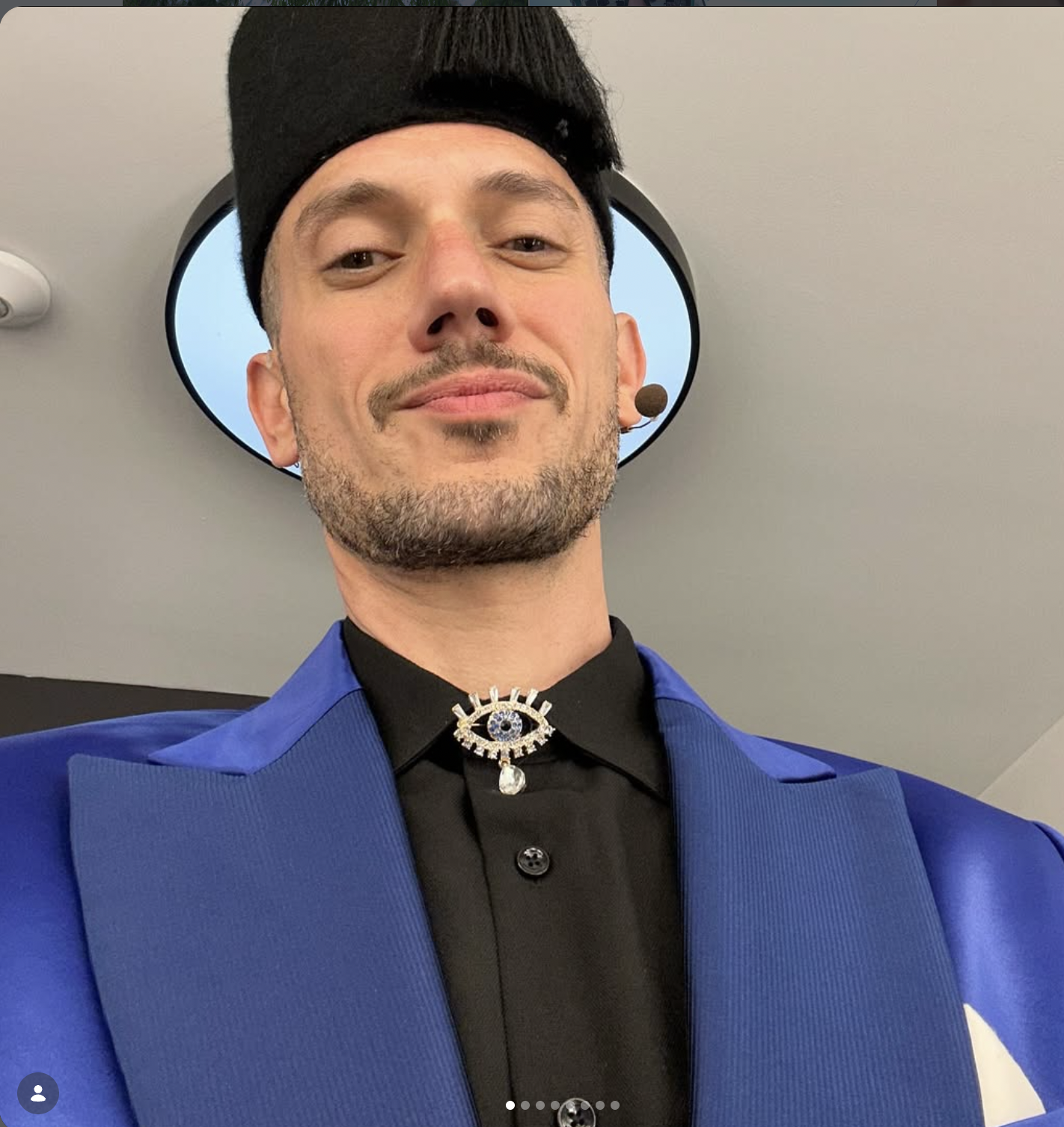
By: John Mason / Arab America Contributing Writer
This is the 138th article in Arab America’s series on American pathbreakers of Arab descent. The series features figures from entertainment, business, sports, science, the arts, academia, journalism, and politics. Our 138th Pathbreaker is Omar Offendum, Syrian American hip-hop artist, designer, poet and peace activist. He has become a major interpreter in the cultural conversation about hip-hop’s political and cultural role, especially for the Arab diaspora. Here, we spotlight Offendum’s hip-hop as a politically charged, culturally hybrid, and historically rooted practice that challenges indifference, fosters solidarity, and mobilizes social justice awareness.
A major interpreter of Arab and Western crosscurrents, Offendum’s music has captured the imagination of the Arab Diaspora and beyond
Omar Offendum is a Syrian American hip-hop artist, designer, poet and peace activist, born in Saudia Arabia to Syrian parents. Born in 1981, Omar was raised in in Washington, DC, where he attended the Islamic Saudi Academy, followed by his graduation from the University of Virginia (UVA) School of Architecture. He then moved to Los Angeles, where he worked at an architecture firm for 10 years while simultaneously establishing his musical career. (The name ‘Offendum’ is a play on ‘effendi’ in Arabic, an historical term of respect meaning lord or sir; Offendum combines the term with the English word “offend,” a word conveying negative connotations in English.)
Even as a student at UVA, Offendum, per Wikipedia, “began his career as part of The N.O.M.A.D.S duo, with Sudanese American rapper Mr Tibbz.” In Los Angeles, he began collaborating with the Palestinian Filipino hip-hop trio ‘The Phillistines.’ “They worked to create Free the P – a compilation of hip-hop and spoken word dedicated to the youth of Palestine featuring artists from all over the world – which was the first Arab American rap record to receive national distribution.” Omar then began working with Iraqi Canadian rapper Narcy and co-produced the ‘Arab Summit’ album.
Omar’s early work came into prominence through his ‘song #Jan25,’ inspired by the Arab Spring uprisings in Egypt. According to a PBS News Hour interview, this song “went viral via the internet, which Offendum sees as a key factor in the spread of international hip-hop.” Released in February 2011, shortly before the resignation of Egyptian president Hosni Mubarak and as Offendum was gaining fans during the Arab Spring. This was a period of political uprisings across the Middle East and North Africa. “His songs, often political, resonated with Arab youths who embraced hip hop as a form of protest and expression,” not coincidental according to PBS, given that “his lyrical content and cultural fusion made him a voice for many in the region.”
Omar now tours the world performing internationally at music festivals, lecturing at major academic institutions and fundraising for humanitarian relief organizations. Most recently Offendum has been involved in creating several critically acclaimed songs about the popular democratic uprisings throughout the Middle East and North Africa region.
Starting gradually, Offendum moved into the broader cultural conversation about hip-hop’s political and cultural role, especially for the Arab diaspora
Much has been written on the esthetics and finer points of Offendum’s music and messaging. We will not dwell on these, but it is important to know that his work is considered very seriously in the academic community. In one article, “Hip-Hop-Academia: Omar Offendum and Arab Diaspora Rap,” Omar’s work is characterized as blending “scholarly inquiry with hip hop aesthetics to explore Arab American identity, Orientalism, and the political history of hip hop as a tool for resistance.”
Some academics fear that while mainstream hip-hop has lost its revolutionary roots, that there has been an “Arab gravitation toward hip-hop as a way to challenge post 9/11 stereotypes — the “Arab as enemy” or “Arab as Aladdin” — and to navigate the hyphenated identity of living between the East and the West.” Now Omar addresses stereotyping in the U.S., such as TSA (Transportation Security Admin.) harassment of immigrants and “the tension between cultural heritage and American upbringing.” Recently he captured “the pull between the East and the West” in a track called “Destiny.”
Omar has ventured into new territory in merging his hip-hop music and messaging venue to address such matters as Arabic poetry, and traditional music to explore the cultural legacy of Al Andalus and Arabic speaking peoples. He has also been the subject of a Smithsonian National Museum of Asian Art program (May 3, 2023), “a journey inspired performance by Syrian American rapper/poet Omar Offendum and Palestinian American oud virtuoso Ronnie Malley.” In that program, the “trace the influence of Al Andalus (medieval Islamic Spain) and Arabic speaking communities on music and culture — from New York City’s Little Syria to the birth of California surf rock.”
Offendum “breaks the ‘Chain of Silence’ on global indifference toward the Syrian conflict and inspires social justice”
In a 2015 interview with Arab America (“Apathy Toward Syria Is Not an Option”), Offendum discussed his political consciousness, immigrant identity, engagement with the Arab Spring, and reflections on the responsibilities of Arab American artists. He especially commented on his music as a vehicle for social and political engagement and, more particularly, how he “frames his art as a moral and political tool, rejecting indifference toward the Syrian conflict.”
Initially for Arabs here and in the Middle East, the Arab Spring’s early optimism in Syria — where, we recall, Offendum’s family originated — contrasted with the eventual disaster. He recalls the initial hope and idealism, but “also the disillusionment that followed. For him, this was a turning point: art could not be neutral in the face of real human suffering.” Offendum’s central point is “that apathy toward Syria is not an option because beneath political posturing and proxy wars lies real, immediate human suffering that the world must address.”
A scholarly analysis, “Breaking the Chain of Silence: Political Activism and Social Justice in Omar Offendum’s Syrian-American Hip-Hop, ”argues that Omar Offendum’s hip-hop blends political activism, cultural hybridity, and civil rights heritage to challenge global indifference toward the Syrian conflict and inspire social justice.” The authors situate Offendum within a broader transatlantic movement of Syrian and regional artists using hip-hop to address oppression, war, and refugee crises. The study analyzes three of Offendum’s most recognized songs, showing how each “Embeds revolutionary slogans and calls for unity.”
In summary, Offendum’s hip-hop as a politically charged, culturally hybrid, and historically rooted practice that challenges indifference, fosters solidarity, and mobilizes social justice awareness. He is a fine example of an Arab American Pathbreaker who is making a difference through his music, his art, his poetry.
Sources
“Omar Offendum,” Wikipedia, 11/12/2026
“Hip-Hop-Academia: Omar Offendum and Arab Diaspora Rap,” DeGhett, Torie Rose 9/16/2023
“Conversation: Syrian American Rapper Omar Offendum,” PBS NewsHour, 11/4/2011
“For Hip-Hop Artist Omar Offendum, Apathy Toward Syria Is Not an Option.” Arab America, 5/5/2015
“Breaking the Chain of Silence: Political Activism and Social Justice in Omar Offendum’s Syrian-American Hip-Hop,” Academia.edu, Henry Gilbert, Muhammad Alim, and Bruce Cogswell, 2016
“Omar Offendum and Oud Virtuoso Ronnie Malley.” Smithsonian Institution National Museum of Asian Art, 5/3/2023.
John Mason, Ph.D., focuses on Arab culture, society, and history and is the author of LEFT-HANDED IN AN ISLAMIC WORLD: An Anthropologist’s Journey into the Middle East, New Academia Publishing, 2017 and of his new novel, WHISPERS FROM THE DESERT: Zaki, a Little Genie’s Tales of Good and Evil (2025), under his pen name, Yahia Al-Banna. He has taught at the University of Libya in Benghazi, Rensselaer Polytechnic Institute in New York, and the American University in Cairo. John served with the United Nations in Tripoli, Libya, and consulted extensively on socioeconomic and political development for USAID and the World Bank in 65 countries.
The views and opinions expressed in this article are those of the author and do not necessarily reflect the position of Arab America. The reproduction of this article is permissible with proper credit to Arab America and the author.
Want more articles like this? Sign up for our e-newsletter!
Check out our blog here!