
Subscribe
to receive news by email

Poll
Will the Trump Administration Shift U.S. Policy in Favor of Palestine?
- No (86%)
- Yes (14%)
 Loading ...
Copyright © 2026 Arab America
Go topThe Mind Is the Last Territory to Be Liberated from Occupation
By: Ghassan Rubeiz / Arab America Contributing Writer
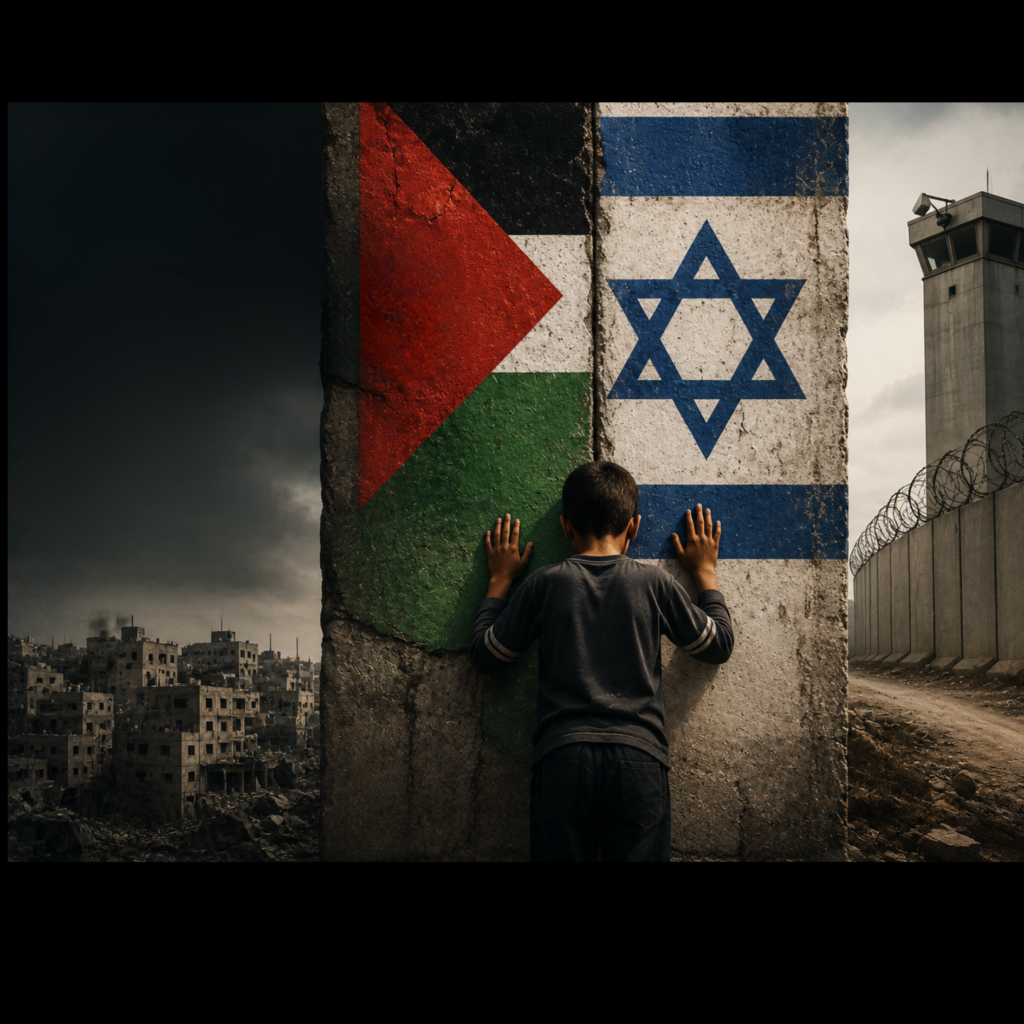
In a recent column, dated July 1, I outlined five overlapping types of occupation in the Middle East: territorial occupation; a ruler who “owns” the state; a state within a state; heavy deployment of foreign forces; and a society obsessed by inextricable fanaticism – i.e., the “occupation of the mind”.
Using this five-category framework, I posit here that the most debilitating form in the region is ideological occupation—particularly the socialization of religious prejudice. Today, religious fanaticism continues to shape political behavior in ways that reinforce illegal occupation of land, tolerate despotism, allow squandering of resources, authorize displacement of people, prolong conflict, and suppress free thinking. It follows that liberating the mind in interpreting scripture opens the door to critical thinking.
Ironically, of the different forms of “occupation” that keep the Middle East trapped in conflict, the occupation of the mind is the least recognized and the hardest to lift. Beneath the visible occupation lies a deeper, well-sanctioned form of societal constraint: exceptionalism, ethnocentrism, rigid attitudes, frozen ideologies, and outdated moral norms that block reform more firmly than any armed intervention.
The evidence is in the slow pace of reform. Israel is expected to hold elections in late October 2026, after the Knesset voted in December 2024 to dissolve itself. Polling since October 7 shows Israeli parties converging around hardline security positions, with no major party proposing a shift on the occupation of Palestinian land (Times of Israel, Dec. 2024; Israel Democracy Institute polling, 2024–2025; Mtanes Shihadeh, Arab Center Washington DC, July 9, 2026). Similarly, the Palestinian Authority announced in early 2024 its intention to hold long-delayed elections; none have been scheduled since 2006 (Al Jazeera, Feb. 2024; International Crisis Group, 2023–2024; Ynet, July 9, 2026). These are not separate failures of logistics. They are what frozen ideology looks like in practice: leaderships that cannot risk a popular vote because the frozen narratives that legitimize them cannot survive open debate.
This raises an unavoidable question: do Israelis and Palestinians share a crippling barrier to reform? They do. Both societies are burdened by religious institutions wielding disproportionate influence over politics, identity, and public morality. The similarity of religious burden in these two otherwise contrasting societies, however, ought not relieve those in power of their responsibility to initiate and lead political reform.
Naturally, the problem does not lie in the religious faiths themselves, but in the way political and spiritual leaders interpret the “Holy Word.” Literalism and exclusivist interpretations of scripture regulate, if not control, free thinking. Religious institutions forcefully influence education, family law, military norms, party mobilization, and even the right to believe or to doubt. The Lebanese-American literary giant, Gibran Khalil Gibran – author of The Prophet – once lamented that Lebanon had “a lot of religion but not much faith.” His observation applies across the region. And in Israel and the Jewish diaspora, some outstanding voices—religious and secular—have long argued that imagination is essential to any future peace.
Physical occupation, unlike occupation of the mind, is visible—and therefore more amenable to reform. Rulers are deposed, foreign troops redeployed, territorial occupiers sometimes withdraw. But ideological occupation does not yield so easily, especially when it is framed as divinely mandated. It hides inside education curricula, legal codes, and religious rulings.
The Middle East cannot afford another generation governed by prejudice, fear, fundamentalism, and inherited hostility. Political paralysis here is not inevitable; it is manufactured, and the manufacturing is visible in specifics: a curriculum that omits the other’s history; a rabbinical or clerical ruling invoked to deny ethnic cleansing or block a peace clause; a school textbook with no room for reconciliation or truth-telling. As long as the region remains trapped in narratives that sanctify authoritarianism, justify the elimination of the “other,” and elevate identity over humanity, no election, negotiation, or military campaign will deliver peace. The first liberation must be that of the intellect. Only when societies confront the sacred myths that justify violence and territorial occupation—and thereby reclaim the right to question, reinterpret, and imagine—will they discover that the most stubborn occupation has not been only of land, but of thought too. Free the mind, and the politics will follow.
Ghassan Rubeiz is the former Middle East Secretary of the World Council of Churches. Earlier, he taught psychology and social work in his country of birth, Lebanon, and later in the United States, where he currently lives. He has contributed to political commentary for the past twenty years and has delivered occasional public talks on peace, justice, and interfaith topics. You can reach him at rubeizg@gmail.com
The views and opinions expressed in this article are those of the author and do not necessarily reflect the position of Arab America. The reproduction of this article is permissible with proper credit to Arab America and the author.
Want more articles like this? Sign up for our e-newsletter!
Check our blog here!