
Subscribe
to receive news by email
Poll
Will the Trump Administration Shift U.S. Policy in Favor of Palestine?
- No (86%)
- Yes (14%)
 Loading ...
Copyright © 2026 Arab America
Go topA Taste of Tunisia
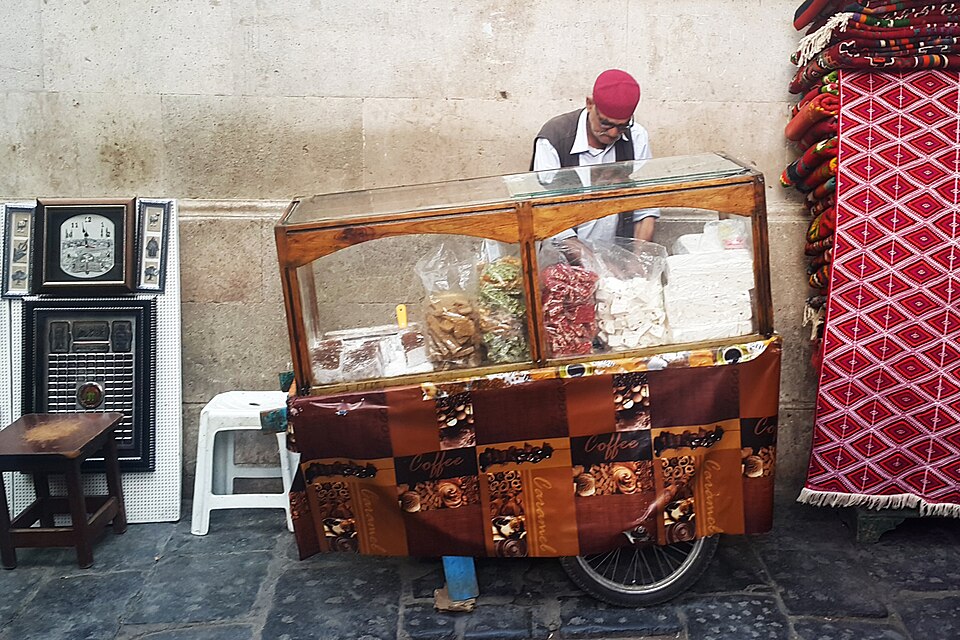
By: Nadia Boughanmi / Arab America Contributing Writer
Makroudh
Makroudh is an extremely popular Tunisian “cookie” or pastry. It consists of date paste wrapped in a semolina flour based dough. It is then deep fried or in some instances baked depending on the region of Tunisia it is made in. After the baking process it is dipped into simple syrup that consists of sugar, honey and orange blossom water.
Kairouan is considered the “origin” of the sweet because it is extremely popular in the city and its shape was inspired by the city’s rich history. Being an extremely holy city for Muslims in Tunisia, there are dozens of mosques across the city. The mosaic patterns of said mosques were the inspiration behind the shape of the Makroudh and now that delicious sweet is enjoyed across the country. It is also extremely popular and commonly found through the streets of Medina in the capital of Tunis. Up on the street of Medina, there are multiple shops selling the same sweet, fighting for your attention on which is better by providing a free sample while you pass by.
Baklawa
Baklawa can be claimed by dozens of countries across the Middle East and North African, but Tunisian Baklawa remains unique. Differing from the traditional use of just walnuts, Tunisian Baklawa features a mix of walnuts and pistachios or just pistachios. Orange blossom water is also commonly added in the simple syrup mix. Tunisian Baklawa is also cut into smaller pieces than traditional baklava. It is also harder like a “cookie,” rather than a fluffier pastry like many other MENA countries.
Baklawa is served in every Tunisian home and on every occasion. From a simple visit to a loved one’s house to a wedding, baklawa is a star dessert. It pairs perfectly with the mint tea served at special occasions and is the perfect balance between nutty and sweet.
Kaak Warka
Kaak Warka is arguably one of Tunisia’s most unique, yet popular desserts. The donut shaped dessert is made from an almond paste mixture and is infused with rose water. It has a very bold and distinct flavor, with a slight hint of sweetness. Kaak Warka is traditionally baked at very low temperatures to keep the bright, white color of the pastry. It can also be dipped in powdered sugar for an added sweetness.
Kaak Warka is THE dessert for Tunisian weddings and celebrations. It always finds its way onto dessert tables and trays for big celebrations. It wouldn’t be a Tunisian wedding without Kaak Warka with a side of mint tea or citronnade. The sweet can be found throughout all cities across the country and is a staple to many Tunisians. Its subtle sweetness makes it enjoyable to a range of taste buds.
Bambalouni
Tunisia’s “street” sweet of the century easily goes to bambalouni. The fried “doughnut” can be found from the blue streets of Sidi Bou Said to the coastal beaches. It is typically sold for 1 to 2 dinar a piece depending on if it’s bought in a tourist focused or local area. It is the staple of any beach trip for a Tunisian child or even adult. The fried dough coated in sugar is the perfect sugar rush for that post swim tiredness. Sidi Bou Said, the infamous blue and white city, is the most “famous spot” for bambalouni, as it attracts many tourists for the beautiful views.
Bambalouni is traditionally eaten dipped in sugar after it is freshly deep fried. Putting Nutella in the middle or adding honey has become popular as well. It is slightly crispy on the edges, yet perfectly soft and fluffy on the inside.
Kaber Ellouz
Kaber Ellouz is known for its vibrant colors. It is a ball of red, green and white pastes. Similar to Kaak Warka, it is made from almond paste infused with rose water. The paste mixture is then separated into 3 separated sections, one left its original white color, one dyed green and the other dyed red. It is then braided together and cut into small balls. The sweets are then rolled in sugar and are a no-bake recipe.
Served next to Kaak Warka, Kaber Ellouz is extremely popular for Tunisian celebrations. It is the perfect colorful and sweet edition to the dessert tray of any Tunisian wedding. Walking into any bakery, from the coastal North to the sandy South of Tunisia, means finding the sweet treat and not being able to resist picking up half a kilo or maybe two.
Want more articles like this? Sign up for our e-newsletter!
Check our blog here!